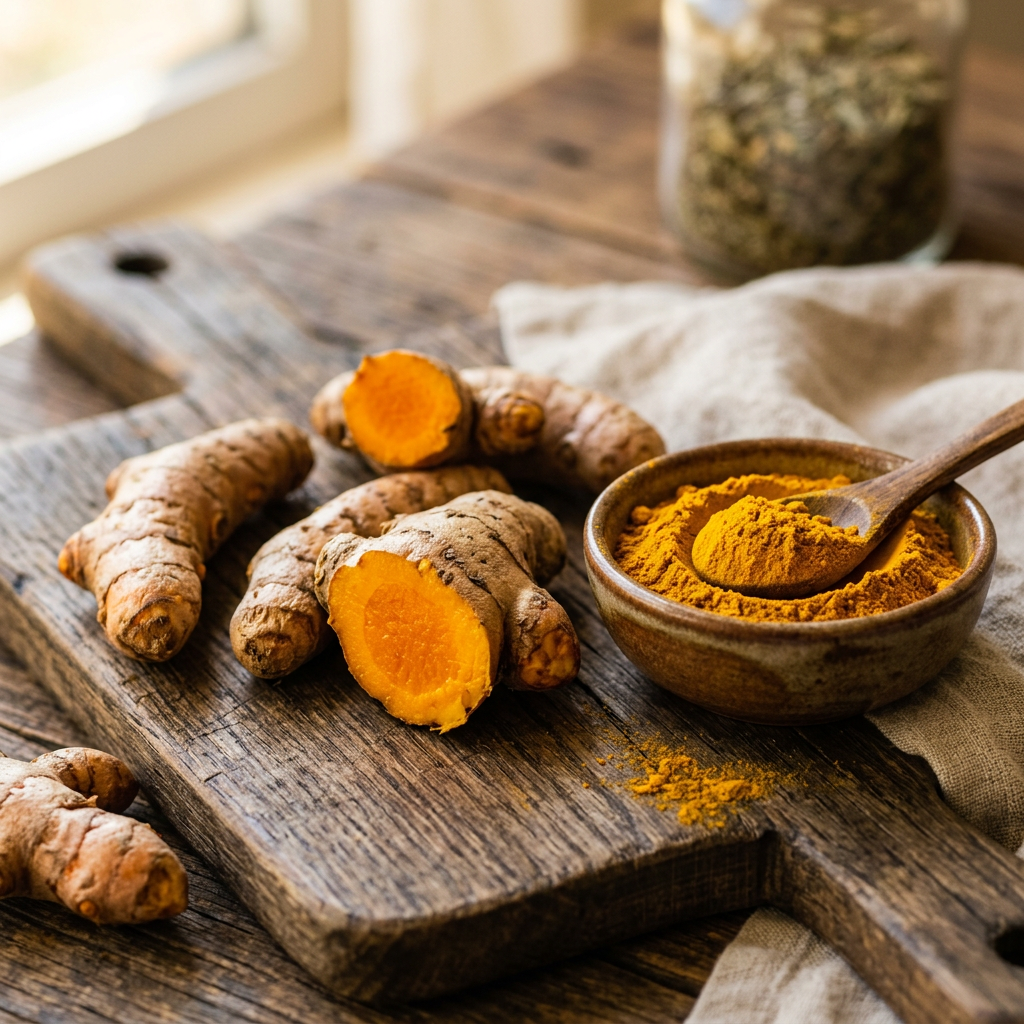
Turmeric

Turmeric

Curcuma longa

Family: Zingiberaceae

Also known as: Indian saffron, Golden spice, Haridra, Jiang huang

At a glance

Best for: Inflammation, Joint pain, Antioxidant, Digestive health, Cognitive support
Parts used: Rhizome
Common forms: Culinary, Capsule, Extract, Tea, Topical
Evidence level: Promising
Cautions: Poor bioavailability without piperine or fat; High doses may cause nausea; May affect iron absorption

What it is

Turmeric is a rhizome (underground stem) from the ginger family, used as a spice, dye, and medicine for thousands of years in South and Southeast Asia. Curcuminoids—primarily curcumin—give turmeric its bright yellow colour and are responsible for most of its medicinal activity.

Traditional use

A cornerstone of Ayurvedic medicine for 4,000+ years. Used in Traditional Chinese Medicine for circulation and pain. Central to Indian cooking where it has been consumed daily for generations. Used topically in Indian traditional medicine for skin conditions and wound healing.

What modern research suggests (Promising)

Thousands of studies confirm anti-inflammatory (inhibits NF-κB, COX-2), antioxidant, and anti-cancer cell effects in vitro. Clinical trials show comparable efficacy to ibuprofen for knee osteoarthritis pain. Good evidence for inflammatory bowel conditions. Emerging evidence for Alzheimer's prevention and cognitive support.

How people use it

For anti-inflammatory benefit: 1,000–1,500mg curcumin extract daily with piperine (black pepper) and fat. In food: add to curries, golden milk, rice, smoothies—always with black pepper and a fat source. Topically: turmeric paste for skin conditions and wound healing (mix with honey or coconut oil).

Safety + interactions

Very safe as food/spice at culinary doses. Higher supplement doses can cause nausea, diarrhoea, yellow stool at very high doses. May interfere with iron absorption—separate from iron supplements. Mild blood-thinning effects. Caution in gallstone disease (may stimulate bile flow).

May interact with: Blood thinners, Diabetes medications, Antacids, Iron supplements

Quality notes

Curcumin is only 2–5% of turmeric powder and has very poor oral bioavailability on its own. Black pepper extract (piperine, BioPerine) at 5–20mg increases curcumin absorption by 2,000%. Phospholipid-bound curcumin (Meriva), nanoparticle forms, and BCM-95 have enhanced bioavailability. Cooking turmeric with fat and black pepper (as in traditional Indian cuisine) is nutritionally synergistic.

Community Insights

Premium members share their experiences and knowledge about this plant.

Disclaimer: This content is educational and not medical advice. Always consult a qualified healthcare provider before using any herbs or supplements, especially if you are pregnant, nursing, taking medications, or have a medical condition.

Related entries