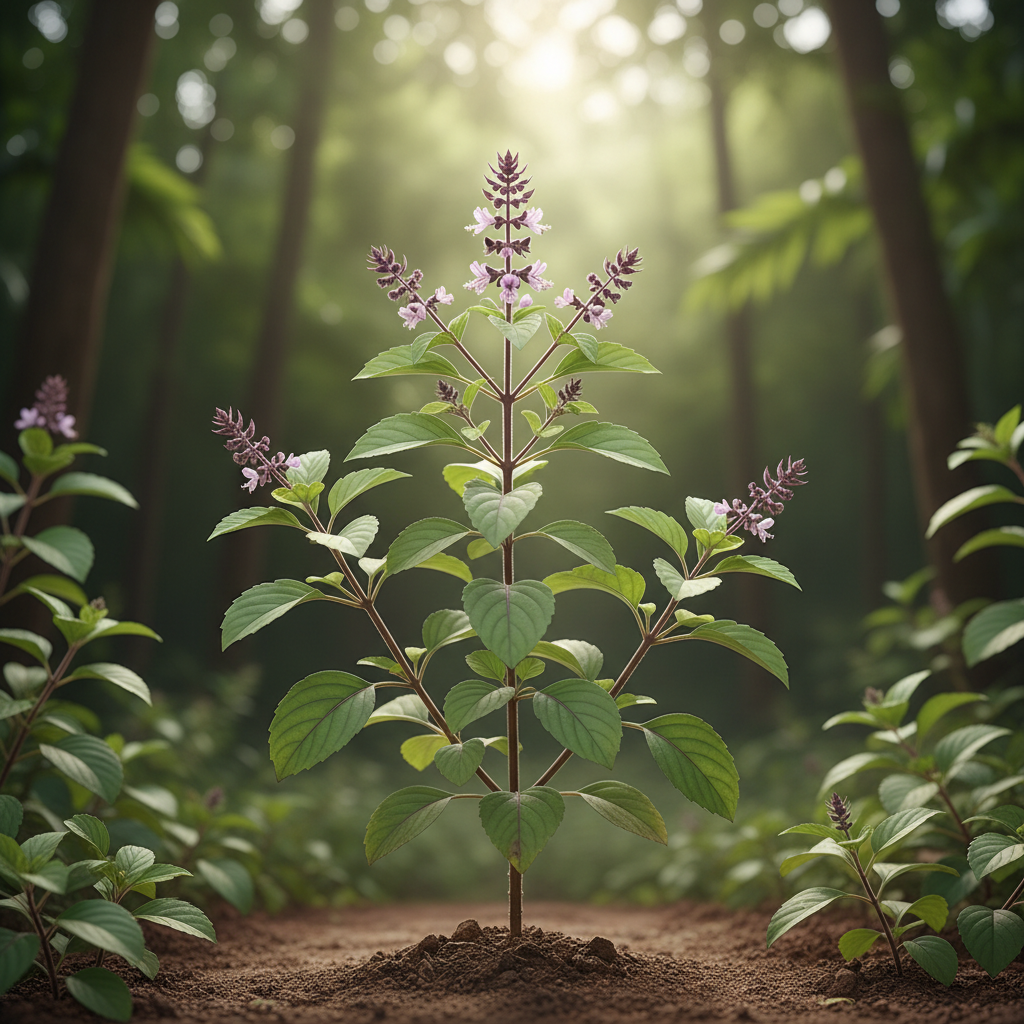
Holy Basil
Ocimum sanctum
Family: Lamiaceae
Also known as: Tulsi, Sacred basil
At a glance
What it is
Traditional use
What modern research suggests (Promising)
How people use it
Safety + interactions
May interact with: Diabetes medications, Blood thinners
Name clarity note
Different from culinary basil (Ocimum basilicum), though related.
Quality notes
Fresh leaves make aromatic tea. Extracts are standardized for ursolic acid.
FAQs
Is this the same as cooking basil?
No, holy basil (tulsi) is a different species with medicinal properties, though both are in the Ocimum genus.
Can I grow it at home?
Yes, it's easy to grow in warm climates or indoors. Use fresh leaves for tea.
Community Insights
Premium members share their experiences and knowledge about this plant.
Disclaimer: This content is educational and not medical advice. Always consult a qualified healthcare provider before using any herbs or supplements, especially if you are pregnant, nursing, taking medications, or have a medical condition.