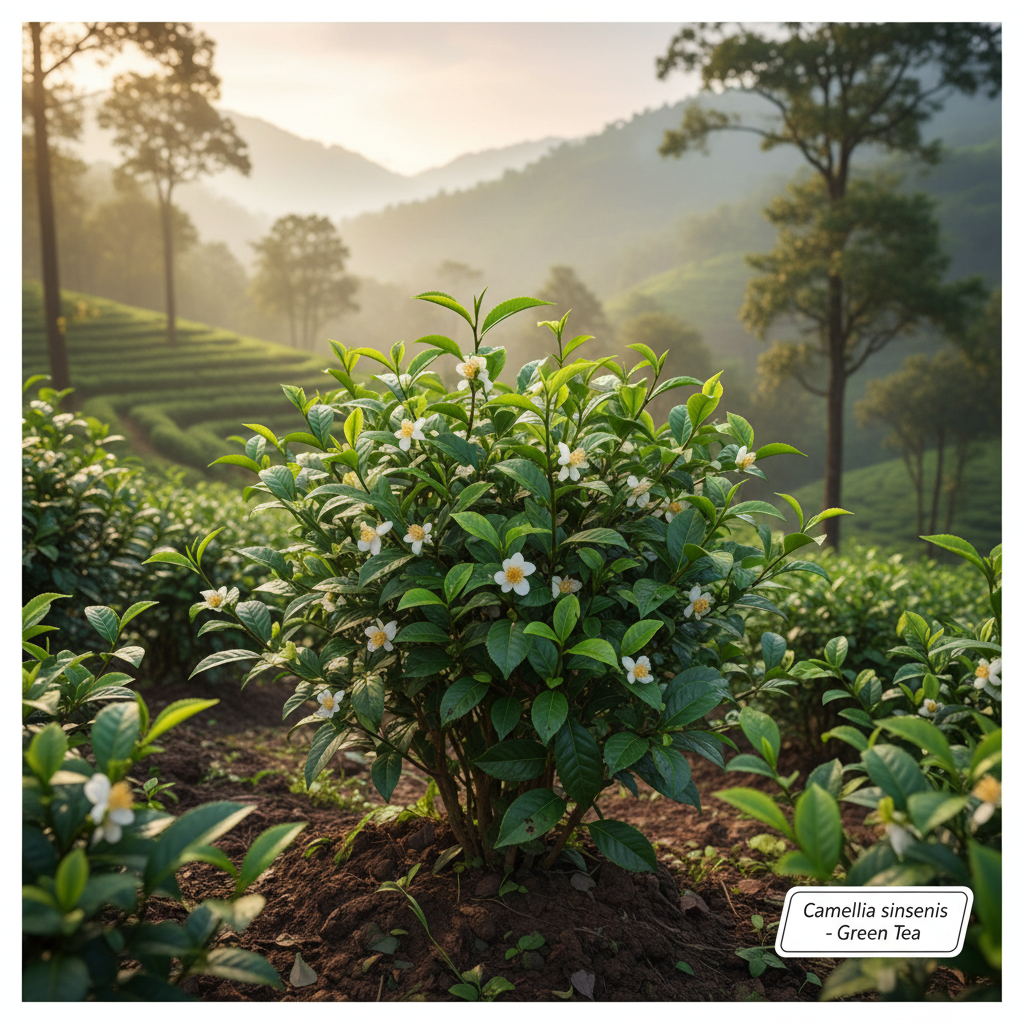
Green Tea
Camellia sinensis
Family: Theaceae
Also known as: Matcha (powder form)
At a glance
What it is
Traditional use
What modern research suggests (Well-supported)
How people use it
Safety + interactions
May interact with: Blood thinners, Stimulants
Name clarity note
All true tea (white, green, oolong, black) comes from Camellia sinensis. Processing differs.
Quality notes
Shade-grown teas (like matcha) have higher L-theanine. Quality varies widely—look for fresh, whole leaves.
FAQs
Is matcha better than regular green tea?
Matcha provides the whole leaf, so more nutrients, but also more caffeine. Both are beneficial.
How much should I drink?
Studies show benefits with 2-5 cups daily. More isn't always better.
Community Insights
Premium members share their experiences and knowledge about this plant.
Disclaimer: This content is educational and not medical advice. Always consult a qualified healthcare provider before using any herbs or supplements, especially if you are pregnant, nursing, taking medications, or have a medical condition.