Plant MedicineGinger
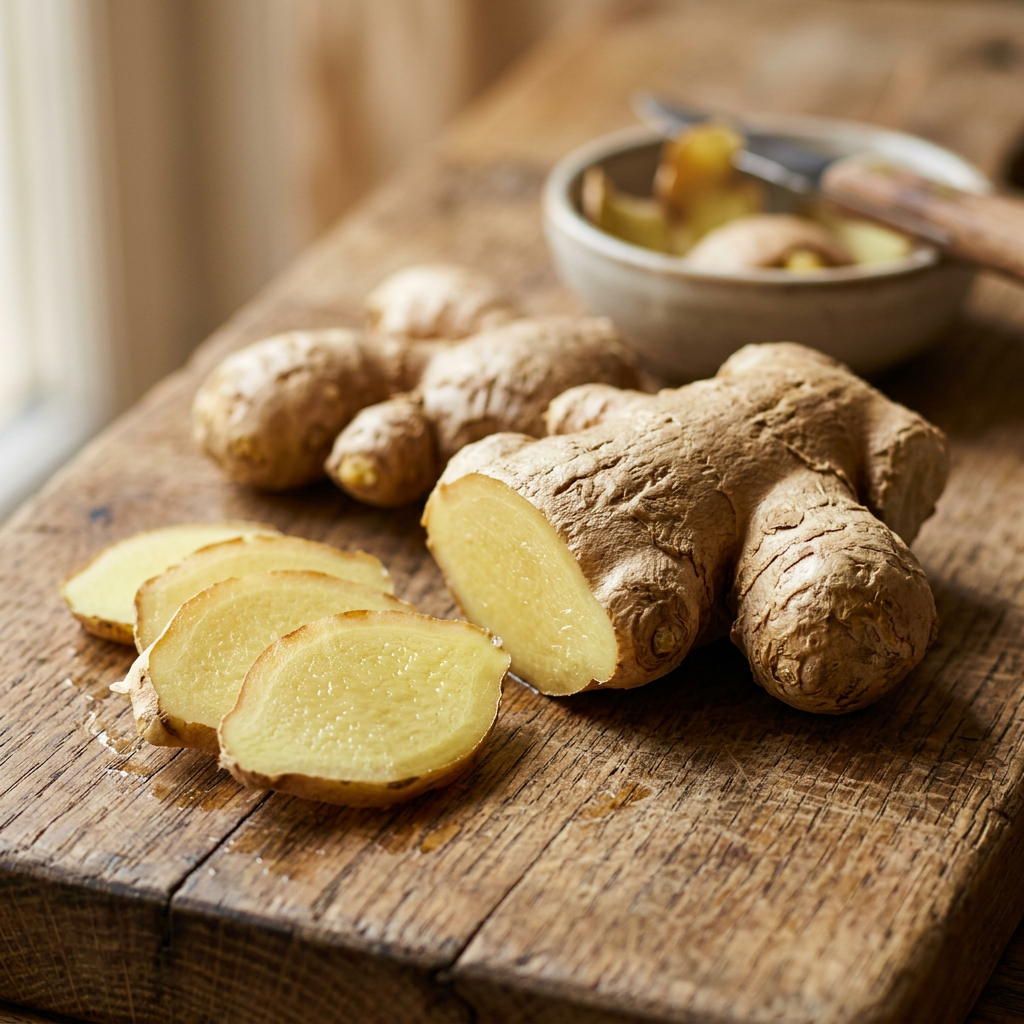
Ginger
Zingiber officinale
Family: Zingiberaceae
Also known as: Common ginger, Garden ginger, Sheng jiang, Sunthi
At a glance
Best for: Nausea, Morning sickness, Motion sickness, Digestive relief, Anti-inflammatory
Parts used: Rhizome
Common forms: Culinary, Tea, Capsule, Tincture, Crystallised
Evidence level: Well-supported
Cautions: High doses may cause heartburn; May interact with blood thinners at high doses
What it is
Ginger is the rhizome (underground stem) of Zingiber officinale. Its key active compounds are gingerols (fresh ginger) and shogaols (dried/cooked ginger)—both are potent anti-inflammatory and anti-nausea compounds. It is one of the most widely used spices and medicines in the world.
Traditional use
Used in Ayurveda, Traditional Chinese Medicine, and throughout Asian culinary medicine for thousands of years. Known as the 'universal medicine' in Ayurveda (vishvabheshaja). Traded along the Silk Road. Introduced to Europe by Arab traders and became one of the most important medieval medicines.
What modern research suggests (Well-supported)
Multiple meta-analyses confirm efficacy for nausea and vomiting of pregnancy (comparable to vitamin B6), chemotherapy-induced nausea, and motion sickness. Several RCTs show significant reduction in osteoarthritis pain. Anti-inflammatory effects comparable to NSAIDs at high doses. Blood glucose lowering effects in type 2 diabetes.
How people use it
For nausea: 1–1.5g divided through the day (250mg capsules with each meal). Fresh ginger tea: grate 1 inch of fresh ginger into boiling water, steep 10 minutes. For joint pain: 510–1000mg ginger extract daily. For motion sickness: take 1–2g 30 minutes before travel. Crystallised ginger and ginger ale (with real ginger) also effective for mild nausea.
Safety + interactions
Extremely safe with millennia of food use. At high supplemental doses (>5g/day) may cause heartburn, mouth irritation. Mild blood-thinning effect—caution with anticoagulants at high doses. Generally very safe in pregnancy for nausea at recommended doses (1–1.5g/day).
May interact with: Warfarin, Aspirin, Diabetes medications
FAQs
Is ginger safe to take during pregnancy for morning sickness?
Yes. Multiple clinical trials and meta-analyses support ginger's safety and efficacy for pregnancy nausea at doses of 1–1.5g per day. It is one of the most evidence-backed natural remedies for morning sickness. Always discuss with your midwife or obstetrician.
Community Insights
Premium members share their experiences and knowledge about this plant.
Disclaimer: This content is educational and not medical advice. Always consult a qualified healthcare provider before using any herbs or supplements, especially if you are pregnant, nursing, taking medications, or have a medical condition.