Plant MedicineEvening Primrose
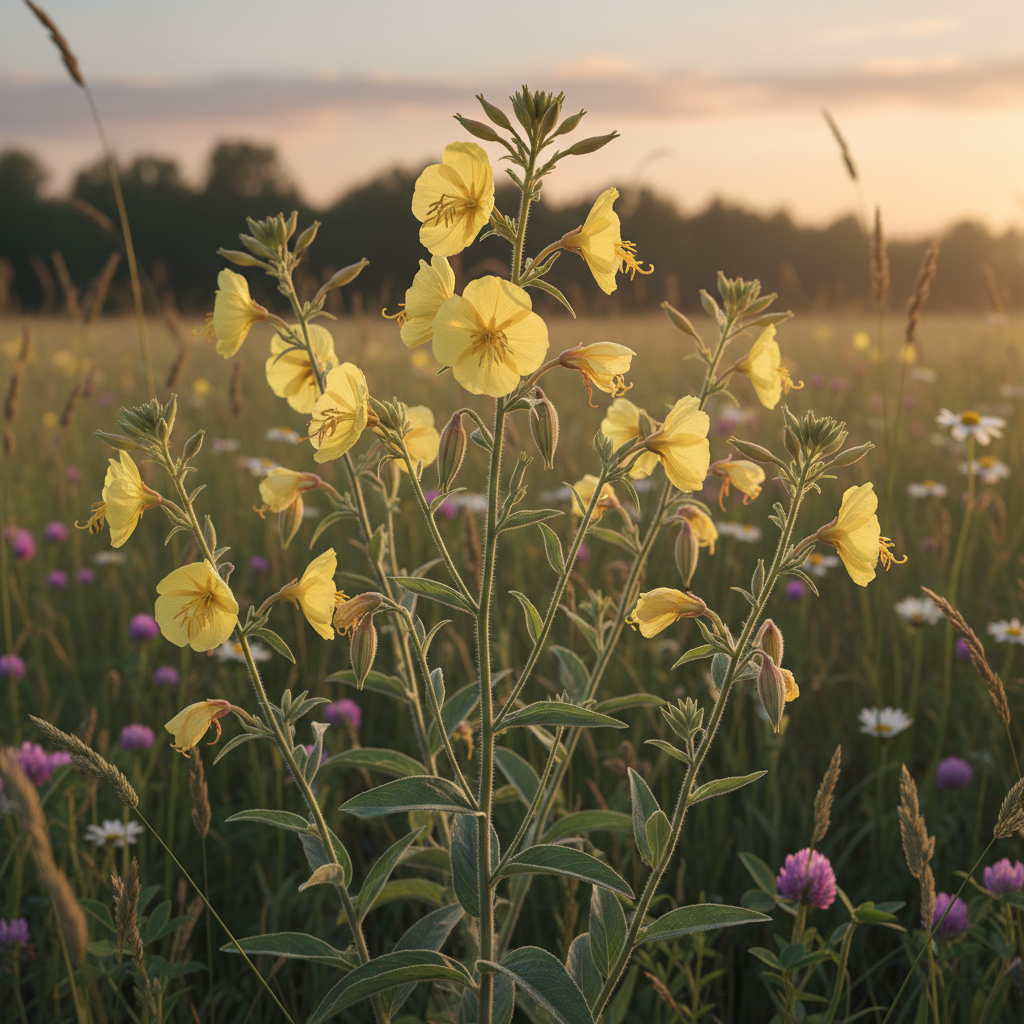
Evening Primrose
Oenothera biennis
Family: Onagraceae
At a glance
Best for: Skin health, PMS, Inflammation
Parts used: Seeds (oil)
Common forms: Oil capsules
Evidence level: Promising
Cautions: May increase bleeding risk
What it is
Evening primrose is a wildflower that blooms in the evening. The seeds yield oil rich in GLA, an omega-6 fatty acid.
Traditional use
Native Americans used the whole plant for wounds and digestive complaints. Oil use is more recent (1930s onward).
What modern research suggests (Promising)
Studies show benefits for eczema (though evidence is mixed), PMS symptoms, and possibly rheumatoid arthritis. GLA has anti-inflammatory effects.
How people use it
Oil capsules (500-1000mg, 2-3x daily, providing 40-100mg GLA). Take with food for best absorption. Effects take weeks to months.
Safety + interactions
Generally safe. May increase bleeding risk—avoid before surgery. Mild digestive upset possible. Store properly to prevent rancidity.
May interact with: Blood thinners
Quality notes
Cold-pressed oil in softgels. Look for GLA content (8-10%). Store in cool, dark place to prevent rancidity.
FAQs
Will it help my eczema?
Evidence is mixed. Some studies show benefits, others don't. May be worth trying for 3 months.
Is it the same as fish oil?
No—fish oil is omega-3, evening primrose is omega-6 (GLA). Both are beneficial but different.
Community Insights
Premium members share their experiences and knowledge about this plant.
Disclaimer: This content is educational and not medical advice. Always consult a qualified healthcare provider before using any herbs or supplements, especially if you are pregnant, nursing, taking medications, or have a medical condition.