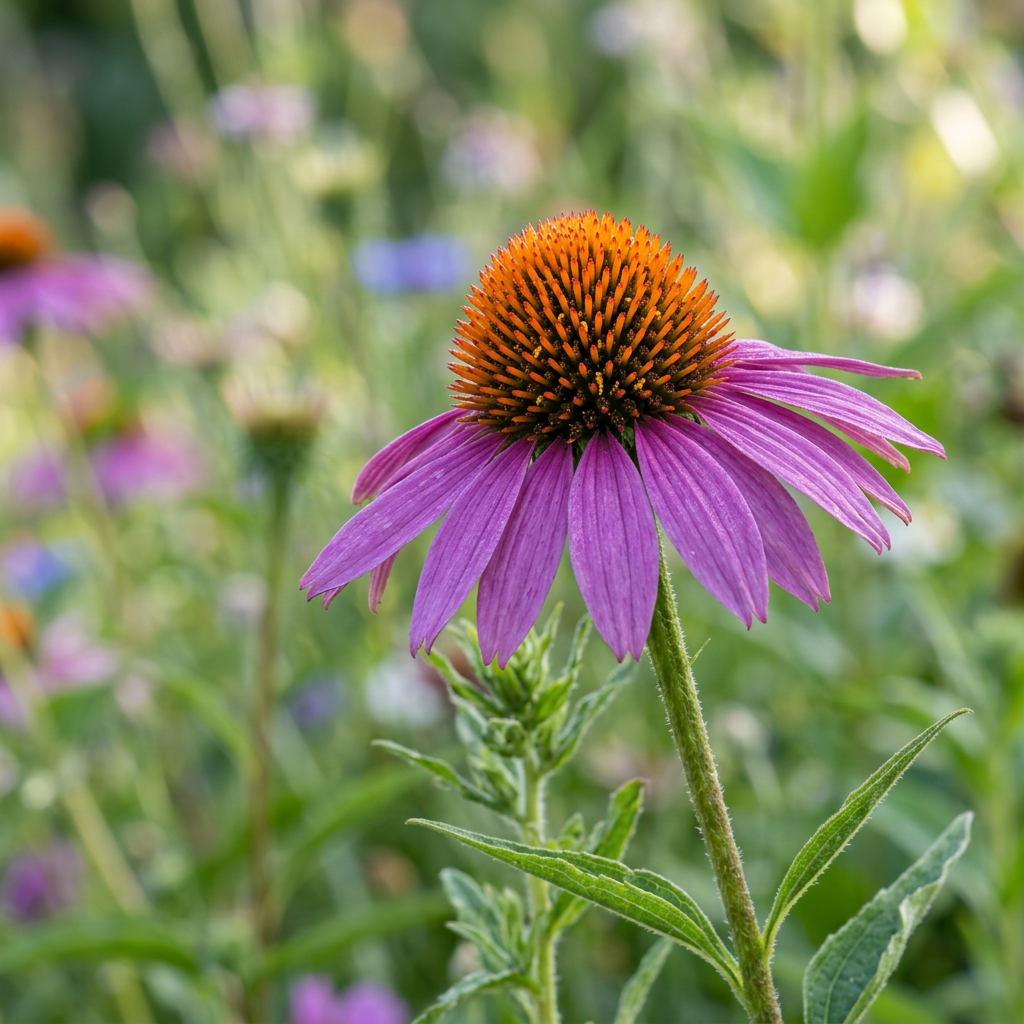
Echinacea
Echinacea purpurea
Family: Asteraceae
Also known as: Purple coneflower, American coneflower, Black sampson, Red sunflower
At a glance
What it is
Traditional use
What modern research suggests (Promising)
How people use it
Safety + interactions
May interact with: Immunosuppressants, Corticosteroids, Medications metabolised by CYP3A4
Name clarity note
Three Echinacea species are used medicinally: E. purpurea, E. angustifolia, and E. pallida. They have different phytochemical profiles. E. purpurea aerial parts and E. angustifolia root are the most studied. Different preparations (pressed juice, dried aerial parts, root extract) have different evidence levels. Many products mix species and plant parts—check labels carefully.
Quality notes
Quality is highly variable. The pressed juice of E. purpurea aerial parts (as used in Echinagard/Echinaforce products) is the most rigorously studied preparation. Look for standardised products specifying the species, plant part, and if possible the preparation method.
FAQs
Should I take echinacea every day to prevent colds?
Evidence for continuous prevention is limited. Current evidence best supports taking echinacea at the onset of symptoms or during high-exposure periods. Continuous daily use throughout winter has less robust evidence and some concerns about immune tolerance with very long-term use.
Community Insights
Premium members share their experiences and knowledge about this plant.
Disclaimer: This content is educational and not medical advice. Always consult a qualified healthcare provider before using any herbs or supplements, especially if you are pregnant, nursing, taking medications, or have a medical condition.