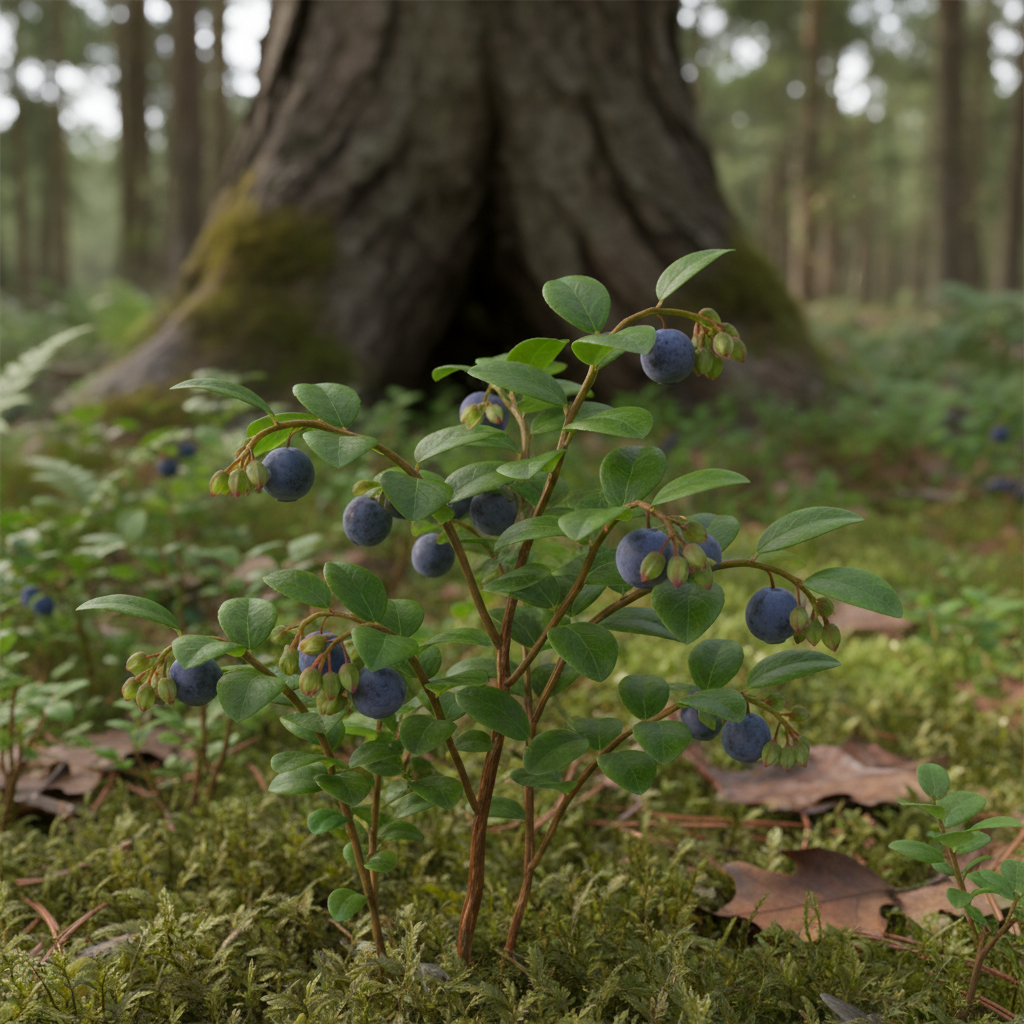
Bilberry
Vaccinium myrtillus
Family: Ericaceae
Also known as: European blueberry, Whortleberry, Wild Blueberry
At a glance
What it is
Traditional use
What modern research suggests (Well-supported)
How people use it
Safety + interactions
May interact with: Blood thinners, Diabetes medications
Name clarity note
Often confused with American blueberry (Vaccinium corymbosum), but bilberry has darker flesh and higher anthocyanin content.
Quality notes
Standardized extracts (25% anthocyanosides) are most studied. Fresh berries are nutritious but less concentrated.
FAQs
Will it really help my night vision?
Some studies show modest improvements in low-light vision and reduced eye fatigue, especially in those with visual strain.
Can I eat regular blueberries instead?
Blueberries are healthy but have lower anthocyanin content than bilberry. Standardized bilberry extracts are more potent.
Community Insights
Premium members share their experiences and knowledge about this plant.
Disclaimer: This content is educational and not medical advice. Always consult a qualified healthcare provider before using any herbs or supplements, especially if you are pregnant, nursing, taking medications, or have a medical condition.