Plant MedicineAshwagandha
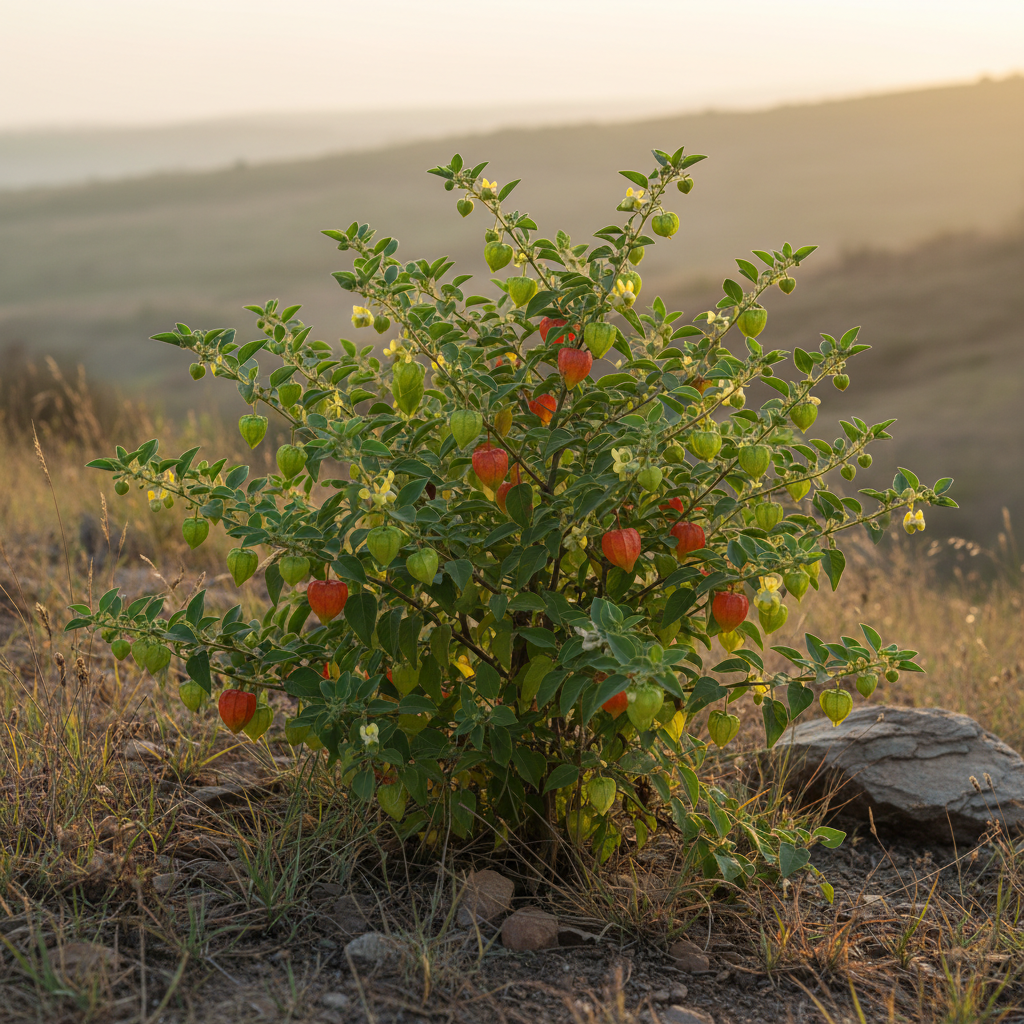
Ashwagandha
Withania somnifera
Family: Solanaceae
Also known as: Indian ginseng, Winter cherry, Withania
At a glance
Best for: Stress support, Sleep, Energy
Parts used: Root, Leaves
Common forms: Powder, Capsules, Extract, Tea
Evidence level: Promising
Cautions: Pregnancy—Avoid; Thyroid conditions—Caution
What it is
Ashwagandha is a small shrub with yellow flowers. The root is considered one of the most important herbs in Ayurvedic medicine.
Traditional use
Used for over 3,000 years in Ayurveda as a rejuvenating tonic (rasayana) for stress, vitality, and longevity.
What modern research suggests (Promising)
Multiple studies show reduced cortisol and perceived stress, improved sleep quality, potential benefits for anxiety, testosterone, and muscle strength.
How people use it
Standardized extract (300-600mg daily), traditional powder (3-6g), capsules. Often taken at night for sleep support.
Safety + interactions
Generally well-tolerated. Avoid during pregnancy (may cause miscarriage). May affect thyroid function—monitor if on thyroid meds. May enhance sedative effects.
May interact with: Sedatives, Thyroid medications, Immunosuppressants
Quality notes
Look for KSM-66 or Sensoril standardized extracts used in research.
FAQs
Will it make me sleepy during the day?
Most people find it calming but not sedating. Some take it at night to support sleep.
How long before I see results?
Studies typically show effects after 4-8 weeks of consistent use.
Community Insights
Premium members share their experiences and knowledge about this plant.
Disclaimer: This content is educational and not medical advice. Always consult a qualified healthcare provider before using any herbs or supplements, especially if you are pregnant, nursing, taking medications, or have a medical condition.