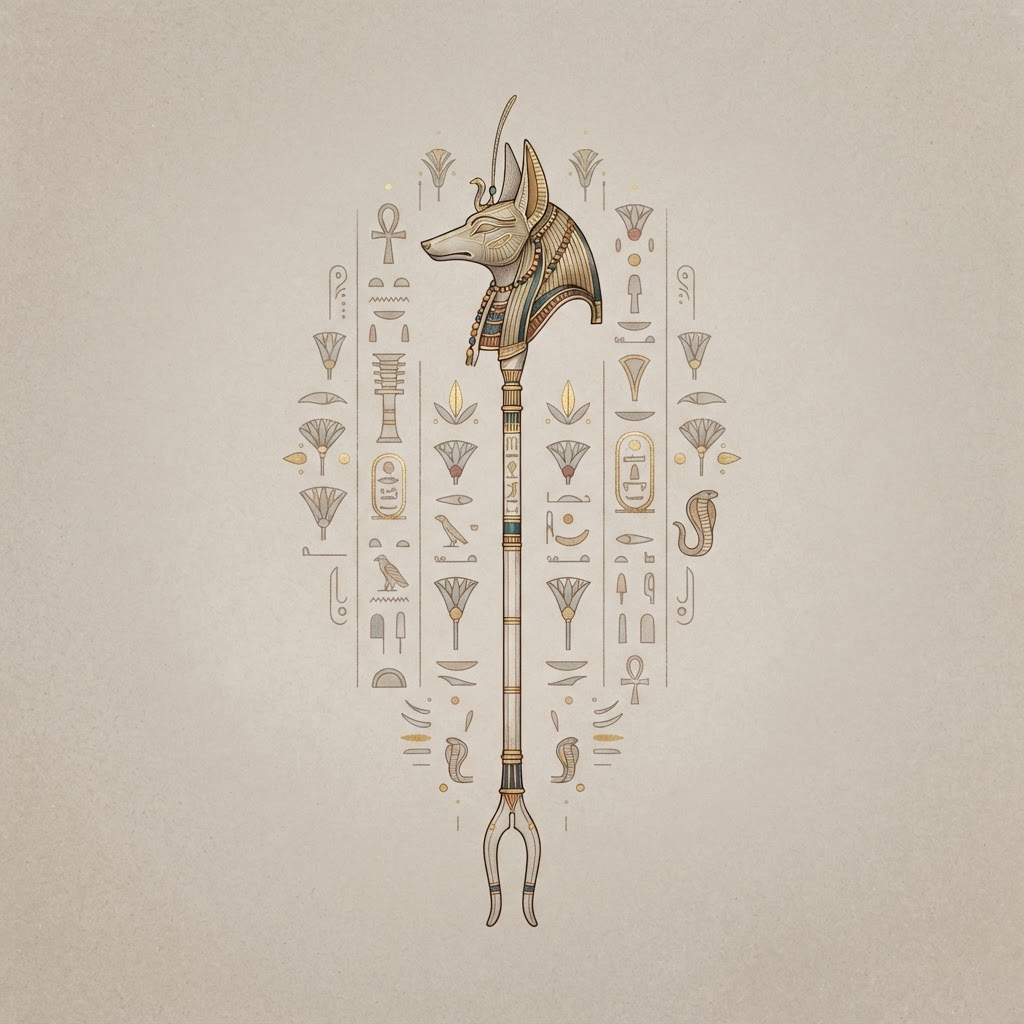
Was Scepter: Meaning, Origin & Symbolism
Also known as: Staff of Dominion, Scepter of Power
Ancient Egyptian
Ancient Egyptian
Solar Plexus Chakra
Root Chakra
Earth
Protection
Wisdom
Transformation
The Was Scepter is a stylized staff symbolizing divine power, dominion, authority, and sovereign control.
Quick Facts
- Category
- Ancient Egyptian
- Culture / Origin
- Ancient Egyptian
- Geographic Origin
- Nile River Valley, Egypt
- Historical Period
- Early Dynastic through Greco-Roman Period
- Estimated Age
- circa 3000 BCE
- Element
- Earth
- Planet
- Mars
- Chakra
- Solar Plexus, Root
- Zodiac
- Aries, Capricorn
- Deities
- Set, Ptah, Anubis, Amun
- Verification
- unverified
What is Was Scepter?
The Was Scepter is an iconic ancient Egyptian hieroglyphic staff featuring a straight vertical rod, topped with the stylized head of a sacred animal (often associated with the enigmatic Set animal or a canine) and terminating at the base in a bifurcated, two-pronged fork.
Carried primarily by deities, pharaohs, and occasionally high-ranking officials, the Was scepter materialized the concept of 'dominion' (was) and absolute spiritual authority over the forces of order and chaos. In temple reliefs, gods like Amun, Ptah, and Anubis hold it in their left hand while clasping the Ankh in their right, indicating that they bestow both divine dominion and life upon the pharaoh.
Over centuries, the scepter was also buried alongside deceased rulers and nobles in the form of wooden funeral rods, intended to equip them with the spiritual mastery needed to govern their own destiny in the netherworld and fend off underworld demons.
Meaning of Was Scepter
The primary meaning of the Was Scepter is divine dominion, royal authority, power, and sovereign control.
Origin & History
The Was scepter is one of the earliest emblems of authority in Egyptian art, appearing on predynastic pottery and early ceremonial slate palettes. It was intimately connected to the city of Thebes, which was originally called 'Waset', meaning 'City of the Scepter'.
Architectural columns in temples were sometimes sculpted in the shape of giant Was scepters, literally and symbolically upholding the roof of the temple, which represented the sky vaulted over the earth.
Spiritual Meaning
In spiritual traditions, the Was Scepter represents self-mastery, personal authority, and the conscious control of chaotic internal forces.
The scepter indicates that true power is not tyrannical domination over others, but spiritual dominion over one's own lower instincts, fears, and internal turmoil.
Symbolism
The head of the Set-like beast at the top symbolizes mastery over chaos and instinctual beasts, while the forked base was used practically to manipulate venomous serpents and symbolically to pin down chaotic threats.
Traditional Uses
Understood as an instrument of divine transmission, channeling power from the gods to the Pharaoh to rule the two lands with cosmic legitimacy.
Modern Spiritual Uses
Modern occult and ceremonial magic traditions view the Was Scepter as a wand of energetic direction, boundary assertion, and personal self-governance.
Healing Associations
Channeling focused vitality to overcome mental weakness, lethargy, and lack of self-confidence.
Protection Associations
Serves to banish chaotic entities, command respect, and suppress malevolent astral influences.
How the Symbol Is Used
- •Ceremonial ritual
- •Empowerment meditation
- •Chakra grounding
Cultural Context
Ancient Egyptian — Nile River Valley, Egypt (Early Dynastic through Greco-Roman Period)
Sources & References
- 1.Wilkinson, Richard H. 'Reading Egyptian Art: A Hieroglyphic Guide to Ancient Egyptian Painting and Sculpture.' Thames & Hudson, 1992.
- 2.Shaw, Ian, and Paul Nicholson. 'The British Museum Dictionary of Ancient Egypt.' British Museum Press, 1995.
This content is for educational and informational purposes only. Where modern spiritual interpretations are described, they are not presented as ancient historical facts. It is not a substitute for professional medical or spiritual advice.