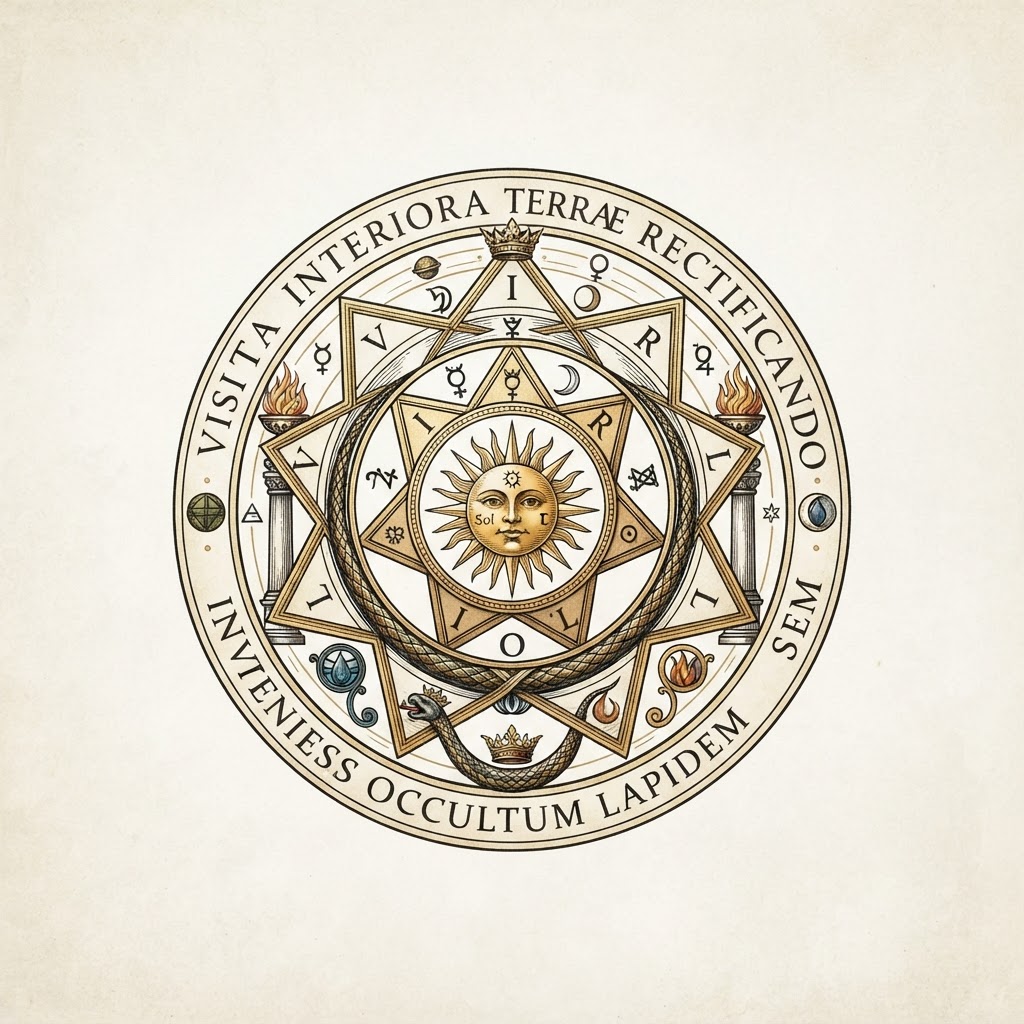
V.I.T.R.I.O.L. Seal: Meaning, Origin & Symbolism
Also known as: Alchemical Vitriol, Visita Interiora Terrae, The Hermetic Emerald
Alchemical
European Hermetic
Root Chakra
Third Eye Chakra
Earth
Transformation
Wisdom
Healing
A famous Hermetic motto and emblem commanding inner introspection to discover the true Philosopher's Stone.
Quick Facts
- Category
- Alchemical
- Culture / Origin
- European Hermetic
- Geographic Origin
- Germany and Central Europe
- Historical Period
- Early Modern
- Estimated Age
- circa 1600 CE
- Element
- Earth
- Planet
- Saturn
- Chakra
- Root, Third Eye
- Zodiac
- Scorpio, Capricorn
- Deities
- Pluto, Hades
- Verification
- unverified
What is V.I.T.R.I.O.L. Seal?
The V.I.T.R.I.O.L. Seal is one of the most definitive philosophical glyphs of Western Hermeticism, popularized in Basil Valentine's 1613 work Azoth of the Philosophers. It centers on an acronym for the Latin phrase: 'Visita Interiora Terrae Rectificando Invenies Occultum Lapidem', which translates to 'Visit the interior of the earth; through rectification you will find the hidden stone.' Visually, the emblem displays a central human face enveloped by a seven-pointed star, with planetary symbols, alchemical tools, and allegorical figures placed around the periphery. While vitriol physically referred to mineral iron or copper sulfates that yielded powerful acids, spiritually it serves as an uncompromising imperative for the seeker to journey into the dark, raw terrain of their own inner psyche to find true enlightenment.
Meaning of V.I.T.R.I.O.L. Seal
The V.I.T.R.I.O.L. seal denotes the necessity of exploring the unconscious depths to uncover the enlightened divine core.
Origin & History
Introduced in the late 16th and early 17th centuries through Rosicrucian and Paracelsian manuscripts, the seal encapsulated the shift toward spiritual alchemy. Attributed pseudepigraphically to the legendary monk Basil Valentine, it served as a summary diagram of the entire Hermetic path, widely circulated among European secret societies and operative mystery schools.
Spiritual Meaning
Spiritually, this emblem demands deep shadow work and radical honesty. It warns that true spiritual treasures cannot be gained through superficial positivity, but through diving into the repressed, forgotten, and unrectified corners of the soul to purify and transmute them into divine gold.
Symbolism
The seven points of the star represent the seven classical planets and metals; the subterranean central face represents the internal self; the Latin motto forms a ring holding the entire spiritual journey together.
Traditional Uses
Understood as both the chemical production of sulfuric oil used as a solvent and the contemplative descent into the body to release the divine spirit.
Modern Spiritual Uses
Regarded by depth psychologists and modern esoteric practitioners as the ultimate historical motto for shadow work and subconscious integration.
Healing Associations
Associated with uncovering the root causes of trauma and emotional wounds buried deep within the subconscious.
How the Symbol Is Used
- •Shadow Work
- •Hermetic Meditation
- •Rosicrucian Contemplation
Cultural Context
European Hermetic — Germany and Central Europe (Early Modern)
Sources & References
- 1.Basilius Valentinus, Azoth of the Philosophers (1613)
- 2.Edinger, Edward F., Ego and Archetype (1972)
- 3.McLean, Adam, The Alchemical Mandala (1989)
This content is for educational and informational purposes only. Where modern spiritual interpretations are described, they are not presented as ancient historical facts. It is not a substitute for professional medical or spiritual advice.