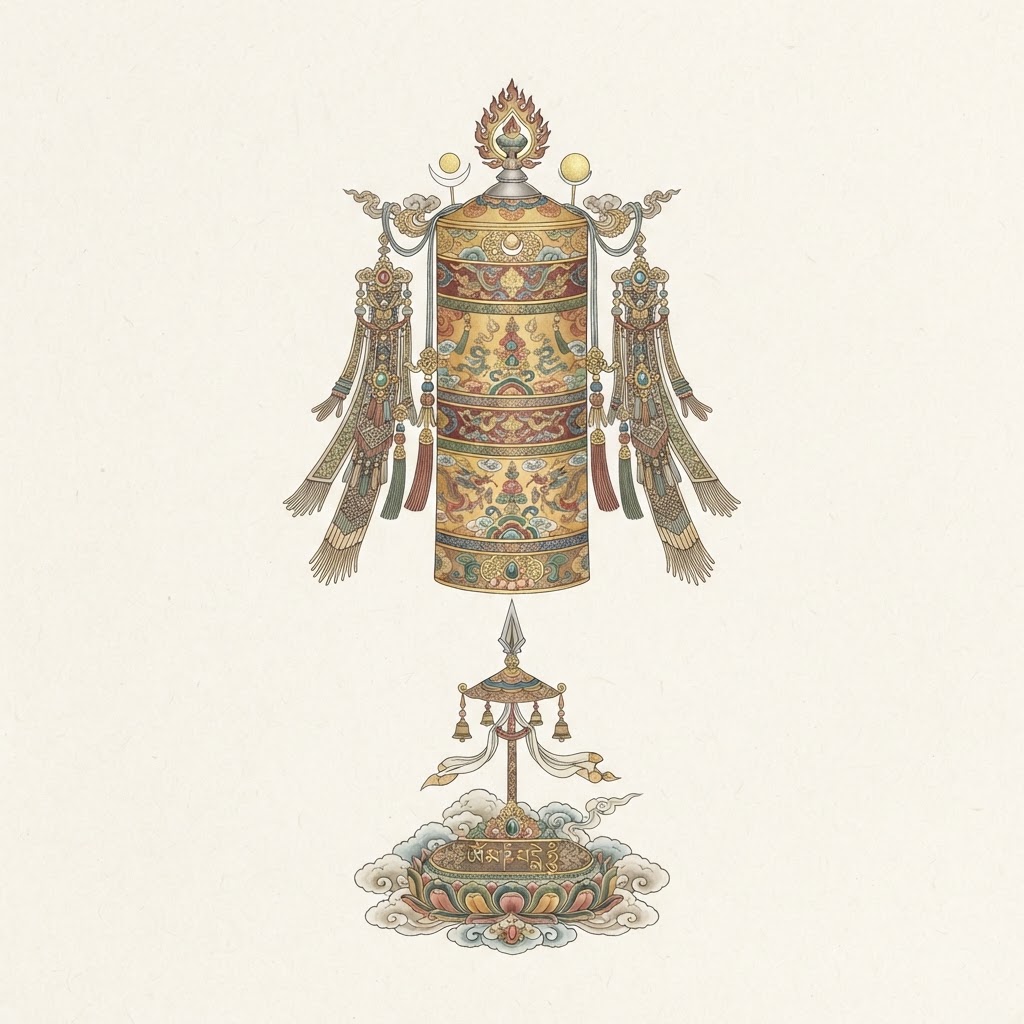
Victory Banner: Meaning, Origin & Symbolism
Also known as: Dhvaja, Rgyal-mtshan, Standard of Victory
Buddhist
Buddhist
Solar Plexus Chakra
Fire
Protection
Wisdom
Transformation
A military banner transformed into an emblem of triumph over ignorance, death, passion, and spiritual obstacles.
Quick Facts
- Category
- Buddhist
- Culture / Origin
- Buddhist
- Geographic Origin
- Ancient India
- Historical Period
- Classical Antiquity
- Estimated Age
- circa 4th century BCE
- Element
- Fire
- Planet
- Sun
- Chakra
- Solar Plexus
- Zodiac
- Leo
- Deities
- Gautama Buddha, Vaishravana
- Verification
- unverified
What is Victory Banner?
The Victory Banner (Sanskrit: Dhvaja; Tibetan: Rgyal-mtshan) is an important emblem within the Eight Auspicious Symbols (Ashtamangala). Originating as a military flag mounted upon chariot poles during ancient Indian warfare, Buddhism transformed it into a visual proclamation of spiritual supremacy. The banner symbolizes the Buddha's absolute triumph over Mara, the personification of worldly temptation, delusion, fear, and death. Usually depicted as a cylindrical cloth pavilion with ornate multi-tiered draperies, parasol tops, and silk streamers, the victory banner is commonly placed upon the rooftops of Tibetan monasteries and temples to announce the reigning presence of the Buddha's Dharma over all discordant conditions.
Meaning of Victory Banner
The triumph of enlightened insight over the four Maras: pride, desire, death, and composite conditioning.
Origin & History
Standard flags (dhvaja) signaled regiment identities on Vedic battlefields. In Buddhist scripture, on the night before his enlightenment beneath the Bodhi tree, Siddhartha Gautama faced and subdued the entire host of Mara, giving rise to the banner as a monument to inner spiritual victory.
Spiritual Meaning
The banner stands for triumphant realization achieved through self-mastery. It indicates that darkness and confusion are ultimately insubstantial and yield invariably to steadfast awareness and resolute truth.
Symbolism
The cylinders and hanging silk ribbons symbolize various spiritual remedies used to subdue passions; the jewel top finial signifies the supreme victory of the Buddha's teachings.
Traditional Uses
Traditionally, eleven types of victory banners correspond to specific methods for conquering emotional afflictions such as arrogance, wrath, and lust.
Modern Spiritual Uses
In contemporary personal growth, it represents triumph over self-doubt, overcoming self-sabotaging patterns, and celebrating internal milestones.
Healing Associations
Restores confidence, combats feelings of defeatism, and strengthens the will.
Protection Associations
Repels demonic influences, self-limiting fears, existential anxiety, and malignant energies.
How the Symbol Is Used
- •Temple Architecture
- •Protective Invocations
- •Processional Rites
Cultural Context
Buddhist — Ancient India (Classical Antiquity)
Sources & References
- 1.The Handbook of Tibetan Buddhist Symbols by Robert Beer
- 2.The Life of the Buddha by Bhikkhu Nanamoli
This content is for educational and informational purposes only. Where modern spiritual interpretations are described, they are not presented as ancient historical facts. It is not a substitute for professional medical or spiritual advice.