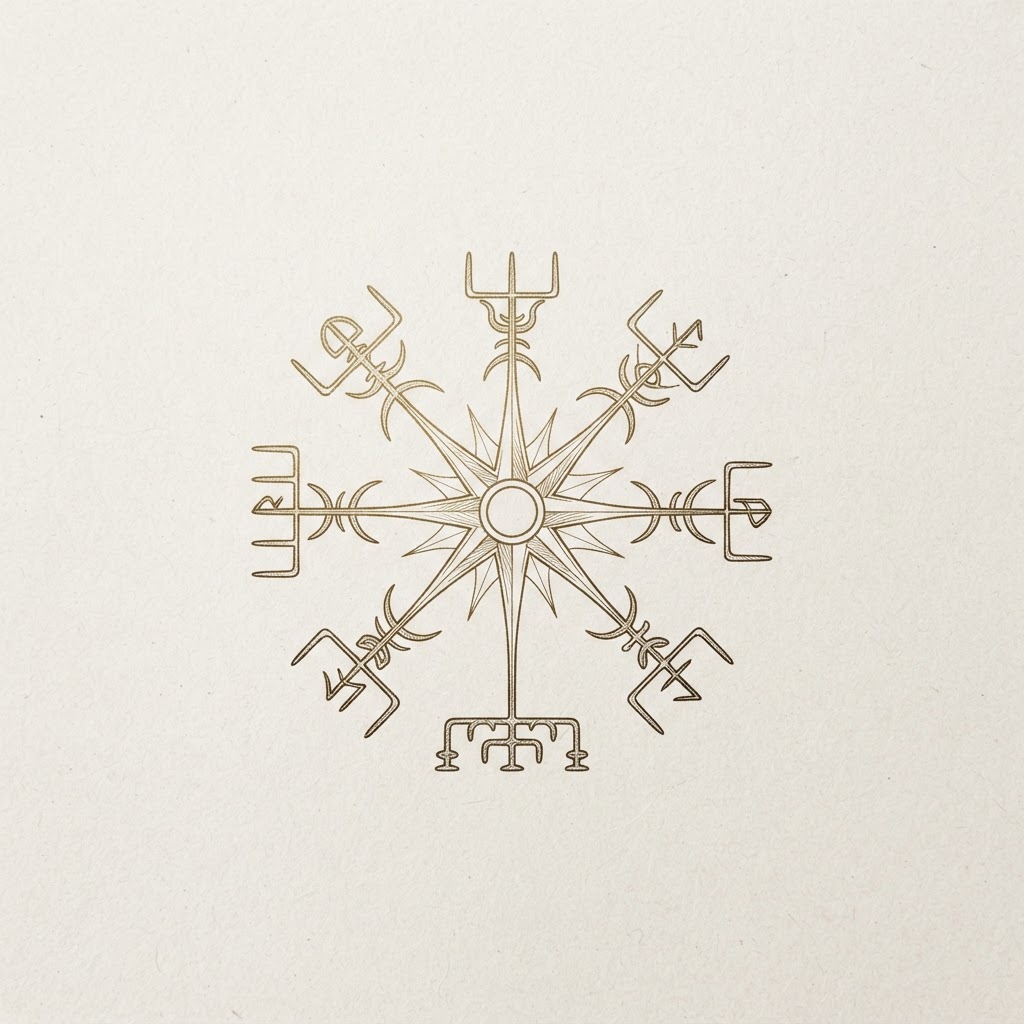
Vegvísir: Meaning, Origin & Symbolism
Also known as: The Wayfinder, Runic Compass, Icelandic Compass
Norse/Germanic
Norse/Icelandic
Third Eye Chakra
Heart Chakra
Air
Clarity
Protection
Wisdom
Transformation
An Icelandic magical stave created to prevent the bearer from losing their way in storms and bad weather.
Quick Facts
- Category
- Norse/Germanic
- Culture / Origin
- Norse/Icelandic
- Geographic Origin
- Iceland
- Historical Period
- Early Modern to 19th Century
- Estimated Age
- circa 19th century CE (documented form)
- Element
- Air
- Planet
- Mercury
- Chakra
- Third Eye, Heart
- Zodiac
- Sagittarius, Pisces
- Deities
- Njord, Odin
- Verification
- unverified
What is Vegvísir?
The Vegvísir (literally 'Way-pointer' in Icelandic) is an eight-armed sigil where each terminal branch displays a distinct geometric configuration. Commonly misinterpreted as an ancient Viking emblem, historical manuscripts confirm that it belongs to the post-Viking Icelandic folk magic tradition (galdrastafir). Its earliest surviving textual appearance is found in the Huld Manuscript compiled by Geir Vigfússon in 1860, and later in the Olgeirsson manuscript. The accompanying inscription explains: 'Carry this sign with you and you won't lose your way in storms or bad weather, even though the way be not known.' Its intricate structure reflects the convergence of native Icelandic magical thinking with European hermetic influences.
Meaning of Vegvísir
A protective wayfinding charm to ensure safe travel through disorienting weather and uncharted terrain.
Origin & History
Often erroneously described as a Viking compass, the Vegvísir does not appear in any Viking Age archaeological finds. It emerged centuries later among Icelandic farming and fishing communities as an amulet against the treacherous North Atlantic blizzards and mountain fogs.
Spiritual Meaning
In contemporary spiritual contexts, the Vegvísir has evolved into a beloved symbol of metaphysical orientation. It guides individuals through the dark 'storms' of life, helping seekers discover their authentic life purpose, maintain moral integrity amidst chaos, and make wise decisions when the spiritual path is obscured by doubt or grief.
Symbolism
The eight varying arms correspond metaphorically to the eight cardinal and intercardinal compass points, each holding unique energetic glyphs that harmonize inner perception with external reality.
Traditional Uses
A practical folk stave inscribed on parchment, wood, or skin to prevent maritime disaster and terrestrial disorientation during severe northern weather.
Modern Spiritual Uses
A guide for spiritual journeys, career transitions, and personal metamorphosis, functioning as a beacon of intuition and soul alignment.
Healing Associations
Relieves anxiety related to uncertainty and restores intuitive mental clarity.
Protection Associations
Protects travelers from getting physically lost and shields the psyche against spiritual disorientation.
How the Symbol Is Used
- •Travel blessing rituals
- •Tattoo magic
- •Life path meditation
- •Amulet consecration
Cultural Context
Norse/Icelandic — Iceland (Early Modern to 19th Century)
Sources & References
- 1.Huld Manuscript (ÍB 383 4to)
- 2.Stephen Flowers, Icelandic Magic
- 3.Matthías Viðar Sæmundsson, Galdrar á Íslandi
This content is for educational and informational purposes only. Where modern spiritual interpretations are described, they are not presented as ancient historical facts. It is not a substitute for professional medical or spiritual advice.