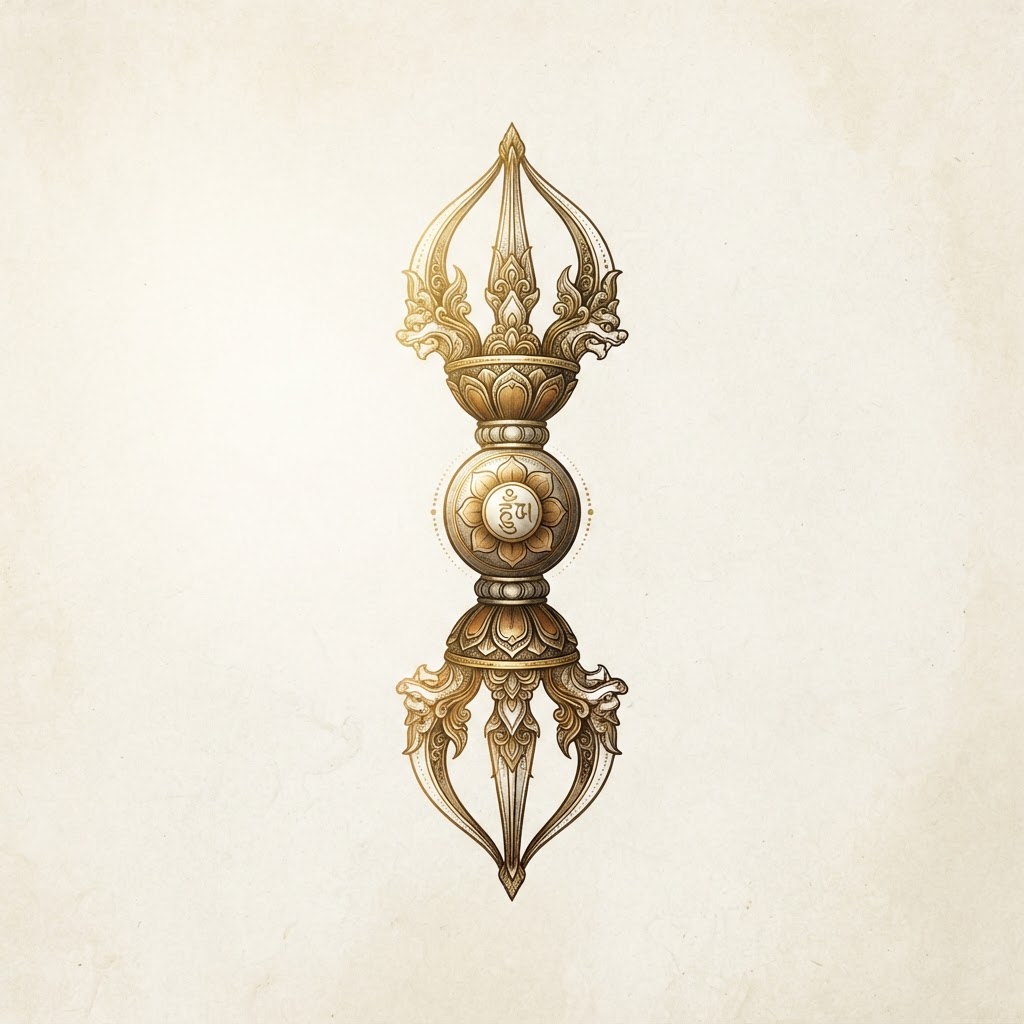
Vajra: Meaning, Origin & Symbolism
Also known as: Dorje, Thunderbolt Scepter, Adamantine Scepter
Buddhist
Buddhist
Crown Chakra
Heart Chakra
Fire
Protection
Transformation
Wisdom
Courage
The indestructible ritual weapon representing the diamond-like clarity of enlightened mind and the swift power of spiritual awakening.
Quick Facts
- Category
- Buddhist
- Culture / Origin
- Buddhist
- Geographic Origin
- Ancient India / Tibet
- Historical Period
- Classical Antiquity
- Estimated Age
- circa 1st millennium BCE
- Element
- Fire
- Planet
- Mars
- Chakra
- Crown, Heart
- Zodiac
- Aries
- Deities
- Vajrasattva, Vajrapani, Padmasambhava
- Verification
- unverified
What is Vajra?
The Vajra (known as Dorje in Tibetan) is the paramount ritual implement and conceptual symbol of Vajrayana Buddhism. Deriving from the ancient Sanskrit term for both diamond and thunderbolt, the vajra encapsulates indestructible spiritual force, absolute reality, and the unyielding nature of enlightenment. Just as a diamond can cut any substance while remaining uncut, the awakened mind cleaves through delusion without being perturbed by ignorance.
In Tibetan Buddhist liturgies, the vajra is held in the right hand representing skillful means (Upaya) and masculine dynamic compassion, while the ritual bell (Ghanta) is held in the left hand representing wisdom (Prajna) and feminine insight. Handled together during ritual and meditation, their integration manifests the non-dual state of complete enlightenment.
Meaning of Vajra
The Vajra represents the indestructible, immutable, and radiant nature of ultimate spiritual reality and the awakened intellect.
Origin & History
Originally the devastating lightning weapon of the Vedic god Indra, the vajra was transformed by esoteric Buddhism into an instrument of spiritual conquest. Legend tells of the Buddha grasping Indra's sharp-pronged weapon and bending the prongs inward, converting a tool of destruction into a peaceful scepter of spiritual subjugation over the ego and inner afflictions.
Spiritual Meaning
In esoteric practice, it signifies Sunyata (emptiness)—the foundational, indestructible condition of reality that can never be created, corrupted, or destroyed. It acts as an instrument that cuts through mental fixations with the swiftness of lightning.
Symbolism
The central sphere represents the Dharmakaya (truth body). From lotus bases on either side emerge prongs (commonly five or nine), representing the Five Wisdoms and the transformation of the five mental poisons into enlightened awareness.
Traditional Uses
In Tantric Buddhism, it is the primary instrument employed to anchor mantras, seal sacred spaces, and bind negative psychological demons through transformative power.
Modern Spiritual Uses
Contemporary practitioners regard the vajra as an emblem of inner resilience, unshakable psychological boundaries, and clarity during life crises.
Healing Associations
Cuts through paralyzing doubt, breaks depressive apathy, and energizes the spiritual heart.
Protection Associations
Powerful protection against spiritual stagnation, psychic disturbances, and malevolent inner forces.
How the Symbol Is Used
- •Tantric sadhana
- •Mudra recitation
- •Space clearing rituals
- •Tibetan deity meditation
Cultural Context
Buddhist — Ancient India / Tibet (Classical Antiquity)
Sources & References
- 1.The Handbook of Tibetan Buddhist Symbols by Robert Beer
- 2.Indo-Tibetan Buddhism by David L. Snellgrove
- 3.Secret of the Vajra World by Reginald A. Ray
This content is for educational and informational purposes only. Where modern spiritual interpretations are described, they are not presented as ancient historical facts. It is not a substitute for professional medical or spiritual advice.