Thyrsus: Meaning, Origin & Symbolism
Also known as: Bacchic Wand, Thyrsos
Greek & Roman
Ancient Greek & Roman
Sacral Chakra
Third Eye Chakra
Earth
Vitality
Transformation
Joy
Creativity
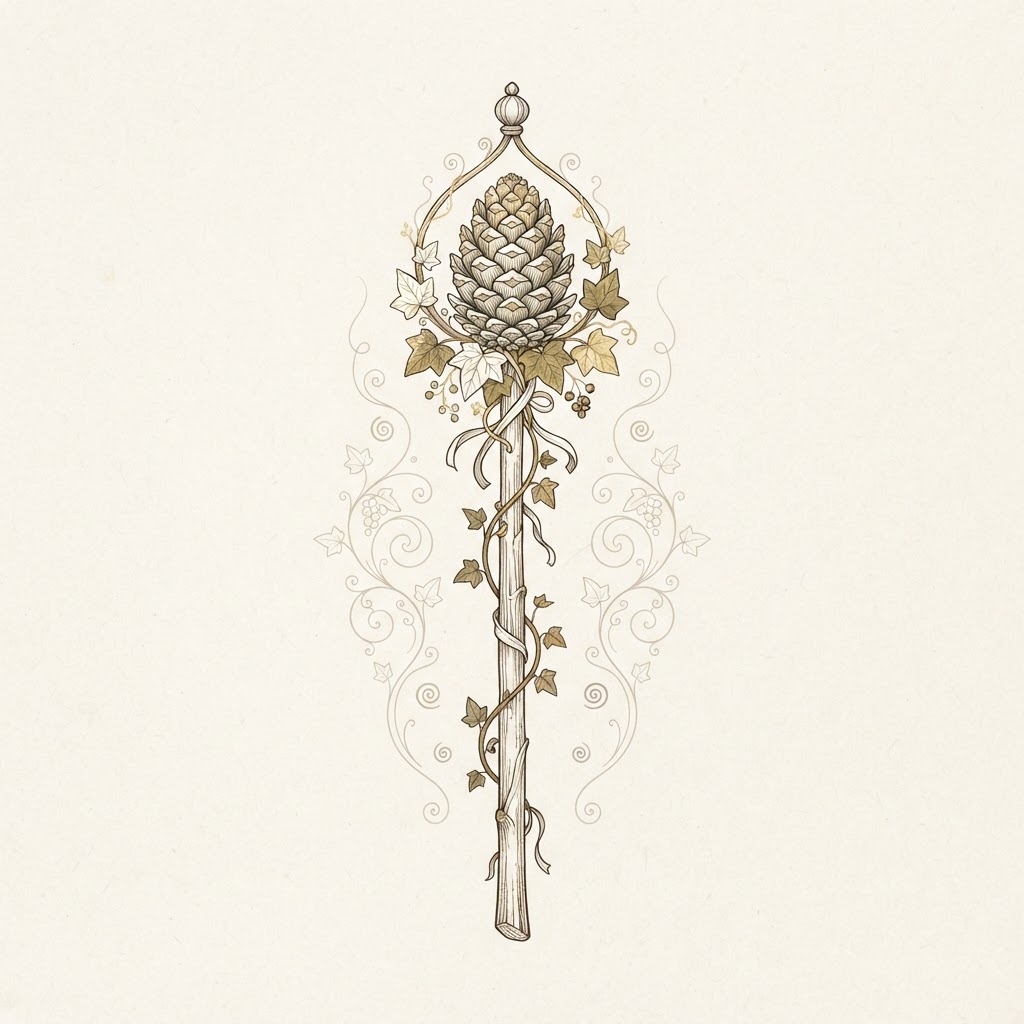
A wand made of a giant fennel stalk topped with a pinecone, symbolizing fertility, ecstatic trance, and Dionysian liberation.
Quick Facts
- Category
- Greek & Roman
- Culture / Origin
- Ancient Greek & Roman
- Geographic Origin
- Ancient Greece and Magna Graecia
- Historical Period
- Classical Antiquity
- Estimated Age
- circa 700 BCE
- Element
- Earth
- Planet
- Jupiter
- Chakra
- Sacral, Third Eye
- Zodiac
- Pisces, Taurus
- Deities
- Dionysus, Bacchus, Silenus, Pan
- Verification
- unverified
What is Thyrsus?
The Thyrsus (Greek: Thyrsos) is a ritual wand carried by the god Dionysus (Bacchus), his followers the Maenads, and the Satyrs. It is crafted from a light, hollow stalk of giant fennel (Ferula communis) crowned by a pinecone and frequently bound with ivy leaves or ribbons.
Historically, the Thyrsus was central to the Bacchic mysteries and seasonal fertility rites across Greece and Rome. Despite being constructed from fragile vegetation, myths attributed lethal and miraculous power to it: Maenads could use it to draw milk and honey from the earth or strike down opponents, illustrating the paradox of gentle nature wielding ecstatic fury.
Symbolically, the wand embodies the vital sap of life, uninhibited creative vitality, and sacred vegetation. The fennel stalk, which Prometheus used to smuggle celestial fire to mankind, combines with the evergreen pinecone to form a potent totem of cyclical life, mystery initiation, and the wild divinity of nature.
Meaning of Thyrsus
The Thyrsus signifies ecstatic religious devotion, sacred frenzy, vegetable fertility, and divine liberation from social constraints.
Origin & History
The Thyrsus appears frequently in Attic black-figure and red-figure pottery from the 6th century BCE onward, as well as in Euripides' tragedy 'The Bacchae'. It was the indispensable badge of the ecstatic celebrant in the Dionysian mysteries.
In Roman religion, the Bacchanalia adopted the Thyrsus as a primary cult instrument. When the Roman Senate banned secret Bacchic assemblies in 186 BCE due to perceived subversive activities, the Thyrsus became a subversive emblem of spiritual autonomy and subterranean mystery rites.
Spiritual Meaning
Spiritually, the Thyrsus represents the awakening of latent ecstatic consciousness and primal spiritual liberation. The pinecone, renowned as an ancient emblem of regeneration, pineal insight, and generative seeds, sits atop the hollow channel of the reed, symbolizing the rise of raw life force.
It encourages communion with the sacred chaos of nature, bypassing intellectual dogma to directly perceive the ecstasy of being, unburdened by egoic illusions.
Symbolism
The fennel stalk represents the earthly vessel and divine fire; the pinecone represents generative seed, vitality, and higher perception; ivy ribbons denote devotion and eternal life.
Traditional Uses
An instrument of Dionysian ecstasy capable of channeling supernatural joy, madness, and miraculous earthly abundance during holy festivals.
Modern Spiritual Uses
Viewed in modern neo-pagan and psychological circles as an emblem of ecstatic embodiment, shadow work, and reclaiming raw instincts.
Healing Associations
Emotional release, catharsis, breaking creative blocks, and revitalization of dormant life force.
Protection Associations
Warded against the rigid strictures of social oppression and spiritual stagnancy.
How the Symbol Is Used
- •Bacchic mysteries
- •Ecstatic dance
- •Fertility blessings
- •Shadow catharsis
Cultural Context
Ancient Greek & Roman — Ancient Greece and Magna Graecia (Classical Antiquity)
Sources & References
- 1.Euripides. 'The Bacchae'. Translated by E.R. Dodds.
- 2.Kerényi, Karl. 'Dionysos: Archetypal Image of Indestructible Life'. Princeton University Press.
This content is for educational and informational purposes only. Where modern spiritual interpretations are described, they are not presented as ancient historical facts. It is not a substitute for professional medical or spiritual advice.