Thyrsus: Meaning, Origin & Symbolism
Also known as: Thyrsos, Bacchic Wand, Wand of Dionysus
Greek & Roman
Ancient Greece & Rome
Sacral Chakra
Third Eye Chakra
Earth
Ecstasy
Transformation
Fertility
Inspiration
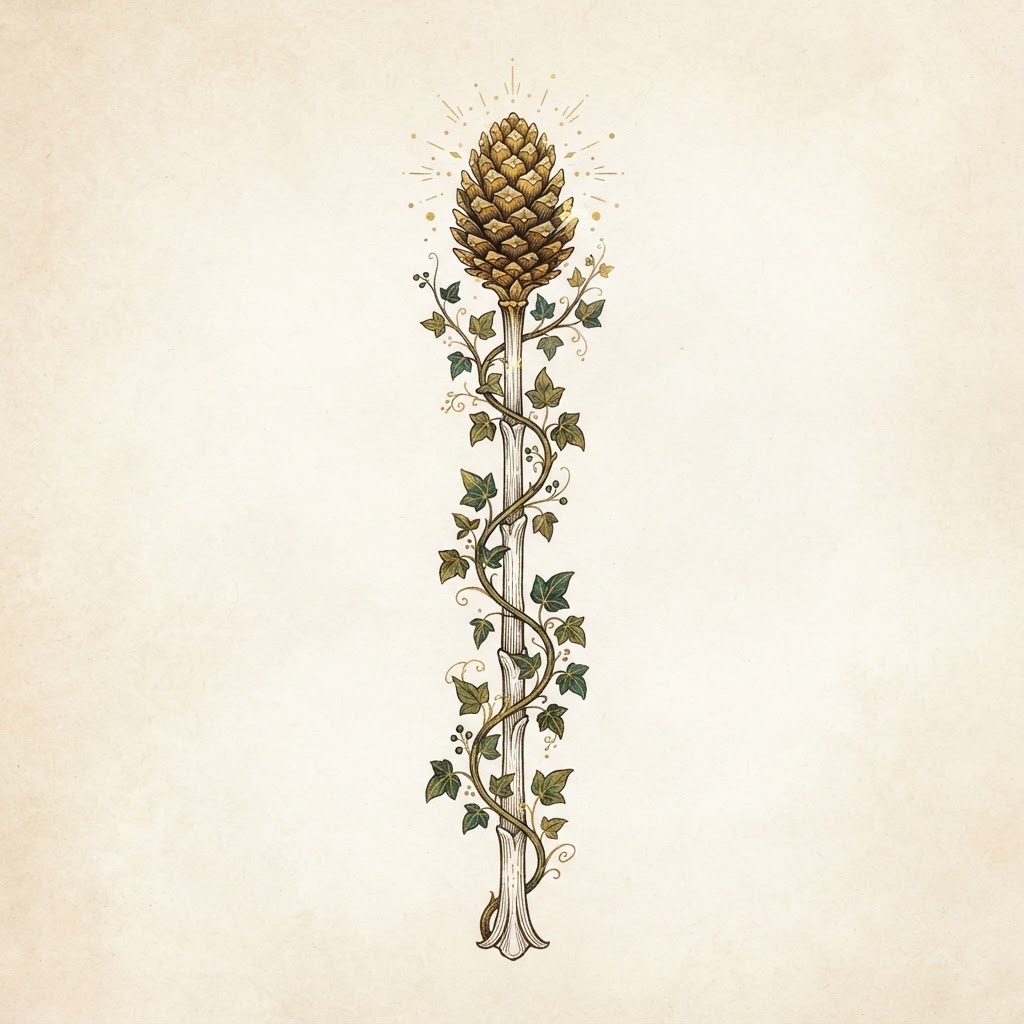
A ritual staff of giant fennel topped with a pinecone and wound with ivy, symbolizing ecstatic joy and fertility.
Quick Facts
- Category
- Greek & Roman
- Culture / Origin
- Ancient Greece & Rome
- Geographic Origin
- Greece and Southern Italy
- Historical Period
- Classical to Hellenistic
- Estimated Age
- circa 700 BCE
- Element
- Earth
- Planet
- Jupiter
- Chakra
- Sacral, Third Eye
- Zodiac
- Pisces, Sagittarius
- Deities
- Dionysus, Bacchus, Silenus, Pan
- Verification
- unverified
What is Thyrsus?
The Thyrsus is an ancient ceremonial wand sacred to the god Dionysus (Roman Bacchus) and his devotees, the Maenads and Satyrs. It is fashioned from a straight stalk of the giant fennel (Ferula communis), topped with a pinecone, and entwined with ivy leaves or ribbons.
In classical literature and art, the Thyrsus is both an instrument of divine frenzy and a phallic symbol of plant and human fertility. According to myth, the wand could cause springs of honey, wine, and milk to gush forth from rocks when struck against the ground.
Though light and fragile in material, the Thyrsus was regarded as a lethal weapon when wielded by ecstatic worshippers, carrying the hidden force of the god of divine release and madness.
Meaning of Thyrsus
The Thyrsus represents ecstatic celebration, nature's vital fertility, ritual release, and divine inspiration.
Origin & History
The Thyrsus was the central ritual instrument used in the Dionysian and Bacchic Mysteries. Initiates carried it during nocturnal processions into mountains, dancing and chanting in honor of Dionysus.
When the Roman Senate attempted to ban the Bacchic rites in 186 BCE through the Senatus consultum de Bacchanalibus due to perceived subversion, the Thyrsus remained a persistent underground emblem of religious ecstasy and personal liberation.
Spiritual Meaning
Esoterically, the Thyrsus signifies the awakening of dormant vitality and primal kundalini energy ascending through the spine. The hollow fennel stem represents the subtle central spinal pathway (sushumna), while the pinecone at the summit embodies spiritual illumination and the pineal organ.
It represents liberating the soul from rational constraints, letting individuals dissolve the ego into transcendent, communal ecstasy and natural rhythm.
Symbolism
The pinecone represents the pineal gland, seed of life, and spiritual insight; the fennel stalk signifies inner fire; the evergreen ivy illustrates tenacious, undying life.
Traditional Uses
Wielded by Dionysian initiates to channel the ecstatic presence of the god, invoke vegetation fertility, and enter altered states of consciousness.
Modern Spiritual Uses
Used in contemporary paganism and ecopsychology as an emblem of sacred wildness, bodily liberation, and reconnection with natural ecosystems.
Healing Associations
Assists in releasing emotional repression, overcoming creative inhibition, and restoring vital zest for living.
Protection Associations
Used in ancient rites to establish sacred space and repel rational interference during ritual ecstasy.
How the Symbol Is Used
- •Ecstatic Dance
- •Bacchic Rituals
- •Creative Awakening
Cultural Context
Ancient Greece & Rome — Greece and Southern Italy (Classical to Hellenistic)
Sources & References
- 1.Euripides. Bacchae. Translated by E. R. Dodds, Oxford University Press, 1960.
- 2.Kerényi, Karl. Dionysos: Archetypal Image of Indestructible Life. Princeton University Press, 1976.
This content is for educational and informational purposes only. Where modern spiritual interpretations are described, they are not presented as ancient historical facts. It is not a substitute for professional medical or spiritual advice.