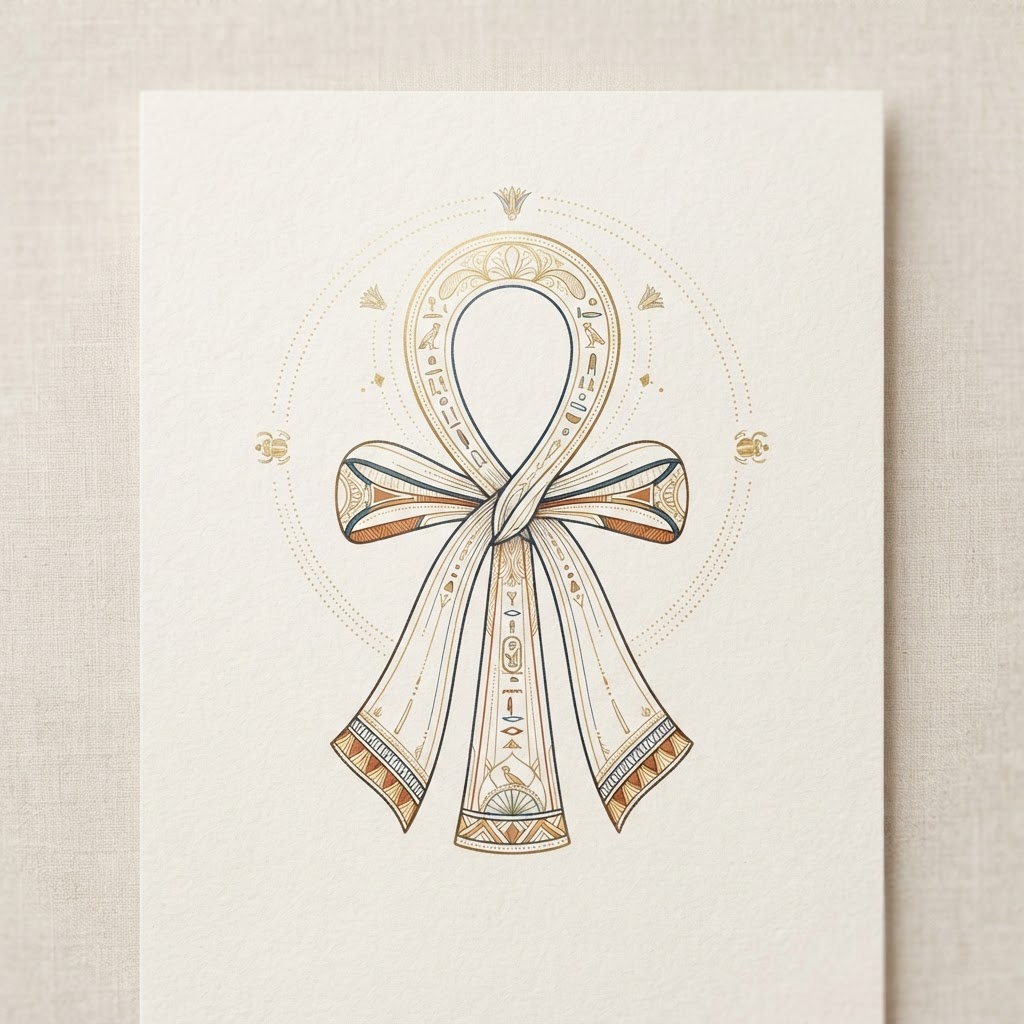
Tyet: Meaning, Origin & Symbolism
Also known as: Knot of Isis, Girdle of Isis, Blood of Isis
Ancient Egyptian
Ancient Egyptian
Sacral Chakra
Heart Chakra
Water
Protection
Healing
Love
The Tyet, or Knot of Isis, represents maternal protection, divine magic, feminine creative power, and fertility.
Quick Facts
- Category
- Ancient Egyptian
- Culture / Origin
- Ancient Egyptian
- Geographic Origin
- Nile River Valley, Egypt
- Historical Period
- Old Kingdom through Ptolemaic Period
- Estimated Age
- circa 2800 BCE
- Element
- Water
- Planet
- Moon
- Chakra
- Sacral, Heart
- Zodiac
- Cancer, Virgo
- Deities
- Isis, Hathor, Nephthys
- Verification
- unverified
What is Tyet?
The Tyet, widely known as the Knot of Isis or Girdle of Isis, closely resembles an Ankh with its horizontal arms drooping downward along its vertical stem. While its visual genesis has been compared to a knotted cloth, an item of clothing, or a stylized sanitary towel, it is intrinsically connected to the feminine life-giving essence and magical potency of the goddess Isis.
Typically carved from red materials such as carnelian, jasper, red glass, or red wood, the Tyet invokes the restorative blood of Isis. In funerary rites, it complemented the Djed pillar; while the Djed symbolized masculine stability and Osiris, the Tyet embodied feminine dynamism, generative power, and magical protection.
According to the Book of the Dead (Chapter 156), the Tyet amulet was placed upon the neck of the deceased to ensure that Isis's magical charms would defend their limbs and clear any supernatural obstacles on their journey through the underworld.
Meaning of Tyet
The primary meaning of the Tyet is divine protection, maternal guardianship, and magical empowerment through Isis.
Origin & History
During the New Kingdom, the Tyet surged in popularity as devotion to Isis deepened across all strata of Egyptian society. It was frequently paired with the Djed pillar on funerary sarcophagi, tomb walls, and temple friezes to represent balanced divine duality.
Its association with blood was directly linked to the fluids of childbirth, menstrual vitality, and the healing tears Isis shed while reassembling the body of Osiris.
Spiritual Meaning
The Tyet signifies the sacred feminine principle that nurtures, protects, and reconstructs that which has been broken. It embodies divine intuition, emotional wisdom, and maternal sovereignty.
It speaks spiritually to the unbreakable knot of divine love that protects the soul from astral predators and existential dissolution.
Symbolism
The looped top reflects eternal life, the downward folded arms suggest modesty and embrace, and the red stone represents the protective, life-giving blood of the Mother Goddess.
Traditional Uses
Traditionally placed on the deceased to bestow the magical protection of Isis's blood, keeping evil spirits and enemies at bay.
Modern Spiritual Uses
Modern spiritualists and feminine empowerment circles honor the Tyet as an emblem of sacred feminine power, somatic womb healing, and protective magic.
Healing Associations
Used historically to heal blood ailments, relieve menstrual distress, and promote healthy pregnancy.
Protection Associations
Vigorously deployed against malevolent spirits, curses, difficult childbirth, and sudden tragedy.
How the Symbol Is Used
- •Womb healing rituals
- •Protective talisman design
- •Sacred feminine retreats
Cultural Context
Ancient Egyptian — Nile River Valley, Egypt (Old Kingdom through Ptolemaic Period)
Sources & References
- 1.Andrews, Carol. 'Amulets of Ancient Egypt.' University of Texas Press, 1994.
- 2.Pinch, Geraldine. 'Magic in Ancient Egypt.' British Museum Press, 1994.
This content is for educational and informational purposes only. Where modern spiritual interpretations are described, they are not presented as ancient historical facts. It is not a substitute for professional medical or spiritual advice.