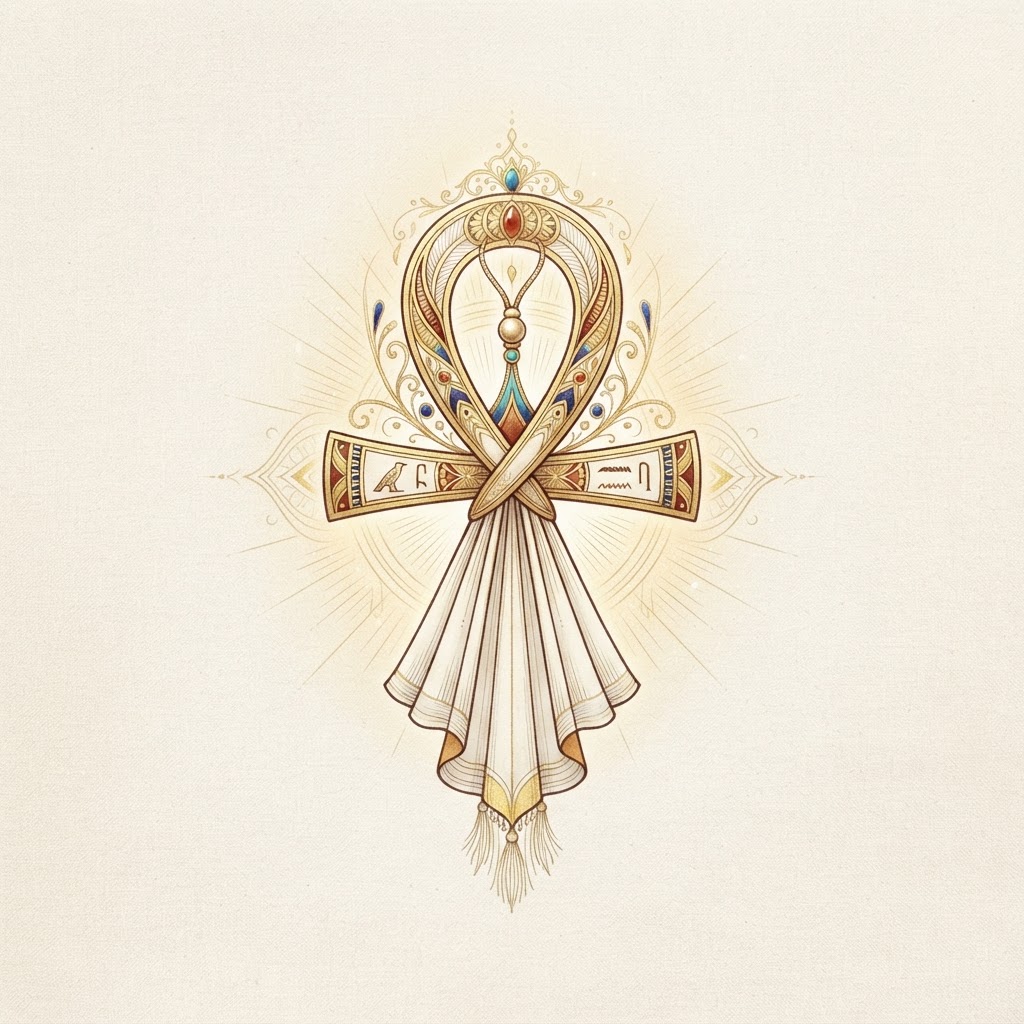
Tyet: Meaning, Origin & Symbolism
Also known as: Tiet, Isis Knot, Girdle of Isis, Blood of Isis
Ancient Egyptian
Ancient Egyptian
Sacral Chakra
Heart Chakra
Water
Protection
Love
Healing
A protective Egyptian amulet symbolizing the nurturing power, magical protection, and life-giving blood of the goddess Isis.
Quick Facts
- Category
- Ancient Egyptian
- Culture / Origin
- Ancient Egyptian
- Geographic Origin
- Egypt
- Historical Period
- Old Kingdom to Roman Period
- Estimated Age
- circa 2700 BCE
- Element
- Water
- Planet
- Moon
- Chakra
- Sacral, Heart
- Zodiac
- Cancer, Virgo
- Deities
- Isis, Hathor
- Verification
- unverified
What is Tyet?
The Tyet, often referred to as the Knot of Isis or the Girdle of Isis, closely resembles an ankh, but with its horizontal crossbar curved and folded downward parallel to the central stem. It was frequently fashioned out of red carnelian, jasper, red glass, or red wood, visually linking it to blood and vital feminine essence.
The symbol represents the protective garment tie or magical knot worn by Isis, the supreme magician and divine mother of Egyptian myth. In Egyptian magical practice, knots were considered conduits of concentrated cosmic power, capable of tying up hostile spirits or binding divine protection to a person's physical body.
According to Chapter 156 of the Book of the Dead, a Tyet amulet made of red stone and consecrated with specific words of power had to be placed at the throat of the deceased to secure the protection of Isis across all dimensions.
Meaning of Tyet
The Tyet represents the magical protection, nurturing power, and life-force blood of the goddess Isis.
Origin & History
The Tyet has been documented since the Early Dynastic Period. It often appeared in paired motifs with the Djed pillar, contrasting and balancing Osirian masculine stability with Isian feminine magical protection.
During the New Kingdom, the Tyet became an essential funerary jewel, found repeatedly inside the tomb furnishings of Tutankhamun and other royalty, as well as depicted across temples dedicated to mother goddesses such as Hathor and Isis.
Spiritual Meaning
The Tyet embodies the protective, sheltering maternal nature of the Divine Feminine. It is a conduit for esoteric wisdom, intuition, and magical mastery used to shield the vulnerable and nurse what has been wounded back to health.
It is intrinsically tied to menstrual and maternal blood as the divine creative liquid of life, highlighting the sacred dignity and power of biological and spiritual gestation.
Symbolism
The downward-turned arms symbolize wrapped, sheltering energy and protective binding, while the vertical loop represents the womb and the flow of vital fluids.
Traditional Uses
A funerary amulet granting the deceased the active magical patronage of Isis, preventing evil forces from obstructing their safe passage in the Duat.
Modern Spiritual Uses
Modern practitioners invoke the Tyet to connect with divine feminine empowerment, womb healing, intuition, and protective motherly archetypes.
Healing Associations
Traditionally linked to gynecological health, safe childbirth, and circulation.
Protection Associations
Worn to invoke the all-encompassing protection of Isis against curses, malicious magic, and physical injury.
How the Symbol Is Used
- •Womb blessing ceremonies
- •Goddess invocations
- •Talisman magic
- •Aura shielding
Cultural Context
Ancient Egyptian — Egypt (Old Kingdom to Roman Period)
Sources & References
- 1.Faulkner, Raymond O. The Ancient Egyptian Book of the Dead. British Museum Press, 1985.
- 2.Andrews, Carol. Amulets of Ancient Egypt. University of Texas Press, 1994.
This content is for educational and informational purposes only. Where modern spiritual interpretations are described, they are not presented as ancient historical facts. It is not a substitute for professional medical or spiritual advice.