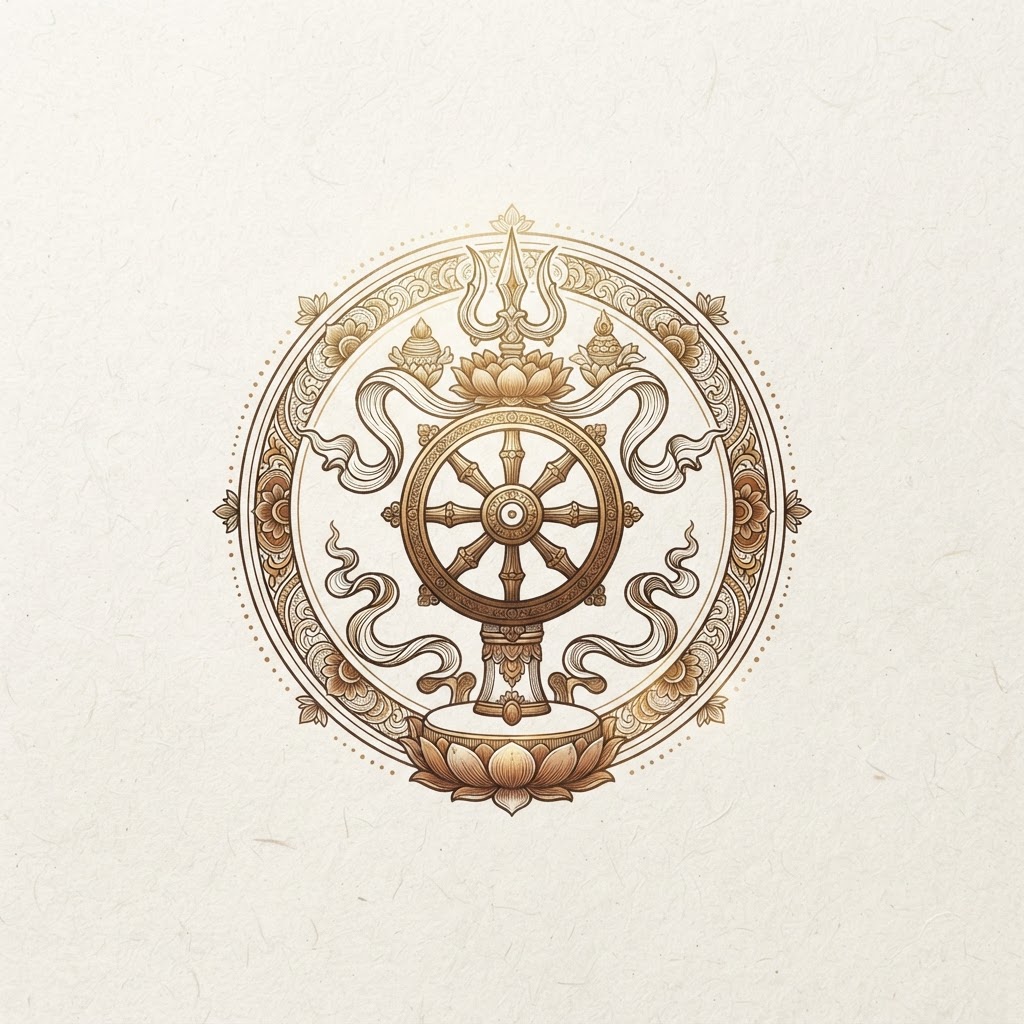
Triratna: Meaning, Origin & Symbolism
Also known as: Three Jewels, Triple Gem, Three Treasures
Buddhist
Buddhist
Heart Chakra
Throat Chakra
Crown Chakra
Ether/Spirit
Wisdom
Protection
Devotion
Unity
The foundational emblem of Buddhist refuge, symbolizing the Buddha, the Dharma (teachings), and the Sangha (community).
Quick Facts
- Category
- Buddhist
- Culture / Origin
- Buddhist
- Geographic Origin
- Ancient India
- Historical Period
- Classical Antiquity
- Estimated Age
- circa 3rd century BCE
- Element
- Ether/Spirit
- Chakra
- Heart, Throat, Crown
- Deities
- Gautama Buddha
- Verification
- unverified
What is Triratna?
The Triratna, or Three Jewels, constitutes the spiritual core and foundation of all Buddhist traditions. Taking refuge in the Three Jewels is the defining act that formally marks an individual's commitment to the Buddhist path. As a graphic emblem, the Triratna is commonly rendered as a trident-like tripartite crown or three glowing spheres resting atop a lotus base or accompanied by a Dharmachakra.
Each prong or jewel signifies an indispensable pillar of refuge: the Buddha (the teacher and the potential for awakening within all minds), the Dharma (the path of truth and teachings that guide liberation), and the Sangha (the community of monastic and lay practitioners who support one another along the journey). Together, they form an integrated sanctuary from the storms of cyclic existence.
Meaning of Triratna
The Triratna represents the three ultimate sources of spiritual refuge: the Buddha, the Dharma, and the Sangha.
Origin & History
The Triratna is among the earliest aniconic representations of Buddhist philosophy, predating the depiction of the Buddha in human form. It is found carved abundantly on the toranas (gateways) and railings of the great stupas at Sanchi, Bharhut, and Amaravati, as well as on early coinage throughout the Mauryan and Kushan empires.
Spiritual Meaning
Taking refuge in the Triratna is an inward turning of the mind. It signifies relinquishing reliance on transitory worldly illusions and rooting one's identity in awakened awareness (Buddha), ultimate truth (Dharma), and spiritual fellowship (Sangha).
Symbolism
The three prongs or jewels embody the Buddha, Dharma, and Sangha. When supported by a lotus, it reflects that this refuge rests upon unshakeable spiritual purity and ethical integrity.
Traditional Uses
Understood in early canonical Buddhism as the supreme spiritual shelter, reciting the refuge formula three times establishes vows and aligns one's karma toward liberation.
Modern Spiritual Uses
Modern practitioners emphasize the Three Jewels as an essential tri-fold balance: inner wisdom, continuous study of truth, and compassionate engagement with community.
Healing Associations
Relieves deep existential loneliness and instills a comforting sense of belonging and guidance.
Protection Associations
Shields against spiritual despondency, nihilism, and straying from an ethical path.
How the Symbol Is Used
- •Refuge taking ceremonies
- •Daily chanting
- •Devotional recitation
- •Meditation retreats
Cultural Context
Buddhist — Ancient India (Classical Antiquity)
Sources & References
- 1.The Foundations of Buddhism by Rupert Gethin
- 2.Early Buddhist Art of India and Sri Lanka by A.K. Coomaraswamy
- 3.What the Buddha Taught by Walpola Rahula
This content is for educational and informational purposes only. Where modern spiritual interpretations are described, they are not presented as ancient historical facts. It is not a substitute for professional medical or spiritual advice.