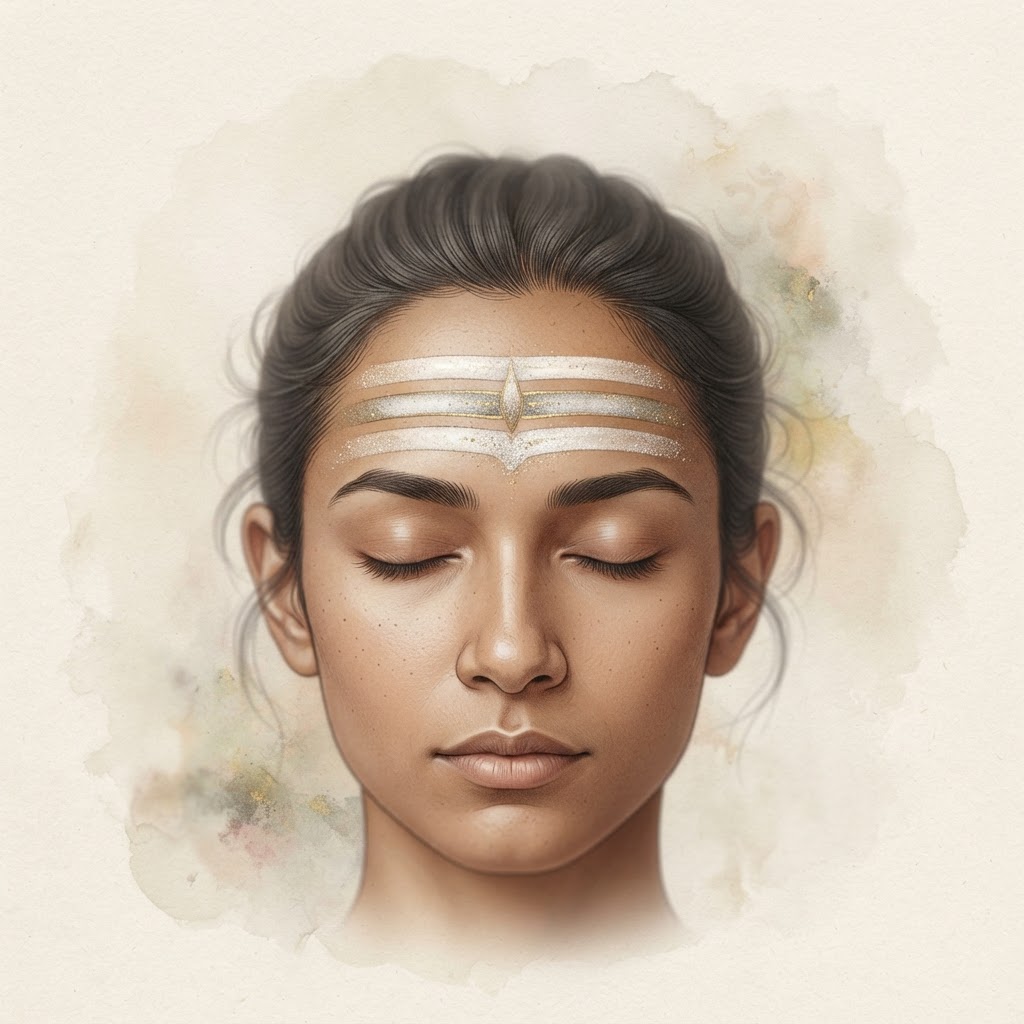
Tripundra: Meaning, Origin & Symbolism
Also known as: Shiva Tilak, Bhasma Tripundra
Hindu
Hindu
Third Eye Chakra
Earth
Transformation
Wisdom
Protection
Spiritual Connection
Three horizontal sacred ash stripes marked across the forehead, signifying spiritual purification and non-attachment.
Quick Facts
- Category
- Hindu
- Culture / Origin
- Hindu
- Geographic Origin
- Indian Subcontinent
- Historical Period
- Classical / Early Medieval
- Estimated Age
- circa 500 BCE
- Element
- Earth
- Planet
- Saturn
- Chakra
- Third Eye
- Zodiac
- Scorpio, Capricorn
- Deities
- Shiva, Bhairava
- Verification
- unverified
What is Tripundra?
The Tripundra is a distinctive sacred mark applied across the forehead by Shaivite devotees, ascetics, and practitioners of Indian spirituality. It is composed of three horizontal lines of consecrated sacred ash (Vibhuti or Bhasma), often highlighted with a dot of red vermilion (Kumkum) at the center.
The ash is traditionally obtained by burning cow dung alongside sacred herbs within consecrated Vedic sacrificial fires (Homa). Applying it to the brow serves as a tangible, daily meditation on mortality, detachment, and inner transcendence.
Spanning the forehead, the three lines form a striking visual reminder that material bodies eventually return to dust, and that human awareness should focus on that which is immortal, untainted, and eternal.
Meaning of Tripundra
The burning away of worldly illusions and the recognition of the eternal spiritual soul beyond the mortal body.
Origin & History
Scriptural injunctions for wearing the Tripundra are detailed extensively in the Minor Upanishads, specifically the Bhasmajabala Upanishad and the Kalagni Rudra Upanishad, as well as the Shiva Purana.
It has identified Shaivite monks, sadhus, and householders throughout classical and modern Indian history, remaining an essential daily rite for devotees across the world.
Spiritual Meaning
The ash used for the Tripundra signifies the final calcination of ego and attachments in the fire of spiritual wisdom (Jnanagni). Just as ash cannot burn any further, an enlightened mind cannot be consumed by grief or delusion.
It cools the nervous system, activates higher focus at the brow center, and aligns the wearer with a mindset of profound humility and ascetic presence.
Symbolism
The three lines represent the destruction of the three impurities (anava or ego, karma or action bound by desire, and maya or illusion). They also signify mastery over the three worlds and the burning of the three gunas.
Traditional Uses
The sacred signature of Lord Shiva placed upon the body, signifying that the devotee belongs to Shiva and has surrendered their ego to the cosmic fire.
Modern Spiritual Uses
Viewed by yogic practitioners as an anchor for grounding, humility, mental cooling, and mindful recognition of the impermanence of physical life.
Healing Associations
Vibhuti application cools the forehead, soothes headaches, and grounds excessive mental activity.
Protection Associations
Shields the mind from base impulses, psychic agitation, and external emotional volatility.
How the Symbol Is Used
- •Shaiva puja
- •Mantra chanting
- •Vibhuti dharana
- •Sadhana
Cultural Context
Hindu — Indian Subcontinent (Classical / Early Medieval)
Sources & References
- 1.Kalagni Rudra Upanishad
- 2.Bhasmajabala Upanishad
- 3.Shiva Purana
This content is for educational and informational purposes only. Where modern spiritual interpretations are described, they are not presented as ancient historical facts. It is not a substitute for professional medical or spiritual advice.