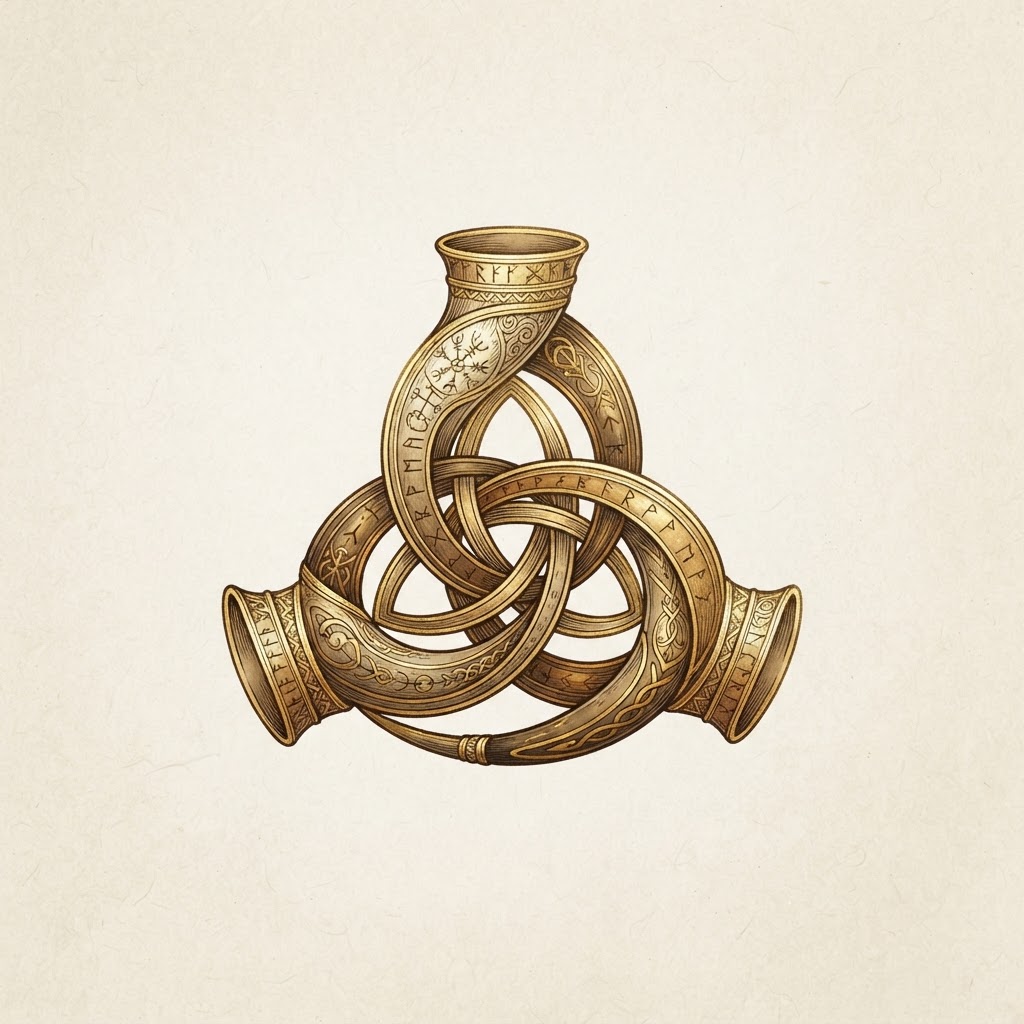
Triple Horn of Odin: Meaning, Origin & Symbolism
Also known as: Horn Triskelion, Odin's Horns, Drinking Horn Triskele
Norse/Germanic
Norse/Germanic
Throat Chakra
Third Eye Chakra
Water
Wisdom
Transformation
Clarity
Three interlocking drinking horns representing the Mead of Poetry and the pursuit of divine wisdom.
Quick Facts
- Category
- Norse/Germanic
- Culture / Origin
- Norse/Germanic
- Geographic Origin
- Scandinavia, Denmark
- Historical Period
- Viking Age
- Estimated Age
- circa 9th century CE
- Element
- Water
- Planet
- Mercury
- Chakra
- Throat, Third Eye
- Zodiac
- Gemini, Libra
- Deities
- Odin, Kvasir, Bragi
- Verification
- unverified
What is Triple Horn of Odin?
The Triple Horn of Odin is composed of three interlinked drinking vessels arranged in a triskelion-like symmetry. The primary historical artifact displaying this symbol is the 9th-century Snoldelev Stone discovered in Zealand, Denmark, where it is carved alongside a sun wheel. In Norse myth, the three horns are traditionally identified with Óðrerir, Boðn, and Són—the vessels holding the legendary Mead of Poetry (Kvasir's blood mixed with honey). Odin ventured into the giant Suttungr's mountain stronghold, seduced the guardian maiden Gunnlöð, and consumed the mead across three nights, draining one vessel each night before transforming into an eagle to escape and gift poetic ecstasy and divine wisdom to gods and skalds alike.
Meaning of Triple Horn of Odin
A sacred emblem of the Mead of Poetry, signifying poetic inspiration, eloquence, and divine wisdom.
Origin & History
Archaeological verification comes directly from the Snoldelev runic inscription (DR 248), a granite boulder featuring both early Younger Futhark runes and the intertwined horns. The stone honors a priest or chieftain named Gunvald, confirming the motif's sacred and high-status ritual usage in early Denmark.
Spiritual Meaning
The horns symbolize the extraction of pure wisdom from raw experience. Spiritually, drinking from these sacred vessels implies partaking in the nectar of spiritual awakening, unlocking articulate speech, artistic creativity, and mystical contemplation. It serves as an invitation to pursue truth and intellectual illumination regardless of sacrifice.
Symbolism
The three interlocked horns represent the trinity of vessels containing knowledge, the power of threefold oaths taken during sumbel toasts, and cyclical transformation through divine fluid.
Traditional Uses
Linked to ritual drinking ceremonies (sumbel), ancestral toasts, skaldic verse, and devotion to Odin as the patron of ecstatic inspiration.
Modern Spiritual Uses
Used by modern creators, writers, and practitioners to invoke intellectual focus, artistic inspiration, and the eloquence of speech.
Healing Associations
Inspires emotional expression, eases creative blocks, and promotes mental agility.
How the Symbol Is Used
- •Sumbel toasts
- •Creative invocations
- •Runic rites
- •Poetic meditation
Cultural Context
Norse/Germanic — Scandinavia, Denmark (Viking Age)
Sources & References
- 1.Snorri Sturluson, Skáldskaparmál
- 2.E.O.G. Turville-Petre, Myth and Religion of the North
- 3.R.I. Page, Runes
This content is for educational and informational purposes only. Where modern spiritual interpretations are described, they are not presented as ancient historical facts. It is not a substitute for professional medical or spiritual advice.