Treasure Vase: Meaning, Origin & Symbolism
Also known as: Kalasha, Bumpa, Vase of Inexhaustible Treasures
Buddhist
Buddhist
Root Chakra
Sacral Chakra
Earth
Abundance
Healing
Harmony
A vessel of infinite abundance, representing the inexhaustible spiritual wealth and boundless blessings of the Dharma.
Quick Facts
- Category
- Buddhist
- Culture / Origin
- Buddhist
- Geographic Origin
- Ancient India
- Historical Period
- Classical Antiquity
- Estimated Age
- circa 1000 BCE
- Element
- Earth
- Planet
- Jupiter
- Chakra
- Root, Sacral
- Zodiac
- Taurus
- Deities
- Jambhala, Vasudhara, Amitayus
- Verification
- unverified
What is Treasure Vase?
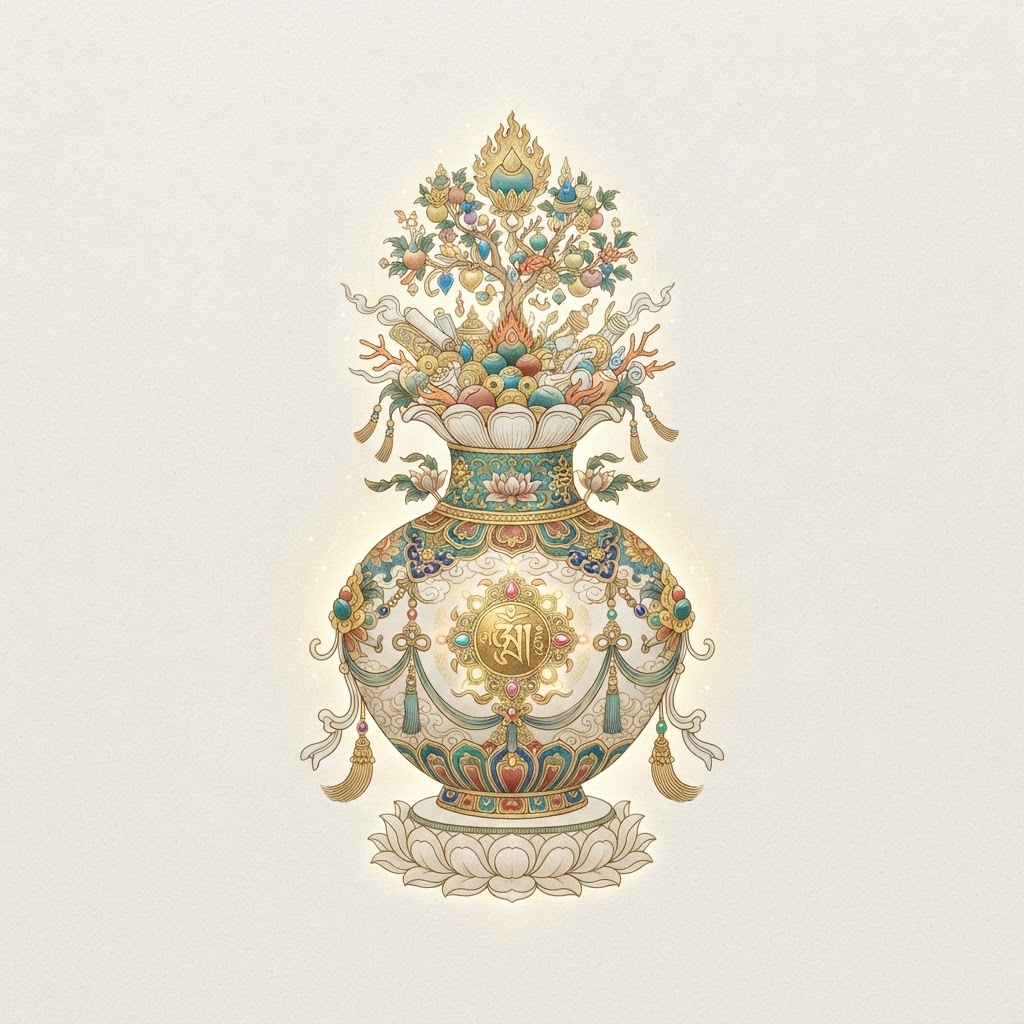
The Treasure Vase (Sanskrit: Kalasha or Kumbha; Tibetan: Gter-gyi-bum-pa) is one of the classic Eight Auspicious Symbols of Buddhism, revered as an emblem of spiritual and material abundance. Typically rendered as an ornate golden urn decorated with lotus-petal motifs and topped with a large wish-granting jewel (chintamani) or peacock feathers, the vase is understood to hold divine nectar (amrita) that never diminishes. No matter how much is poured out to benefit living beings, the vase remains perpetually full. In Buddhist philosophy, this illustrates the limitless nature of the Buddha's teachings and enlightened qualities, which can satisfy the deepest spiritual longings of countless beings without ever being exhausted.
Meaning of Treasure Vase
Inexhaustible spiritual realization, divine prosperity, long life, and the boundless riches of wisdom.
Origin & History
The purna-kalasha (overflowing vessel) was an ancient Indian archetype of planetary fertility, health, and agricultural prosperity. Adopted directly into early Buddhist art at sites like Amaravati and Sanchi, it evolved into a specialized ritual implement used in Tantric initiations across the Himalayan plateau.
Spiritual Meaning
The vase represents the mind of an enlightened being that possesses infinite potential to heal, guide, and nourish. It shows that spiritual attainment is an inexhaustible spring rather than a finite reservoir.
Symbolism
The jewels emerging from its mouth signify the jewels of the Dharma; the broad belly represents generosity and capacity for wisdom; the amrita within signifies deathlessness and health.
Traditional Uses
In Tibetan rituals, consecrated 'treasure vases' (terbum) filled with precious stones, herbs, and mantras are consecrated and buried in the earth to heal environmental distress and pacify conflicts.
Modern Spiritual Uses
Modern interpretations connect the vase to an abundance mindset, inner richness, gratitude, and sustainable living.
Healing Associations
Promotes vitality, longevity, physical regeneration, and relief from chronic weakness.
Protection Associations
Wards off poverty, material lack, environmental degradation, and resource depletion.
How the Symbol Is Used
- •Vase Consecration (Bumpa)
- •Wealth Sadhana
- •Long-Life Practices
Cultural Context
Buddhist — Ancient India (Classical Antiquity)
Sources & References
- 1.The Handbook of Tibetan Buddhist Symbols by Robert Beer
- 2.Tibetan Rituals of Death and Life by Matthew T. Kapstein
This content is for educational and informational purposes only. Where modern spiritual interpretations are described, they are not presented as ancient historical facts. It is not a substitute for professional medical or spiritual advice.