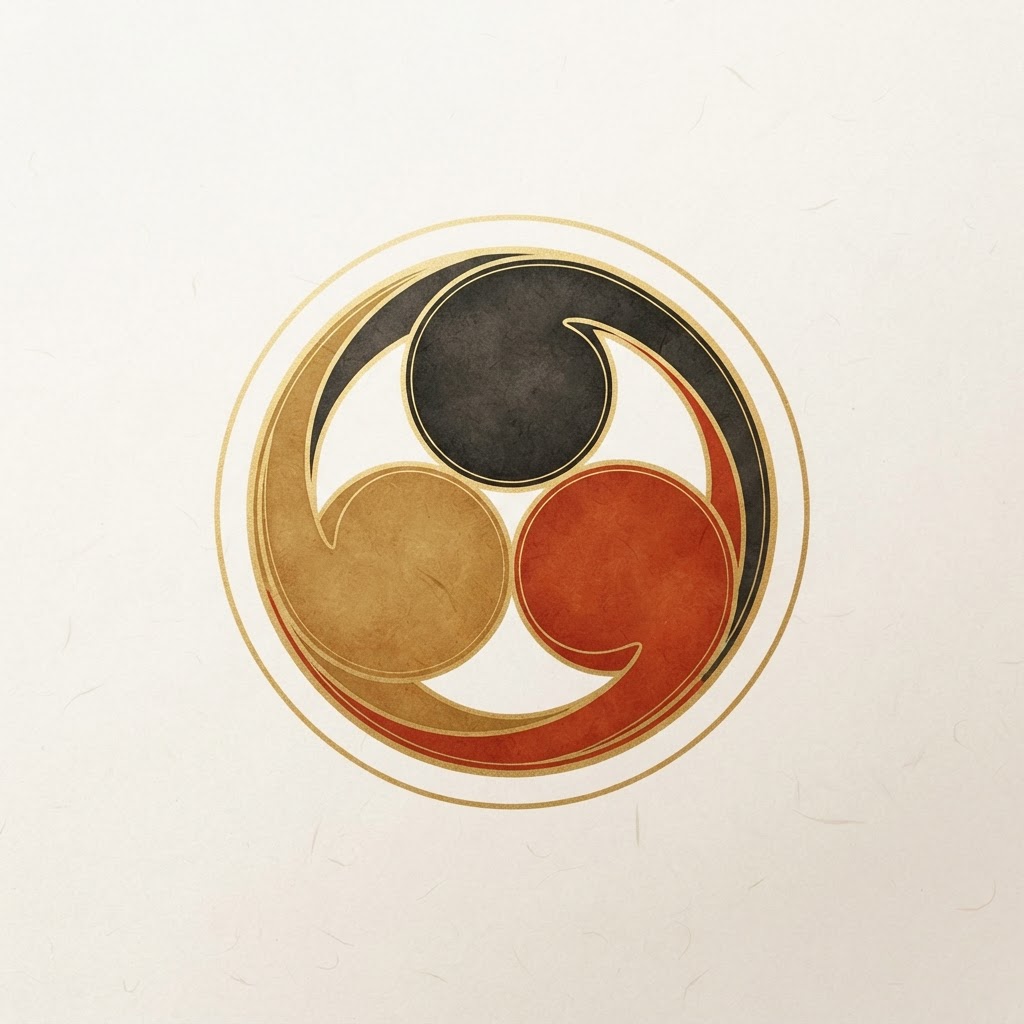
Tomoe: Meaning, Origin & Symbolism
Also known as: Mitsudomoe, Futatsudomoe, Comma Swirl
Japanese
Japanese
Solar Plexus Chakra
Sacral Chakra
Water
Harmony
Protection
Balance
A swirling comma-like Japanese heraldic and sacred symbol representing the movement of cosmic forces, often appearing in sets of two or three.
Quick Facts
- Category
- Japanese
- Culture / Origin
- Japanese
- Geographic Origin
- Japan
- Historical Period
- Kofun Period to Present
- Estimated Age
- Over 1,500 years
- Element
- Water
- Planet
- Moon
- Chakra
- Solar Plexus, Sacral
- Deities
- Hachiman, Susanoo-no-Mikoto
- Verification
- unverified
What is Tomoe?
The Tomoe is a profound dynamic symbol pervasive in Japanese heraldry (kamon), Shinto iconography, and martial traditions. Resembling swirling water droplets, comma-shaped magatama beads, or celestial whirlpools, the motif represents perpetual motion and the circulation of vital life force.
The most prevalent form is the Mitsudomoe (a triad of swirls), which prominently features on shrine banners, rooftop ridge tiles, and taiko drums. Its rotating arms represent the interconnected harmony of heaven, earth, and humankind, circulating in endless cyclical rhythm.
Closely tied to Hachiman, the Shinto god of war and divine archery, the Tomoe carries both protective martial vigor and deep cosmological harmony, encapsulating how dynamic tension yields cosmic balance.
Meaning of Tomoe
Represents the perpetual movement of vital energy, cosmic harmony, and the triad of heaven, earth, and humanity.
Origin & History
The visual shape of the Tomoe is intimately connected to prehistoric magatama (curved comma beads) excavated from Jomon and Kofun burial mounds. Over the classical and medieval eras, the motif evolved into a widely recognized crest (mon).
During the Kamakura period, the warrior class adopted the Tomoe widely due to its link with Hachiman, patron deity of the samurai. Concurrently, it was embedded in shrine architecture across Japan to invoke protection against fire through its visual association with spinning water.
Spiritual Meaning
Spiritually, the Tomoe illustrates the fluidity of existence and the non-static nature of reality. It reflects the realization that truth and harmony are found in motion and balance rather than rigid stillness.
In spiritual contemplation, meditating on the revolving center of the Mitsudomoe assists in harmonizing opposing forces—such as internal conflict, intention and surrender, or mind and body—unifying them into a smooth flow of life energy (ki).
Symbolism
The swirling tails evoke rushing water, swirling clouds, and celestial bodies. The triad structure of the Mitsudomoe symbolizes the cosmic trinity: Ten (Heaven), Chi (Earth), and Jin (Humanity).
Traditional Uses
Interpreted in Shinto as an emblem of divine authority, particularly associated with Hachiman and water spirits; painted on temple roofs and taiko drum heads to repel fire and demonic disturbance.
Modern Spiritual Uses
Regarded today by energy workers and martial artists as a symbol of fluid adaptability, cyclical rebirth, and the seamless integration of body, mind, and spirit.
Healing Associations
Assists in restoring energetic flow, breaking stagnation, and re-centering emotional whirlpools.
Protection Associations
Historically used as an apotropaic charm against fire, storm damage, and spiritual discord.
How the Symbol Is Used
- •Budo and martial arts meditation
- •Shinto festival drumming (Taiko)
- •Spiritual talisman design (Ofuda)
Cultural Context
Japanese — Japan (Kofun Period to Present)
Sources & References
- 1.Dower, John W. 'The Elements of Japanese Design: A Handbook of Family Crests, Heraldry and Symbolism.' Weatherhill, 1971.
- 2.Turnbull, Stephen. 'The Samurai: A Military History.' Routledge, 1996.
This content is for educational and informational purposes only. Where modern spiritual interpretations are described, they are not presented as ancient historical facts. It is not a substitute for professional medical or spiritual advice.