Thunderbolt of Zeus: Meaning, Origin & Symbolism
Also known as: Keraunos, Fulgur, Lightning Bolt of Jupiter
Greek & Roman
Greco-Roman
Solar Plexus Chakra
Crown Chakra
Fire
Illumination
Justice
Transformation
Clarity
A stylized lightning projectile symbolizing absolute cosmic law, illumination, divine justice, and sovereign power.
Quick Facts
- Category
- Greek & Roman
- Culture / Origin
- Greco-Roman
- Geographic Origin
- Greece and Rome
- Historical Period
- Classical Antiquity
- Estimated Age
- circa 1200 BCE
- Element
- Fire
- Planet
- Jupiter
- Chakra
- Solar Plexus, Crown
- Zodiac
- Sagittarius, Aries
- Deities
- Zeus, Jupiter, Tinia
- Verification
- unverified
What is Thunderbolt of Zeus?
The Thunderbolt, or Keraunos in Greek, is the celestial weapon of Zeus (Roman Jupiter), supreme ruler of Mount Olympus. Crafted for Zeus by the three Cyclopes—Brontes, Steropes, and Arges—it allowed the Olympians to overthrow Cronus and the Titans to establish cosmic order.
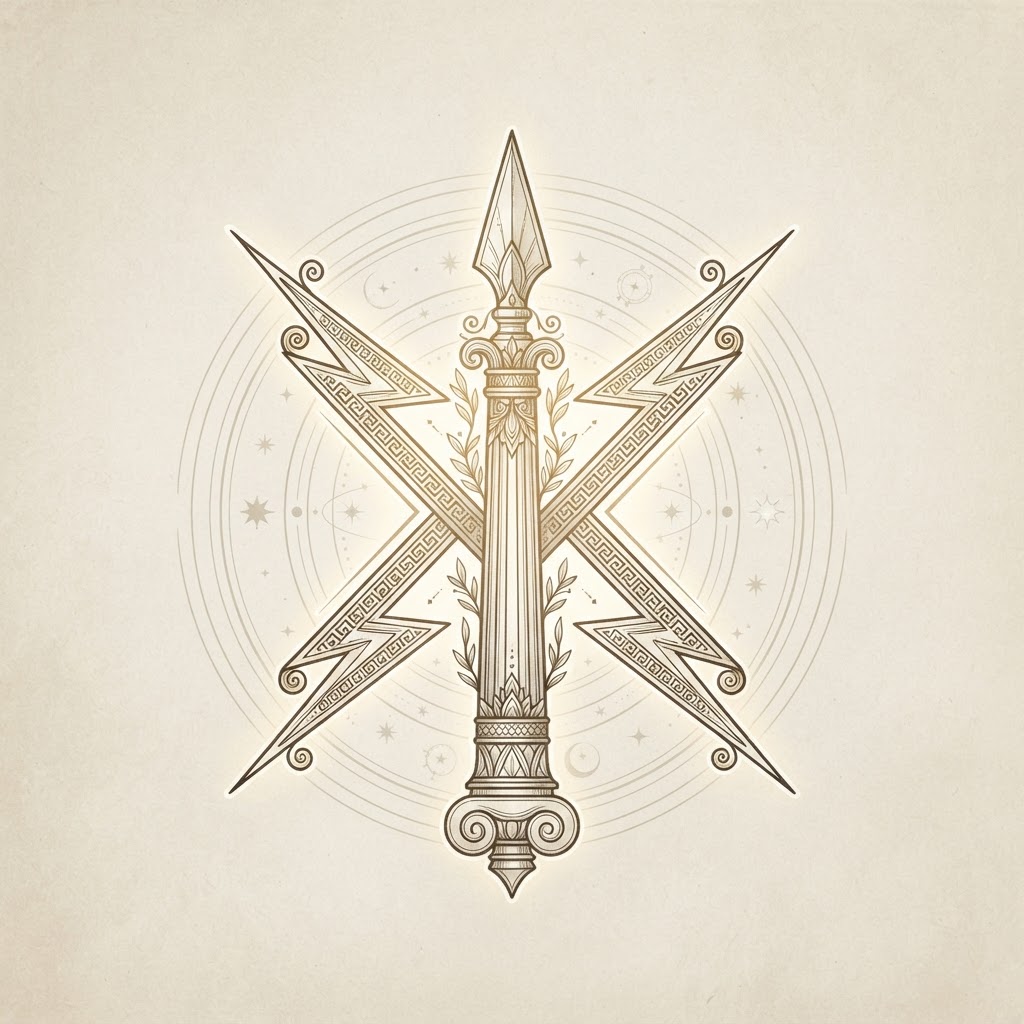
In classical visual art, the thunderbolt is depicted as a double-pointed, fluted javelin, often with wing-like flames, lotus leaves, or zigzag lightning flares emanating from its center. It was viewed as both a destructive blast of divine retribution and an illuminating flash of supreme truth.
In Roman religion, the place struck by lightning was deemed bidental—sacred ground consecrated to Jupiter Fulgur, fenced off and preserved from ordinary human trespass.
Meaning of Thunderbolt of Zeus
The Thunderbolt represents supreme sovereign dominion, immediate justice, cosmic equilibrium, and sudden divine intervention.
Origin & History
The keraunos served as the highest emblem of sovereign authority in the ancient world. Kings such as Pyrrhus and the Seleucid monarchs minted coins featuring the thunderbolt to assert legitimate celestial dominion.
Roman augurs (priests) interpreted lightning flashes across quadrant sectors of the sky (fulgural science) as divine messages approving or condemning state undertakings, wars, and political elections.
Spiritual Meaning
Esoterically, the thunderbolt symbolizes sudden spiritual awakening—an instantaneous blast of divine light that dissolves the illusions of the ego. It represents the descent of cosmic intellect into the lower material world.
Like lightning instantly illuminating a dark sky, it is the archetype of sudden insight, breakthrough realization, and the purification of stagnant mental structures.
Symbolism
The winged shafts symbolize the swiftness of divine decree; the central diamond core represents unyielding truth; the flared fire darts signify purifying power.
Traditional Uses
Regarded as the physical tool through which Zeus enforced oath integrity, punished hubris, and governed cosmic weather patterns.
Modern Spiritual Uses
Interpreted as an emblem of sudden epiphany, decisive boundary breaking, and the reclamation of personal agency.
Healing Associations
Aids in breaking chronic mental lethargy, shattering self-limiting belief loops, and revitalizing life focus.
Protection Associations
Used to invoke heavenly retribution against violators of oaths, tyrants, and unprovoked attackers.
How the Symbol Is Used
- •Oath Swearing
- •Consecration of Space
- •Breakthrough Meditation
Cultural Context
Greco-Roman — Greece and Rome (Classical Antiquity)
Sources & References
- 1.Cook, Arthur Bernard. Zeus: A Study in Ancient Religion. Cambridge University Press, 1914.
- 2.Beard, Mary, John North, and Simon Price. Religions of Rome. Cambridge University Press, 1998.
This content is for educational and informational purposes only. Where modern spiritual interpretations are described, they are not presented as ancient historical facts. It is not a substitute for professional medical or spiritual advice.