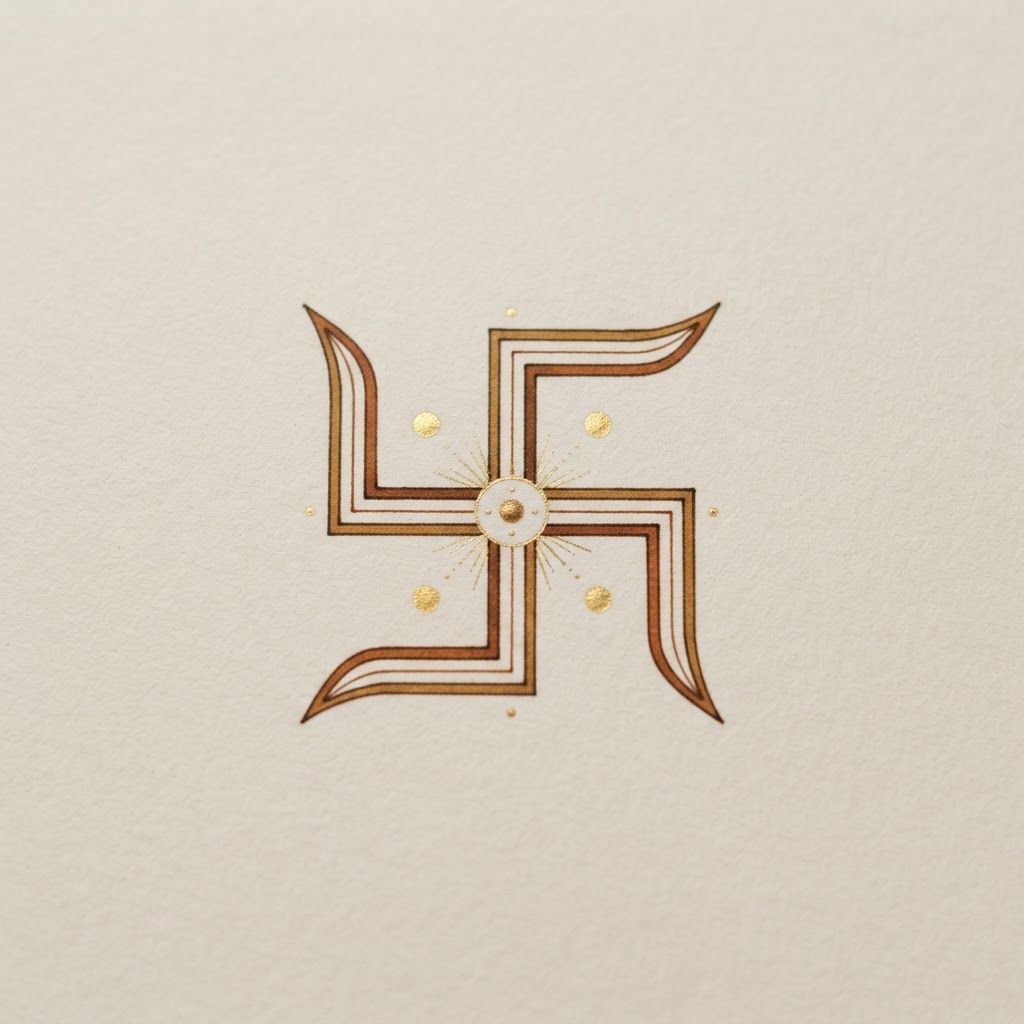
Hindu Swastika: Meaning, Origin & Symbolism
Also known as: Svastika, Sathiya
Hindu
Hindu
Root Chakra
Solar Plexus Chakra
Fire
Protection
Abundance
Wisdom
Harmony
An ancient sacred solar emblem of auspiciousness, good fortune, and cosmic harmony.
Quick Facts
- Category
- Hindu
- Culture / Origin
- Hindu
- Geographic Origin
- Indian Subcontinent
- Historical Period
- Indus Valley Civilization / Vedic Period
- Estimated Age
- 5000+ years
- Element
- Fire
- Planet
- Sun
- Chakra
- Root, Solar Plexus
- Zodiac
- Leo, Aries
- Deities
- Ganesha, Surya, Lakshmi
- Verification
- unverified
What is Hindu Swastika?
The Hindu Swastika is a revered geometric symbol characterized by an equilateral cross with arms bent at right angles facing right. Etymologically derived from the Sanskrit roots 'su' (good) and 'asti' (to be), it literally signifies well-being, health, and auspiciousness.
Unlike its twentieth-century misappropriation in Western political history, in traditional Hindu culture it remains a profound emblem of the sun, light, and the perpetual turning of cosmic order (Rita). It is traditionally drawn with vermilion or turmeric paste at the threshold of homes, ledgers, temples, and wedding altars.
Often accompanied by four dots positioned within each quadrant, the symbol evokes balanced manifestation across the four cardinal directions, the four Vedas, and the four traditional aims of human life.
Meaning of Hindu Swastika
An auspicious invocation of prosperity, welfare, divine order, and eternal solar cycles.
Origin & History
Artifacts bearing the swastika design date back to the Indus Valley Civilization (Harappan period, c. 2600-1900 BCE) on soapstone seals. It seamlessly transitioned into Vedic ritual traditions where it represented Surya, the solar deity, and auspicious cosmic cycles.
For millennia across South Asia, it has marked threshold entries, temple doorways, sacred manuscripts, and festival decorations without interruption.
Spiritual Meaning
The swastika mirrors the dynamic movement of the cosmos evolving around an immovable divine center. It teaches stability amidst cyclical change.
It reflects the integration of worldly duties and spiritual aspirations, drawing divine energy into physical spaces and everyday human endeavors.
Symbolism
The four arms represent the four cardinal directions, the four Vedas (Rig, Sama, Yajur, Atharva), and the four Purusharthas (Dharma, Artha, Kama, Moksha). The central intersection denotes the unmoving divine axis from which all phenomenal realities diverge.
Traditional Uses
A visual blessing invoking the grace of Ganesha and Lakshmi, signifying that endeavors will proceed without obstacles and bear beneficial fruit.
Modern Spiritual Uses
Understood in cross-cultural dialogues as an ancient, sacred emblem of peace and universal cosmic balance, distinct from modern misappropriations.
Healing Associations
Restores environmental harmony, grounding home environments and dispelling stagnant energy.
Protection Associations
Drawn upon thresholds and entryways to ward off malevolent forces and negative energy.
How the Symbol Is Used
- •Vastu Shastra
- •Puja
- •Diwali rituals
- •Griha Pravesha (housewarming)
Cultural Context
Hindu — Indian Subcontinent (Indus Valley Civilization / Vedic Period)
Sources & References
- 1.A Dictionary of Hinduism by Margaret and James Stutley
- 2.The Archetypal Actions of Ritual by Caroline Humphrey and James Laidlaw
This content is for educational and informational purposes only. Where modern spiritual interpretations are described, they are not presented as ancient historical facts. It is not a substitute for professional medical or spiritual advice.