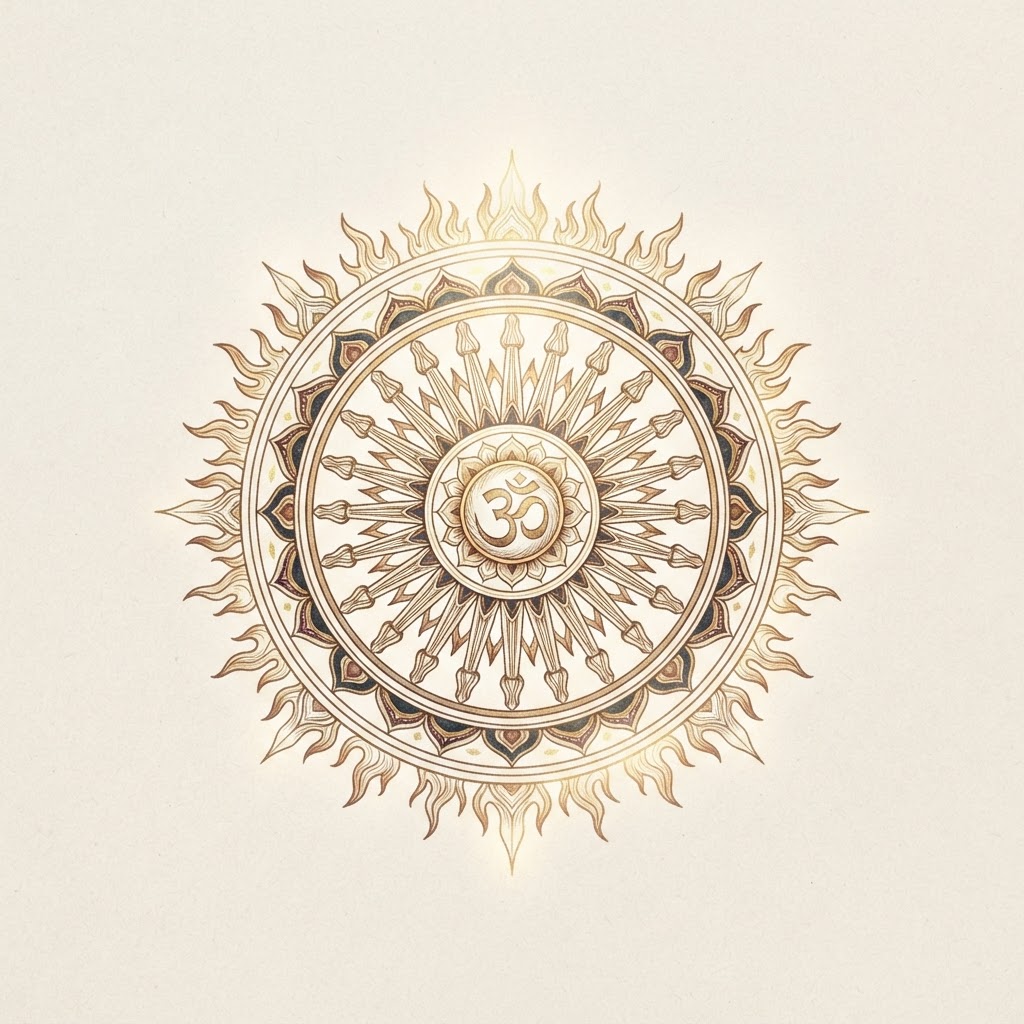
Sudarshana Chakra: Meaning, Origin & Symbolism
Also known as: Chakraraja, Wheel of Auspicious Vision
Hindu
Hindu
Solar Plexus Chakra
Third Eye Chakra
Fire
Protection
Wisdom
Courage
Transformation
The celestial spinning discus of Lord Vishnu representing the destruction of ego, cosmic time, and divine protection.
Quick Facts
- Category
- Hindu
- Culture / Origin
- Hindu
- Geographic Origin
- Indian Subcontinent
- Historical Period
- Epic / Puranic Period
- Estimated Age
- circa 800 BCE
- Element
- Fire
- Planet
- Sun
- Chakra
- Solar Plexus, Third Eye
- Zodiac
- Leo, Sagittarius
- Deities
- Vishnu, Krishna
- Verification
- unverified
What is Sudarshana Chakra?
The Sudarshana Chakra is the legendary spinning weapon of Lord Vishnu, depicted as a brilliant, fiery discus with multiple serrated teeth or spokes. The name translates literally to 'the disc of auspicious vision', implying that its sharp blade cuts through distorted perceptions to reveal supreme spiritual clarity.
Wielded on the index finger of Vishnu's upper right hand, it radiates blazing solar radiance. It is not merely an instrument of warfare, but an embodiment of cosmic order, dynamic time (Kala Chakra), and uncompromising spiritual truth.
In Pancharatra Vaishnava theology, the Sudarshana Chakra is personified as a potent deity (Chakraperumal) with extensive temple shrines dedicated exclusively to its protective and purification powers.
Meaning of Sudarshana Chakra
Divine protection, the wheel of cosmic time, and the destruction of demonic illusion.
Origin & History
The conceptual roots of the divine discus lie in the solar wheel of the Rigveda, which symbolized the sun's unstoppable transit across heaven. By the time of the Mahabharata and Vishnu Purana, it was identified as Vishnu's signature weapon.
During the medieval period in South India, standalone Sudarshana temples and bronzes surged, revered by kings and commoners alike for divine protection during epidemics and wars.
Spiritual Meaning
Spiritually, the Sudarshana Chakra acts as the higher discernment (buddhi) that swiftly slices through the intricate bindings of ego, delusion, and karmic debts.
Its rapid rotation reminds practitioners that time is continuously turning, urging them to utilize their mortal life for genuine spiritual progress and moral righteousness.
Symbolism
The center hub represents motionless, unalterable absolute consciousness; the radiating spokes signify the energetic faculties of mind and elements; the serrated blazing rim represents the sharp edge of truth eradicating error.
Traditional Uses
The ultimate protective discus of Vishnu that returns automatically to his hand after obliterating adharma (unrighteousness) across the three worlds.
Modern Spiritual Uses
Interpreted as a symbol of mental clarity, boundary setting, cutting emotional cords, and aligning with righteous spiritual goals.
Healing Associations
Clears severe psychological confusion and revitalizes weak bioenergetic fields.
Protection Associations
Regarded as one of the most powerful protective shields in Hindu theology against dark magic, psychic attack, and untimely demise.
How the Symbol Is Used
- •Sudarshana Homa
- •Vaishnava Kavacha recitations
- •Puja rituals
Cultural Context
Hindu — Indian Subcontinent (Epic / Puranic Period)
Sources & References
- 1.Vishnu Purana
- 2.Pancharatra Samhitas
- 3.Vaishnavism: Its Philosophy, Theology and Religious Discipline by S.M. Srinivasa Chari
This content is for educational and informational purposes only. Where modern spiritual interpretations are described, they are not presented as ancient historical facts. It is not a substitute for professional medical or spiritual advice.