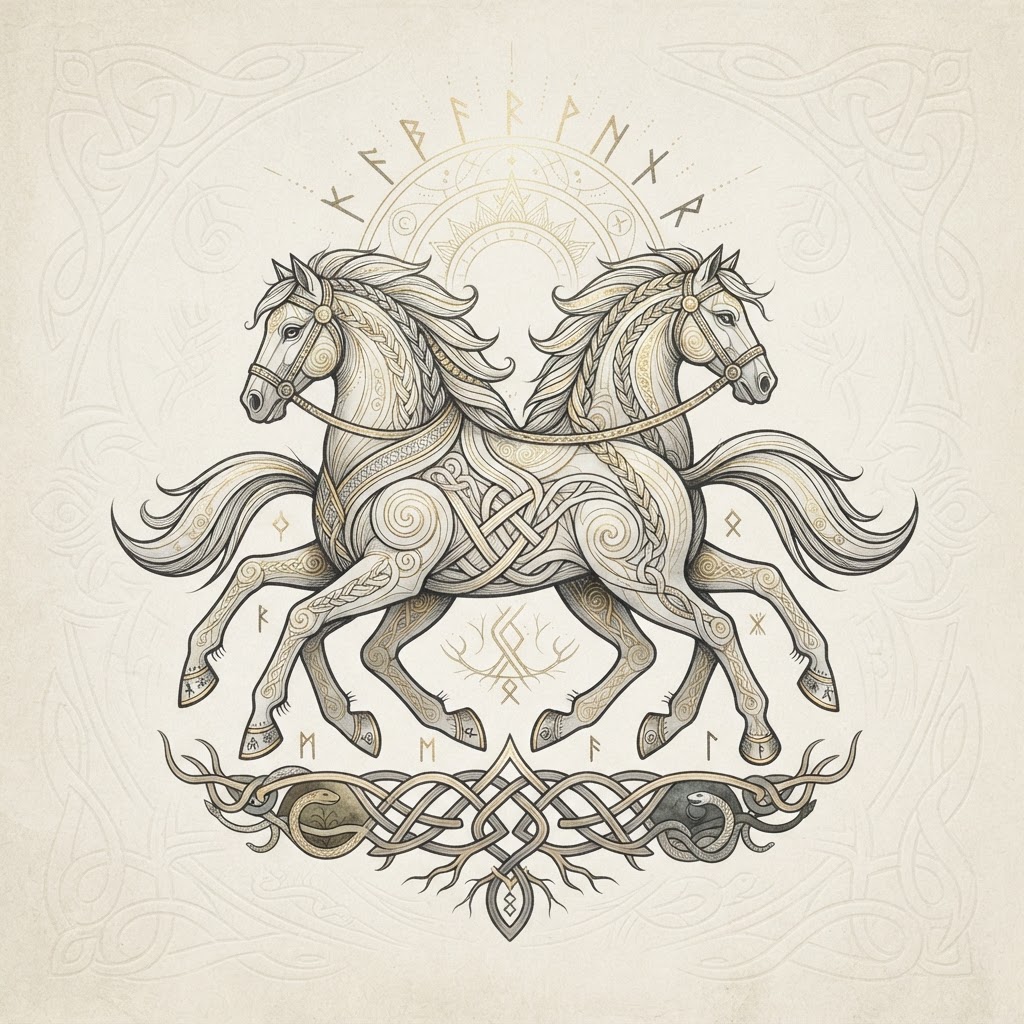
Sleipnir: Meaning, Origin & Symbolism
Also known as: The Eight-Legged Steed, Odin's Horse, The Glider
Norse/Germanic
Norse/Germanic
Third Eye Chakra
Root Chakra
Air
Transformation
Wisdom
Courage
Odin's legendary eight-legged gray stallion capable of traversing the sky, the earth, and the underworld.
Quick Facts
- Category
- Norse/Germanic
- Culture / Origin
- Norse/Germanic
- Geographic Origin
- Scandinavia (Sweden/Gotland)
- Historical Period
- Viking Age
- Estimated Age
- circa 8th century CE
- Element
- Air
- Planet
- Mercury
- Chakra
- Third Eye, Root
- Zodiac
- Sagittarius
- Deities
- Odin, Loki, Hermod
- Verification
- unverified
What is Sleipnir?
Sleipnir is the extraordinary eight-legged horse ridden by Odin, revered as the greatest of all steeds in Norse mythology. Born from the trickster god Loki (who took the form of a mare) and the giant stallion Svaðilfari, Sleipnir represents the ultimate shamanic transport. The horse can gallop effortlessly over stormy seas, fly through the air, and venture across the threshold of Helheim, as demonstrated when Hermóðr rode Sleipnir to plead for the release of Baldr. Sleipnir appears prominently on several 8th-century Gotlandic picture stones, notably the Ardre VIII and Tjängvide stones, carrying a rider welcomed by a valkyrie bearing a drinking horn.
Meaning of Sleipnir
The shamanic mount of Odin that transcends cosmological realms and bridges the worlds of the living and the dead.
Origin & History
Documented in both the Poetic and Prose Eddas, Sleipnir is deeply integrated into Viking Age funeral and monumental art. His eight legs have generated significant comparative interest among historians of religion, who note direct parallels to Siberian shamanic spirits and funeral biers carried by four men (eight legs total).
Spiritual Meaning
Sleipnir is the preeminent emblem of ecstatic spiritual travel, transcendence, and rapid inner movement. The eight legs symbolize extraordinary speed, supernatural agility, and the ability to maintain balance across complex mental or spiritual dimensions. He reminds practitioners that the spirit can travel beyond mundane physical barriers when guided by wisdom and disciplined will.
Symbolism
The eight legs signify double speed, the eight directions of space, and the mystical vehicle that bridges the physical world and the spirit underworld.
Traditional Uses
A psychopomp companion transporting fallen royalty and heroes safely into the afterlife realms of Odin.
Modern Spiritual Uses
Used in contemporary Seidr and shamanic traditions as an archetype of visionary flight, lucid astral exploration, and swift emotional transition.
Healing Associations
Overcomes paralysis of will and restores momentum during life stagnation.
Protection Associations
Provides swift extraction from spiritual danger and safe passage during astral transit.
How the Symbol Is Used
- •Seidr trance-work
- •Shamanic journeying
- •Astral projection
- •Funeral remembrance
Cultural Context
Norse/Germanic — Scandinavia (Sweden/Gotland) (Viking Age)
Sources & References
- 1.Snorri Sturluson, Gylfaginning
- 2.H.R. Ellis Davidson, Gods and Myths of Northern Europe
- 3.Mircea Eliade, Shamanism
This content is for educational and informational purposes only. Where modern spiritual interpretations are described, they are not presented as ancient historical facts. It is not a substitute for professional medical or spiritual advice.