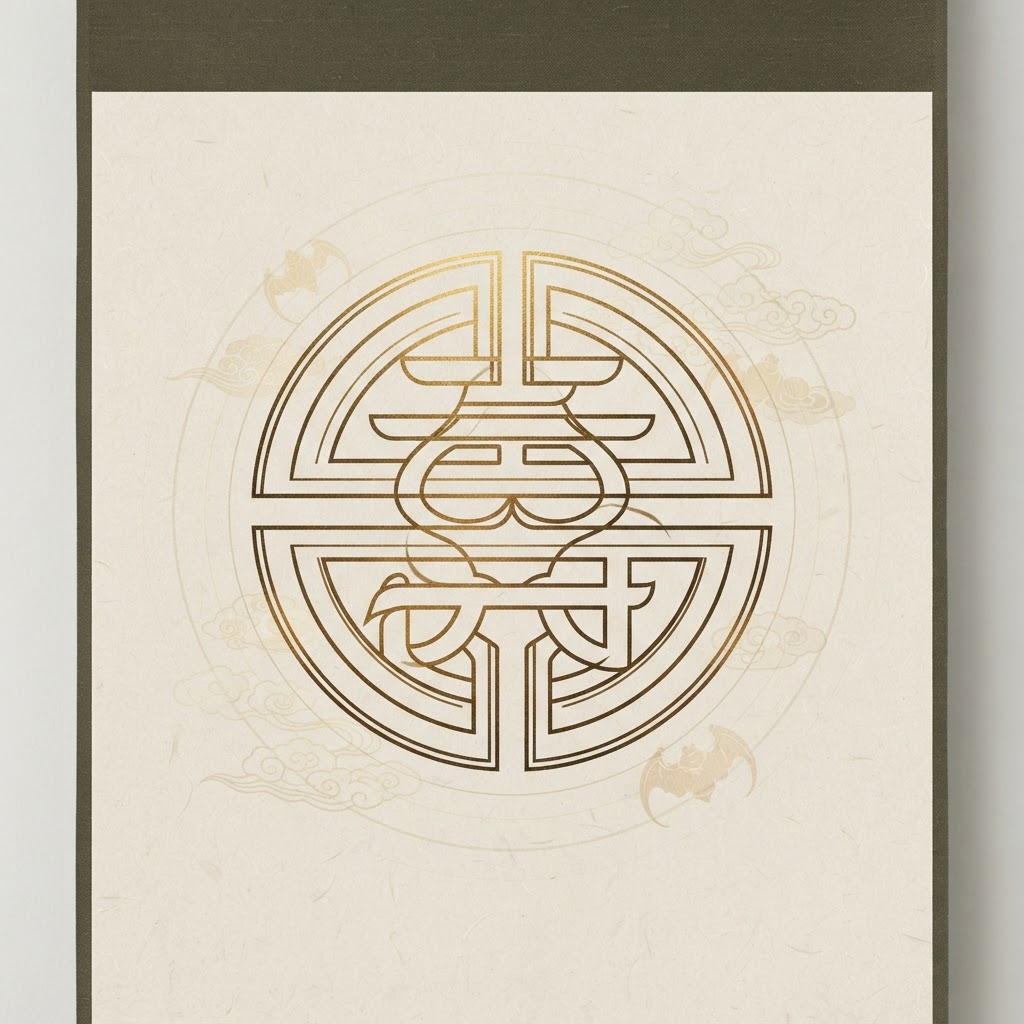
Shou: Meaning, Origin & Symbolism
Also known as: Shou Character, Longevity Symbol, Chinese Character for Longevity
Taoist/Chinese
Taoist/Chinese
Root Chakra
Heart Chakra
Wood
Longevity
Healing
Protection
Harmony
A ubiquitous Chinese calligraphic glyph symbolizing long life, health, vitality, and harmony with natural lifespans.
Quick Facts
- Category
- Taoist/Chinese
- Culture / Origin
- Taoist/Chinese
- Geographic Origin
- China
- Historical Period
- Zhou Dynasty to present
- Estimated Age
- 2500+ years
- Element
- Wood
- Planet
- Saturn
- Chakra
- Root, Heart
- Deities
- Shouxing (God of Longevity), Canopus Star Deity
- Verification
- unverified
What is Shou?
The Shou symbol is the stylized Chinese character for longevity (壽) and represents one of the most widespread and culturally significant motifs in Chinese iconography. Rendered in hundreds of distinct artistic forms—most notably the elongated circular medallion or the tall rectangular seal style—the Shou symbol serves as a perpetual visual blessing for an enduring, healthy, and fulfilling life.
Deeply rooted in Taoist ideals of physical and spiritual preservation, longevity in traditional Chinese thought is not merely the accumulation of biological years, but the attainment of a life marked by health, mental sharpness, peaceful contentment, and harmonious closure. To live out one's heaven-allotted lifespan (Tiannian) without premature illness is considered one of the Five Blessings (Wufu).
The Shou character frequently appears on porcelain, embroideries, carved wooden screens, architecture, and birthday gifts, often surrounded by five bats (representing the Five Blessings) or combined with the Lu (prosperity) and Fu (good fortune) symbols.
Meaning of Shou
The Shou symbol signifies a long, healthy, and fulfilling physical lifespan achieved through balance and harmony.
Origin & History
The veneration of longevity can be traced to early ancestral cults and bronze inscriptions of the Zhou Dynasty, where dedications frequently ended with prayers for 'ten thousand years of life without end'. With the emergence of religious Taoism and the search for physical immortality during the Qin and Han periods, longevity transformed from a secular wish into a profound spiritual objective.
The character evolved through diverse calligraphic traditions, culminating in compositions like the 'Baishoutu' (The Hundred Shou Diagram), which presents the character in one hundred distinct calligraphic variations. This composition became a classic imperial birthday gift during the Ming and Qing dynasties.
Spiritual Meaning
In Taoist spiritual philosophy, long life is the natural byproduct of living in complete accordance with the Tao. When a person practices simplicity, regulates their desires, and preserves their vital reserves of Jing, Qi, and Shen, bodily decline is greatly decelerated. Therefore, the Shou symbol is a visual reminder to live a mindful, preserved life.
It honors the sacredness of the physical body as the living crucible of spiritual cultivation. Without a stable and enduring physical vessel, the internal alchemical work needed to transcend worldly cycles cannot be completed.
Symbolism
The elongated vertical lines in the seal script versions symbolize an uninterrupted, extended lifeline. When rendered in a circle, it reflects the cyclical, unbroken continuity of existence and completeness. Surrounded by five bats (Fu), it signifies that longevity is accompanied by health, wealth, love of virtue, and a peaceful death.
Traditional Uses
Traditionally regarded as an essential auspicious charm for birthday celebrations (especially for elders), family estates, and temples, invoking blessings of vitality and shielding against untimely death.
Modern Spiritual Uses
In modern lifestyle and wellness frameworks, the Shou symbol stands for holistic vitality, aging gracefully, sustainable living practices, and honoring life's journey.
Healing Associations
Serves as a visual focal point in Qigong recovery and convalescent spaces to reinforce the intention of cellular renewal and physical vitality.
Protection Associations
Used to shield the elderly and family members from sudden illness, premature decline, and debilitating physical weakness.
How the Symbol Is Used
- •Feng Shui
- •Calligraphy Meditation
- •Birthday Rituals
- •Qigong Longevity Practices
Cultural Context
Taoist/Chinese — China (Zhou Dynasty to present)
Sources & References
- 1.Eberhard, Wolfram. 'A Dictionary of Chinese Symbols' (1986)
- 2.Welch, Patricia Bjaaland. 'Chinese Art: A Guide to Motifs and Images' (2008)
- 3.Little, Stephen. 'Taoism and the Arts of China' (2000)
This content is for educational and informational purposes only. Where modern spiritual interpretations are described, they are not presented as ancient historical facts. It is not a substitute for professional medical or spiritual advice.