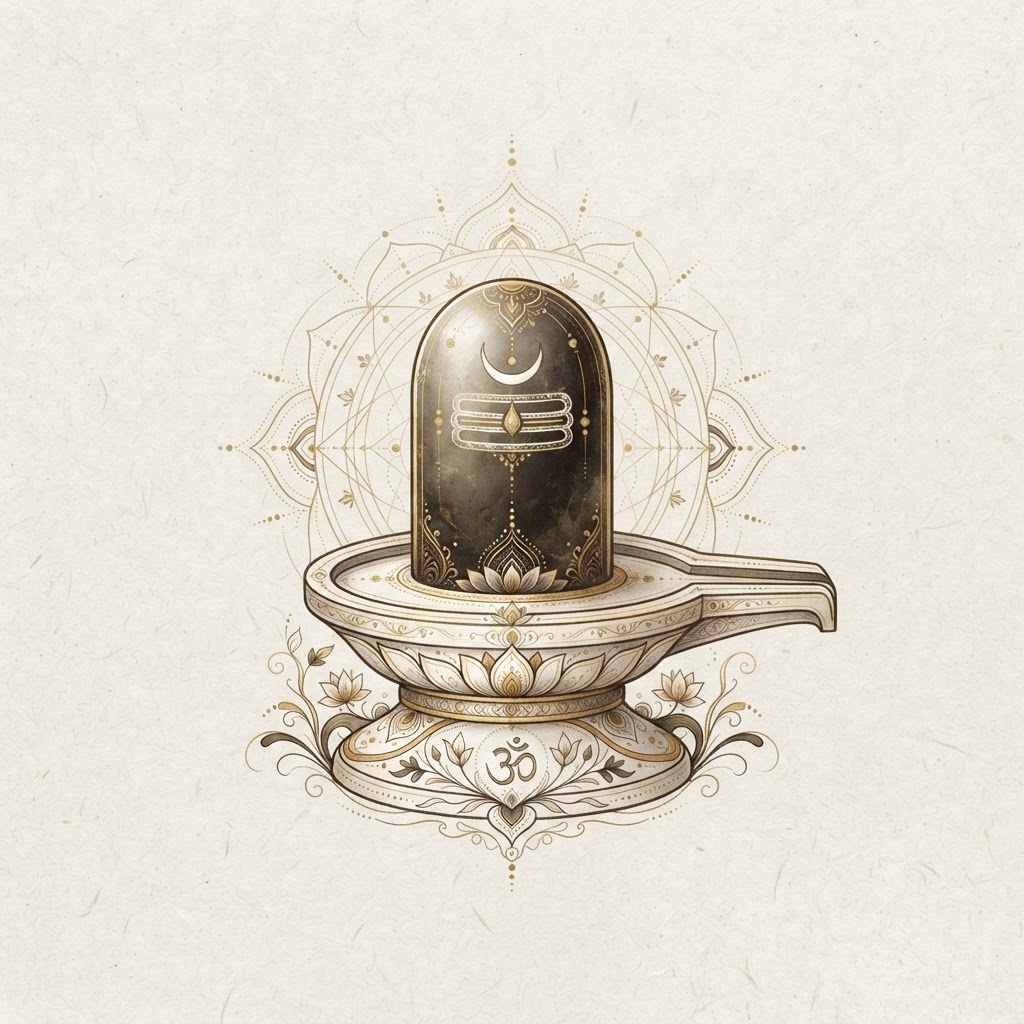
Shiva Lingam: Meaning, Origin & Symbolism
Also known as: Lingam, Linga, Jyotirlinga
Yogic
Hindu / Shaiva
Crown Chakra
Root Chakra
Third Eye Chakra
Ether/Spirit
Transformation
Spiritual Awakening
Balance
Grounding
An elliptical, aniconic stone representation of formless, primordial consciousness and the infinite cosmic source.
Quick Facts
- Category
- Yogic
- Culture / Origin
- Hindu / Shaiva
- Geographic Origin
- Ancient India
- Historical Period
- Ancient India
- Estimated Age
- circa 2000 BCE
- Element
- Ether/Spirit
- Planet
- Sun
- Chakra
- Crown, Root, Third Eye
- Deities
- Shiva, Parvati
- Verification
- unverified
What is Shiva Lingam?
The Shiva Lingam is an aniconic, smooth, elliptical stone or sculpted monument symbolizing the unmanifest, formless aspect of supreme consciousness (Brahman). Commonly mounted upon a circular or oval pedestal known as the Yoni or Pitha, the Lingam-Yoni compound illustrates the cosmic matrix of creation: the unmanifest masculine principle of transcendent awareness (Purusha) resting within the creative feminine matrix of dynamic form (Prakriti). Free from anthropomorphic features, the Lingam points beyond names and forms to the primal egg of the universe (Brahmanda), representing continuous cosmic generation, endurance, and absorption.
Meaning of Shiva Lingam
The formless, infinite ground of pure consciousness from which all manifestation arises and dissolves.
Origin & History
Aniconic stones have been venerated across the Indian subcontinent since prehistoric times, with proto-Lingam structures identified in Harappan excavations like Kalibangan. In the Linga Purana and Svetasvatara Upanishad, the Lingam is defined as the formless pillar of light (Jyotirlinga) that has neither beginning nor end, humbling the gods Brahma and Vishnu by revealing the boundless nature of the divine. It remains the principal sacred image in Hindu Shaivite shrines worldwide.
Spiritual Meaning
The Shiva Lingam teaches non-anthropomorphic spirituality. It invites the yogi to look past fleeting external identities and connect directly with the formless substrate of reality. It signifies the ascent of the mind into formless awareness during advanced stages of meditation.
Symbolism
The smooth columnar shape represents infinity and non-differentiation; the cylindrical stone denotes Shiva's transcendent light; the horizontal pedestal (Yoni) denotes Shakti's manifest material nature. The three horizontal lines often inscribed in ash (Tripundra) signify purification of the three gunas.
Traditional Uses
The ultimate focus of devotion in Shaivism, worshiped through Abhishekam (ritual pouring of water, milk, or ghee) to cultivate clarity, cool the fires of ego, and achieve liberation.
Modern Spiritual Uses
Viewed within transpersonal spirituality and crystal healing as an emblem of cosmic balance, concentrated vital life-force, and the unified zero-point energy field.
Healing Associations
Aids in gathering fragmented mental energy, balancing masculine and feminine internal dynamics.
Protection Associations
Clears negative psychic environments and anchors stabilizing, grounding spiritual fields.
How the Symbol Is Used
- •Linga Puja
- •Abhishekam
- •Dhyana
- •Kundalini Yoga
Cultural Context
Hindu / Shaiva — Ancient India (Ancient India)
Sources & References
- 1.Linga Purana
- 2.Svetasvatara Upanishad
- 3.Diana L. Eck, India: A Sacred Geography
This content is for educational and informational purposes only. Where modern spiritual interpretations are described, they are not presented as ancient historical facts. It is not a substitute for professional medical or spiritual advice.