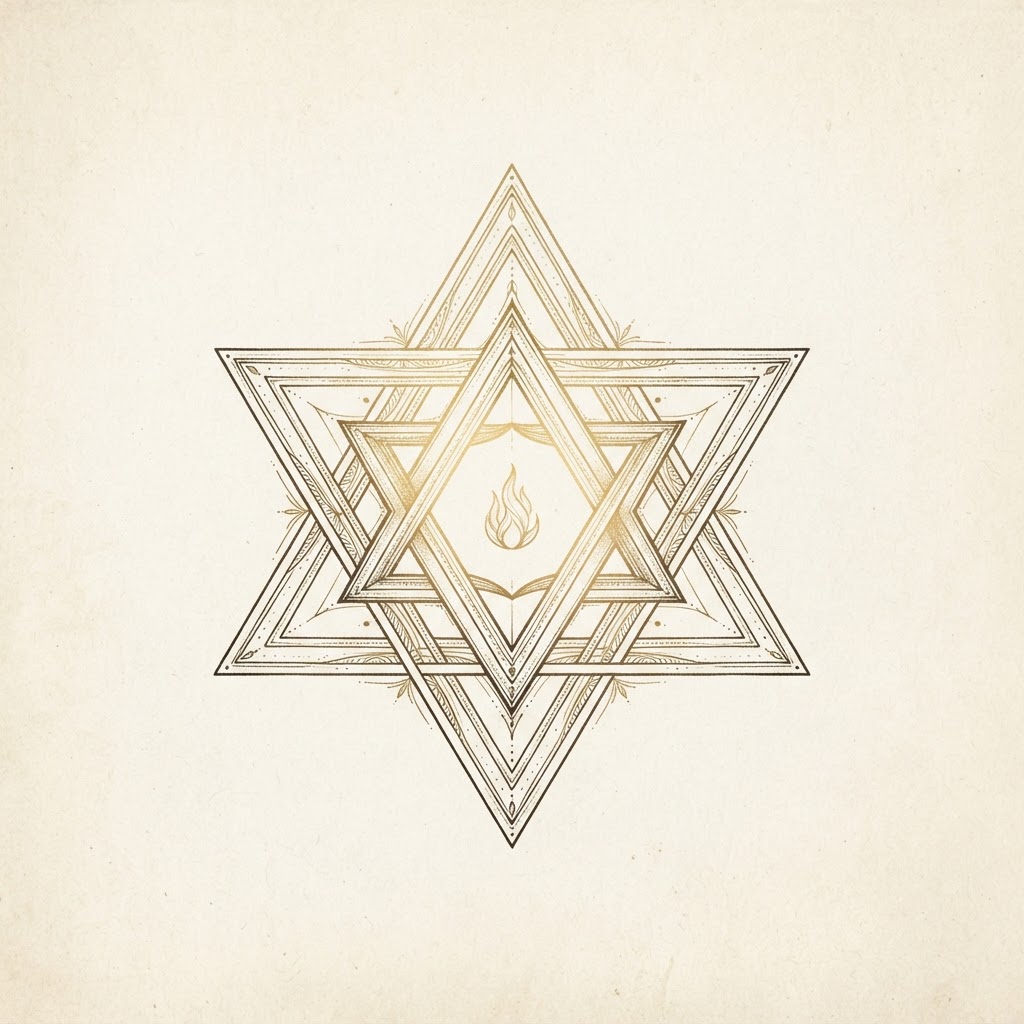
Shatkona: Meaning, Origin & Symbolism
Also known as: Six-Pointed Star of Shiva-Shakti, Yogic Hexagram, Shiva-Shakti Yantra
Yogic
Hindu / Tantric
Heart Chakra
Ether/Spirit
Balance
Harmony
Wisdom
Transformation
An ancient geometric emblem composed of two interlocking triangles representing the divine union of masculine and feminine principles.
Quick Facts
- Category
- Yogic
- Culture / Origin
- Hindu / Tantric
- Geographic Origin
- Ancient India
- Historical Period
- Ancient to Medieval
- Estimated Age
- circa 1000 BCE
- Element
- Ether/Spirit
- Planet
- Sun
- Chakra
- Heart
- Deities
- Shiva, Shakti, Kartikeya
- Verification
- unverified
What is Shatkona?
The Shatkona is an archetypal geometric symbol in Indian symbology and Tantric yoga consisting of two perfectly balanced, interlacing equilateral triangles forming a six-pointed star. Predating the adoption of the hexagram as a Jewish symbol by centuries, the Shatkona specifically embodies the inseparable cosmic duality forming reality. The upward-pointing triangle represents Shiva (Purusha)—unmoving, transcendent consciousness and the element of Fire. The downward-pointing triangle represents Shakti (Prakriti)—manifest creative power, divine grace, and the element of Water. Together, they illustrate that physical reality cannot exist without consciousness, nor can consciousness experience itself without energetic form.
Meaning of Shatkona
The perfect balance, non-duality, and union between masculine consciousness and feminine energy.
Origin & History
Artifacts bearing the Shatkona have been discovered in ancient Indian archaeological contexts, including punch-marked coins and temple iconography. It is intrinsically tied to the theology of Murugan (Skanda/Kartikeya), who was born from six sparks of Shiva's third eye and is represented by the six-pointed hexagram. In medieval Tantric visual culture, the Shatkona was incorporated directly into the heart chakra (Anahata) and various yantric diagrams.
Spiritual Meaning
The Shatkona symbolizes the state of non-dual realization (Advaita) where the apparent duality of subject and object, male and female, light and shadow dissolves into harmonic synthesis. It demonstrates that spiritual liberation occurs within worldly existence when polarity is reconciled.
Symbolism
The upward triangle symbolizes the blade, fire, solar energy, and spiritual ascent. The downward triangle symbolizes the chalice, water, lunar flow, and material descent. The six outer points represent six cardinal faculties or virtues.
Traditional Uses
Represents the union of Purusha (spirit) and Prakriti (matter), also serving as the specific yantra of Lord Kartikeya, the god of spiritual focus and divine warrior wisdom.
Modern Spiritual Uses
Regarded as a universal symbol for sacred balance, inner integration of animus and anima, and harmonious energetic alignment.
Healing Associations
Integrates polarities within the psyche, calming neurotic conflict between intellect and emotion.
Protection Associations
Used in traditional yantric rituals to establish divine balance and ward off discordant or chaotic influences.
How the Symbol Is Used
- •Yantra Sadhana
- •Tantric Rituals
- •Heart Meditation
Cultural Context
Hindu / Tantric — Ancient India (Ancient to Medieval)
Sources & References
- 1.Rao, T. A. Gopinatha, Elements of Hindu Iconography
- 2.Ajit Mookerjee, Tantra Asana: A Way to Self-Realization
- 3.Shiva Purana
This content is for educational and informational purposes only. Where modern spiritual interpretations are described, they are not presented as ancient historical facts. It is not a substitute for professional medical or spiritual advice.