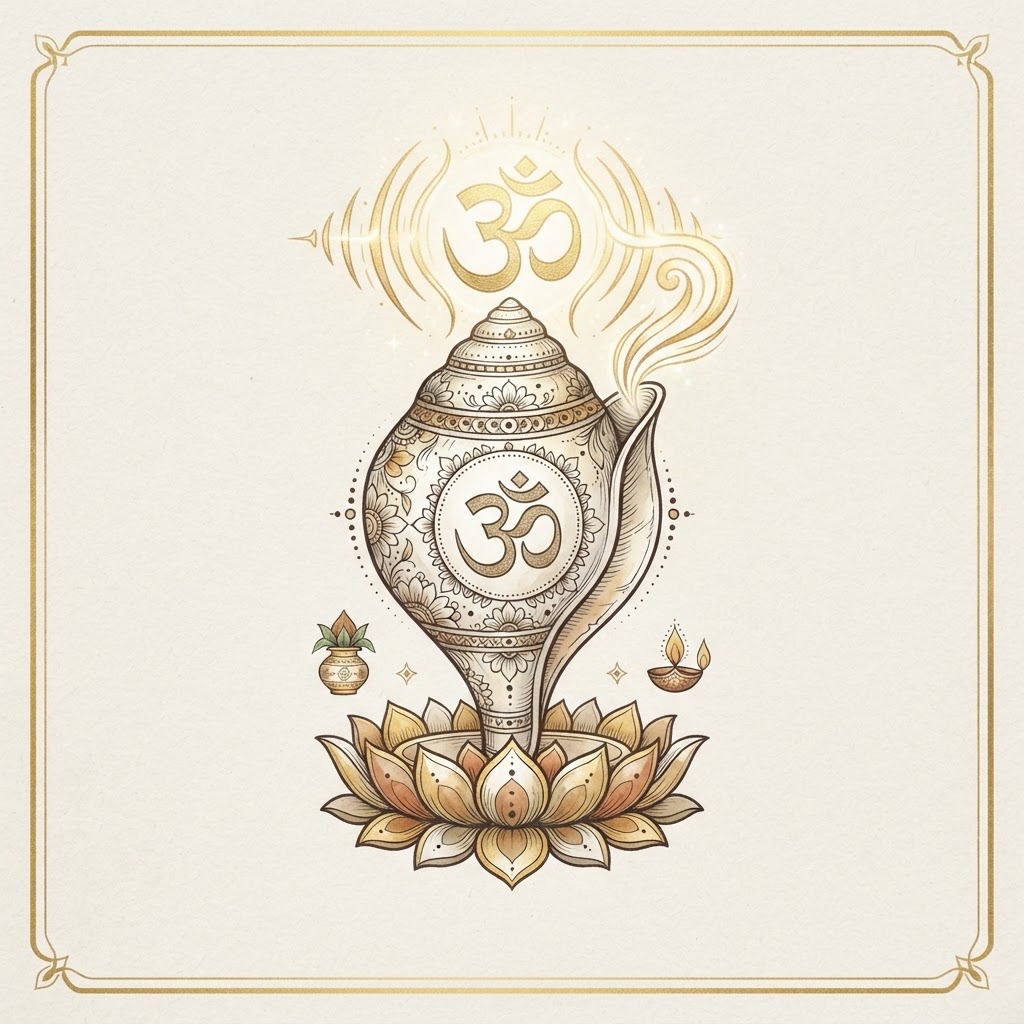
Shankha (Conch Shell): Meaning, Origin & Symbolism
Also known as: Shankh, Conch, Panchajanya
Hindu
Hindu
Throat Chakra
Heart Chakra
Water
Protection
Wisdom
Transformation
Peace
The sacred conch shell whose blowing produces the primordial sound of Om, dispelling negative forces and heralding victory.
Quick Facts
- Category
- Hindu
- Culture / Origin
- Hindu
- Geographic Origin
- India / Indian Ocean
- Historical Period
- Vedic Period
- Estimated Age
- 3500+ years
- Element
- Water
- Planet
- Moon
- Chakra
- Throat, Heart
- Zodiac
- Cancer
- Deities
- Vishnu, Krishna, Lakshmi
- Verification
- unverified
What is Shankha (Conch Shell)?
The Shankha is a ritual conch shell obtained from the marine snail Turbinella pyrum, revered as one of the most sacred ritual emblems in Hinduism. Held in the upper left hand of Lord Vishnu, it represents both the origin of space and sound, and the victorious call to righteous duty.
Two varieties of Shankha are recognized in tradition: the Vamavarta (left-turning, which is common) and the exceedingly rare Dakshinavarta (right-turning), which is considered especially sacred to Goddess Lakshmi and is installed upon altars to attract immense spiritual and material fortune.
Blown during temple ceremonies, at the commencement of battles in ancient epics, and during daily aarti, the deep, resonant drone of the Shankha is believed to cleanse the surrounding environment of demonic energies, purifying the atmosphere and awakening devotion in all who hear it.
Meaning of Shankha (Conch Shell)
The emblem of divine victory, the origin of sound, and the purifier of sacred spaces.
Origin & History
The conch holds deep antiquity in Indian literature, appearing in the Mahabharata where each major warrior possessed a named conch; Lord Krishna's celebrated conch was called 'Panchajanya'. Its blast signaled the opening of the epic Kurukshetra war.
According to Hindu mythology, the Shankha emerged during the Samudra Manthana (Churning of the Cosmic Ocean) as one of the fourteen divine treasures (Ratnas), immediately claimed by Vishnu for its peerless auspiciousness and association with cosmic resonance.
Spiritual Meaning
Spiritually, the spiraling structure of the Shankha echoes the cosmic spiral of galaxies and human DNA, reminding the seeker of the unfolding journey of consciousness. The interior hollow of the shell symbolizes akasha (space), from which the primordial sound of creation bursts forth.
Listening to or blowing the Shankha focuses wandering thoughts, drives away psychological gloom, and inspires courage to confront moral and spiritual battles.
Symbolism
The spiral represents the cyclical evolution of the universe; the sound blown represents the sacred vibration of Om; the shell's lustrous white purity symbolizes truth and unstained virtue.
Traditional Uses
Used as a ceremonial trumpet to banish malevolent spirits and herald auspicious events, and as a sacred pouring vessel during temple abhishekam.
Modern Spiritual Uses
Used in respiratory wellness, pranayama lung-capacity training, sound therapy, and as a visual reminder to express authentic truth with courage.
Healing Associations
Blowing the conch strengthens pulmonary health, diaphragm control, and thyroid functioning via vibrational stimulation.
Protection Associations
Drives away evil spirits, neutralizes psychic stagnation, and dispels malignant atmospheric energies.
How the Symbol Is Used
- •Temple Aarti
- •Puja water libations
- •Mahabharata recitation
- •Ayurvedic conch bhasma medicine
Cultural Context
Hindu — India / Indian Ocean (Vedic Period)
Sources & References
- 1.Bhagavad Gita (Chapter 1)
- 2.Vishnu Purana
- 3.The Indian Conch by J. Hornell
This content is for educational and informational purposes only. Where modern spiritual interpretations are described, they are not presented as ancient historical facts. It is not a substitute for professional medical or spiritual advice.