Ruyi: Meaning, Origin & Symbolism
Also known as: Ruyi Scepter, As-You-Wish Scepter, Ju-I
Taoist/Chinese
Taoist/Chinese
Throat Chakra
Solar Plexus Chakra
Ether/Spirit
Manifestation
Wisdom
Abundance
Harmony
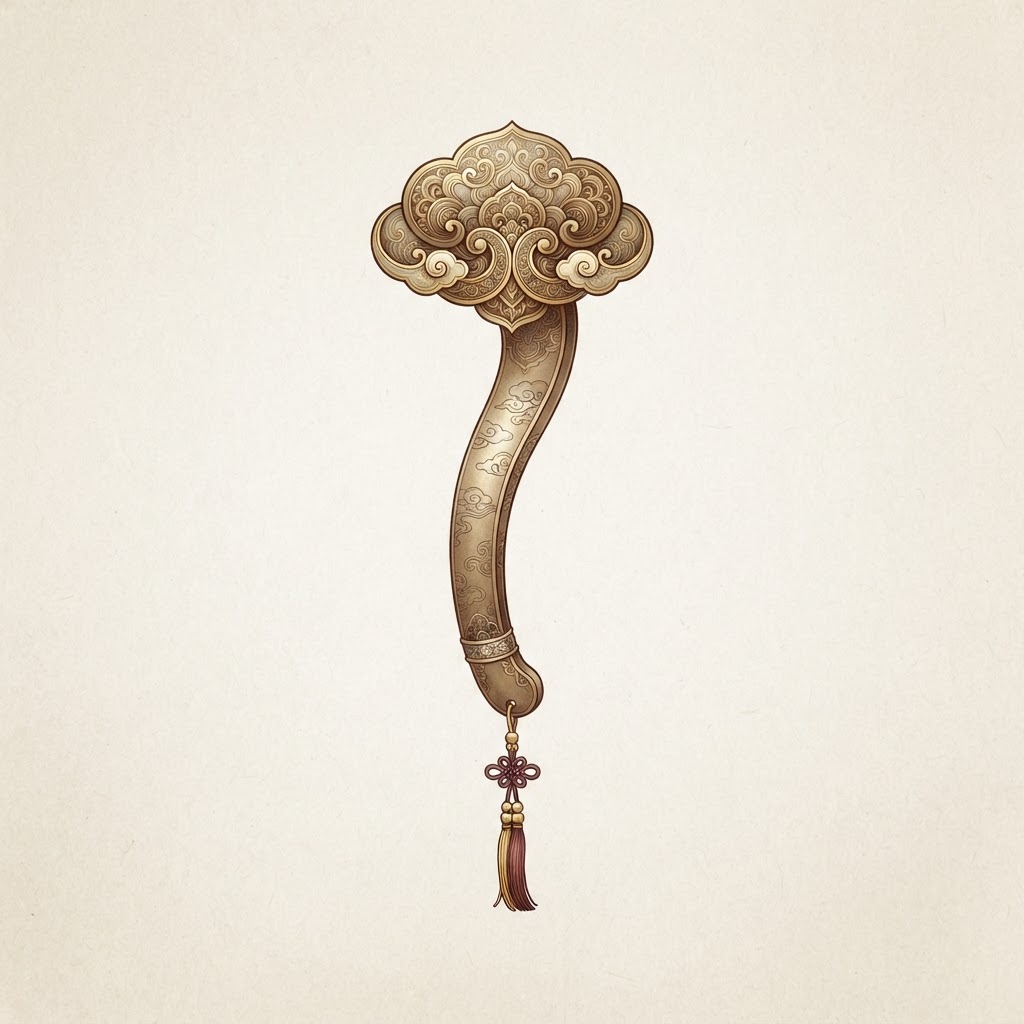
A curved ceremonial scepter with a cloud or lingzhi-shaped head, symbolizing spiritual authority, blessing, and good fortune.
Quick Facts
- Category
- Taoist/Chinese
- Culture / Origin
- Taoist/Chinese
- Geographic Origin
- China
- Historical Period
- Jin Dynasty to Qing Dynasty
- Estimated Age
- circa 300 CE
- Element
- Ether/Spirit
- Planet
- Jupiter
- Chakra
- Throat, Solar Plexus
- Deities
- Caishen, Three Pure Ones, Guanyin
- Verification
- unverified
What is Ruyi?
The Ruyi is an ancient Chinese curved ceremonial scepter whose name translates directly to 'as you wish' or 'according to your will'. Recognized by its gentle S-shaped curve and an ornate head carved in the likeness of a Lingzhi mushroom or an auspicious cloud, the Ruyi has historically stood as a supreme emblem of imperial authority, spiritual peace, and the realization of one's deepest aspirations.
Originally functioning as a utilitarian backscratcher or speaking baton during philosophical debates in ancient times, the Ruyi evolved into a potent ceremonial treasure. It was embraced by both Taoist adepts and Buddhist monks as a symbol of mental sovereignty and spiritual grace before being adopted by Chinese emperors as an emblem of regal authority.
Crafted from auspicious materials such as jade, gold, cloisonné, or hardwood, Ruyi scepters were presented as formal gifts among nobility to convey heartfelt wishes of prosperity, health, and smooth passage through all endeavors.
Meaning of Ruyi
The Ruyi symbolizes the manifestation of positive intent, sovereign authority, and the effortless realization of auspicious desires.
Origin & History
The term 'ruyi' originated around the Han and Jin dynasties. Early records describe scholars holding a ruyi during 'pure conversation' (Qingtan) debates. As Buddhism and religious Taoism flourished in the 4th to 6th centuries, the scepter was adopted into iconography, frequently held by Bodhisattvas (such as Manjushri) and Taoist deities (such as the Three Pure Ones and the God of Wealth).
During the Ming and Qing dynasties, the Ruyi reached the peak of its material prestige. Qing emperors, particularly Qianlong, collected hundreds of exquisitely carved jade Ruyi, which were prominently displayed in throne rooms and presented to foreign ambassadors as gestures of divine sovereignty and peaceful reign.
Spiritual Meaning
On an esoteric level, the Ruyi represents spiritual sovereignty—the condition of being an absolute master of one's own mind, desires, and spiritual destiny. Its curved shape mirrors ease, flexibility, and non-resistance, echoing the Taoist virtue of yielding to the currents of reality while effortlessly directing intention.
The typical depiction of the head as the Lingzhi (Mushroom of Immortality) connects the scepter directly to the pursuit of longevity and spiritual transcendence. To hold the Ruyi in spiritual contemplation is to rest in the conviction that when one's heart is aligned with the Tao, every circumstance naturally unfolds in accordance with divine will.
Symbolism
The S-curve embodies flexibility and graceful adaptation. The head, shaped like a cloud or Lingzhi mushroom, represents celestial blessings, immortality, and transcendent wisdom. The long handle signifies perseverance and longevity.
Traditional Uses
Traditionally regarded as an emblem of good omen, high rank, and divine protection that dissolves obstacles and brings ease, wealth, and smooth career advancement.
Modern Spiritual Uses
In modern Feng Shui and wellness settings, the Ruyi is placed in offices and meditation spaces to inspire clear leadership, empowerment, manifest abundance, and reduce stress.
Healing Associations
Its association with the Lingzhi mushroom links it energetically to longevity, vitality, and the preservation of life force.
Protection Associations
Placed in prominent spaces to ward off destructive conflicts, gossip, political backstabbing, and professional setbacks.
How the Symbol Is Used
- •Feng Shui
- •Taoist Liturgical Rituals
- •Imperial Ceremonies
- •Meditation Visualization
Cultural Context
Taoist/Chinese — China (Jin Dynasty to Qing Dynasty)
Sources & References
- 1.Kieschnick, John. 'The Impact of Buddhism on Chinese Material Culture' (2003)
- 2.Welch, Patricia Bjaaland. 'Chinese Art: A Guide to Motifs and Images' (2008)
- 3.Eberhard, Wolfram. 'A Dictionary of Chinese Symbols' (1986)
This content is for educational and informational purposes only. Where modern spiritual interpretations are described, they are not presented as ancient historical facts. It is not a substitute for professional medical or spiritual advice.