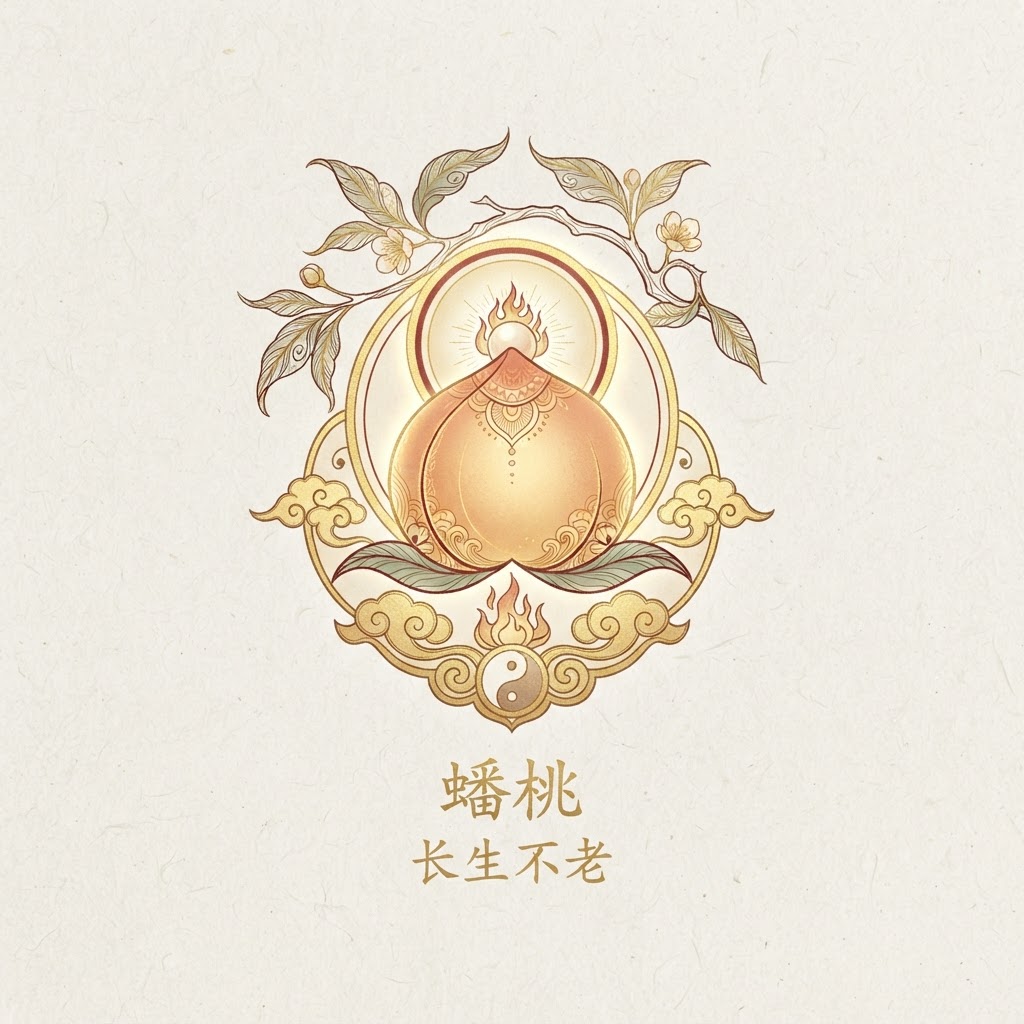
Peach of Immortality: Meaning, Origin & Symbolism
Also known as: Celestial Peach, Pantao, Longevity Peach
Taoist/Chinese
Taoist/Chinese
Root Chakra
Heart Chakra
Earth
Healing
Prosperity
Transformation
Protection
The mythical fruit of the heavenly gardens granting longevity, spiritual immortality, and divine vitality.
Quick Facts
- Category
- Taoist/Chinese
- Culture / Origin
- Taoist/Chinese
- Geographic Origin
- China
- Historical Period
- Han Dynasty
- Estimated Age
- circa 200 BCE
- Element
- Earth
- Planet
- Jupiter
- Chakra
- Root, Heart
- Deities
- Queen Mother of the West (Xiwangmu), Shouxing (God of Longevity), Sun Wukong
- Verification
- unverified
What is Peach of Immortality?
The Peach of Immortality (Pantao) is a sacred symbol in Taoist folklore and iconography, representing the attainment of longevity, spiritual liberation, and eternal youth. According to mythology, these divine peaches grew in the secluded orchard of the Queen Mother of the West (Xiwangmu) in the Kunlun Mountains. The trees blossomed only once every three thousand years, took another three thousand years to ripen, and conferred instantaneous immortality and celestial rank upon anyone who tasted their flesh. Beyond folklore, the peach tree holds an elevated status in Chinese culture; its wood is revered for its potent capability to ward off malevolent spirits, while its fruit symbolizes the ultimate spiritual goal of Taoism: transcending mortal limitations and realizing the immortal true self (Zhenren).
Meaning of Peach of Immortality
Vigorous health, extended physical longevity, and the attainment of spiritual immortality.
Origin & History
The association between peaches and immortality was solidified in Han dynasty texts and the popularization of the Queen Mother of the West cult. In the Ming dynasty classic novel Journey to the West, the Monkey King Sun Wukong famously crashes the heavenly Peach Banquet, consuming the celestial fruit and achieving supernatural resilience. Throughout Chinese dynastic history, peach wood swords were crafted by Taoist priests as essential ceremonial tools to banish malevolent ghosts, and peaches made of porcelain or jade were presented as birthday gifts to elders.
Spiritual Meaning
Symbolizes the fruit of internal cultivation (Neidan). Just as the peach ripens across millennia, spiritual transformation requires patient purification of spirit, mind, and body, eventually yielding the incorruptible nectar of enlightened awareness.
Symbolism
The fleshy heart-shape represents vital life essence, blood, and physical stamina, while the resilient inner stone signifies the enduring, immortal diamond-soul.
Traditional Uses
Considered an auspicious gift that blesses the recipient with longevity, vitality, and high moral standing.
Modern Spiritual Uses
Celebrated in wellness and holistic living as an archetype for anti-aging, self-care, holistic nourishment, and mindful physical longevity.
Healing Associations
Associated with restorative rejuvenation, regenerative energy, and strengthening constitutional qi against premature physical decline.
Protection Associations
Peach wood talismans and swords are used to drive off malevolent spiritual entities and neutralize stagnant qi.
How the Symbol Is Used
- •Taoist Exorcism
- •Feng Shui
- •Longevity Rituals
- •Birthday Celebrations
Cultural Context
Taoist/Chinese — China (Han Dynasty)
Sources & References
- 1.Little, Stephen, and Shawn Eichman. Taoism and the Arts of China. Art Institute of Chicago, 2000.
- 2.Werner, E. T. C. Myths and Legends of China. George G. Harrap & Co., 1922.
This content is for educational and informational purposes only. Where modern spiritual interpretations are described, they are not presented as ancient historical facts. It is not a substitute for professional medical or spiritual advice.