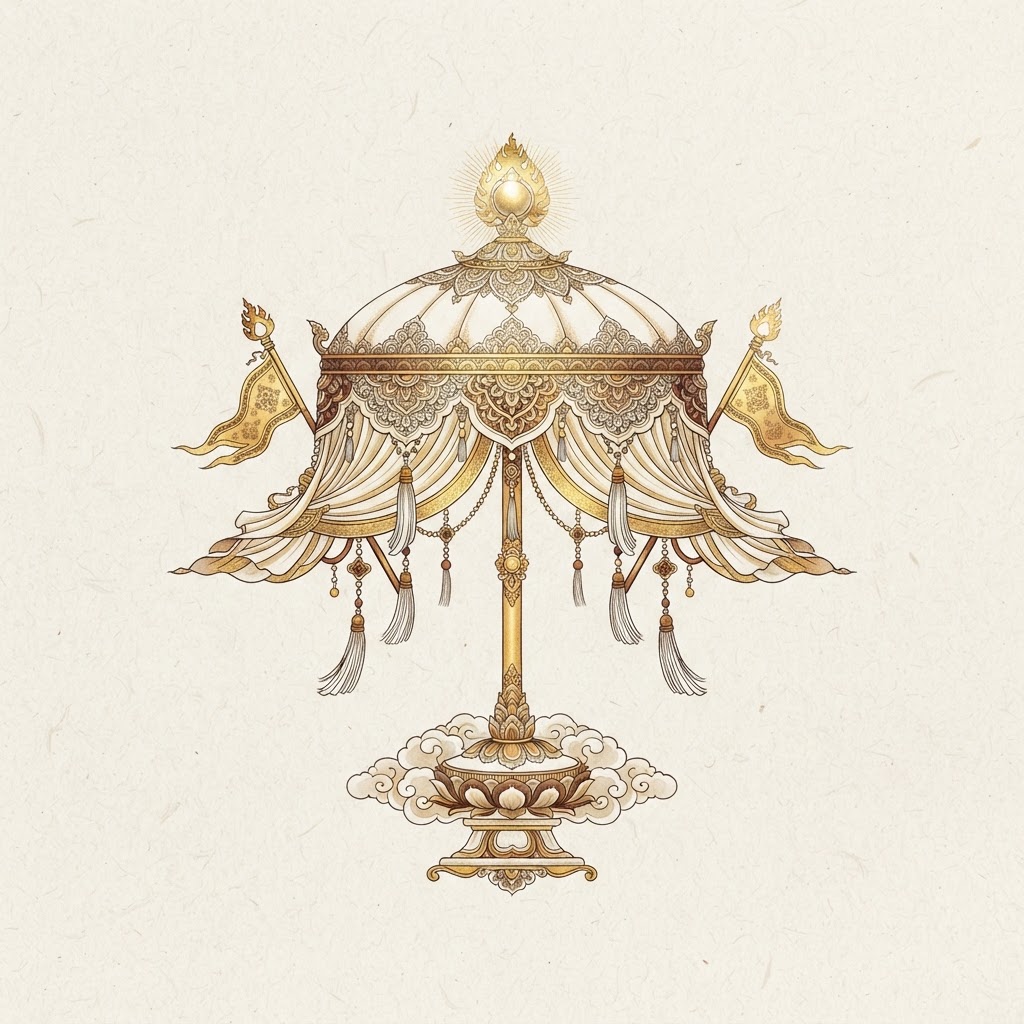
Parasol: Meaning, Origin & Symbolism
Also known as: Chhatra, Dug, Precious Umbrella
Buddhist
Buddhist
Crown Chakra
Air
Protection
Peace
Transformation
An ancient emblem of royalty and protection, symbolizing shelter from defilements, suffering, and negative forces.
Quick Facts
- Category
- Buddhist
- Culture / Origin
- Buddhist
- Geographic Origin
- Ancient India
- Historical Period
- Classical Antiquity
- Estimated Age
- circa 5th century BCE
- Element
- Air
- Planet
- Jupiter
- Chakra
- Crown
- Deities
- Sitatapatra (White Parasol Goddess), Gautama Buddha
- Verification
- unverified
What is Parasol?
The Parasol (Sanskrit: Chhatra; Tibetan: Dug) is one of the eight traditional auspicious symbols (Ashtamangala) in Buddhism. Historically an emblem of royal status across the Indian subcontinent, it was held over kings and spiritual teachers to shade them from the harsh midday sun. In Buddhist art, the parasol was quickly adopted to denote the supreme sovereignty of the Buddha as the Dharmaraja, or spiritual king. Symbolically, the dome of the parasol represents the broad vault of the heavens, while its handle serves as the cosmic axis (axis mundi) connecting the celestial and earthly realms. Functionally, it signifies the spiritual protection offered by the Dharma against the scorch of negative emotions, obstacles, sickness, and rebirth in lower realms.
Meaning of Parasol
Spiritual protection from the suffering of samsara, worldly heat, mental defilements, and harmful spirits.
Origin & History
Dating back to the Vedic and Mauryan eras, parasols were ceremonial regalia carried over emperors and holy figures. Early aniconic Buddhist relief carvings at Sanchi and Bharhut commonly show a parasol hovering above an empty throne or footprints to signify the Buddha's presence and majestic authority.
Spiritual Meaning
The parasol represents the cooling, soothing nature of the Dharma. Just as a physical umbrella protects one from torrential rain or intense solar heat, taking refuge in the Buddha's teachings protects the mind from the searing burn of desire, anger, and delusion.
Symbolism
The circular canopy represents wisdom; the suspended silk flounces represent varied methods of compassionate activity; the pole represents ethical practice anchoring the practitioner.
Traditional Uses
Traditionally, it is raised above sacred stupas, statues, and high-ranking lineage holders to honor their realization and to radiate protective blessing fields across the land.
Modern Spiritual Uses
Modern interpretations view the parasol as an icon of psychological boundary-setting, self-care, and finding sanctuary in inner peace amidst life's turbulence.
Healing Associations
Soothes psychological burnout, emotional overwhelm, and high-stress mental burnout.
Protection Associations
Provides spiritual shelter from negative karmic conditions, illness, accidents, and psychic vulnerabilities.
How the Symbol Is Used
- •Stupa Architecture
- •Protective Visualizations
- •Devotional Offerings
Cultural Context
Buddhist — Ancient India (Classical Antiquity)
Sources & References
- 1.The Handbook of Tibetan Buddhist Symbols by Robert Beer
- 2.Buddhist Symbols in Tibetan Culture by Lobsang Dagpa
This content is for educational and informational purposes only. Where modern spiritual interpretations are described, they are not presented as ancient historical facts. It is not a substitute for professional medical or spiritual advice.