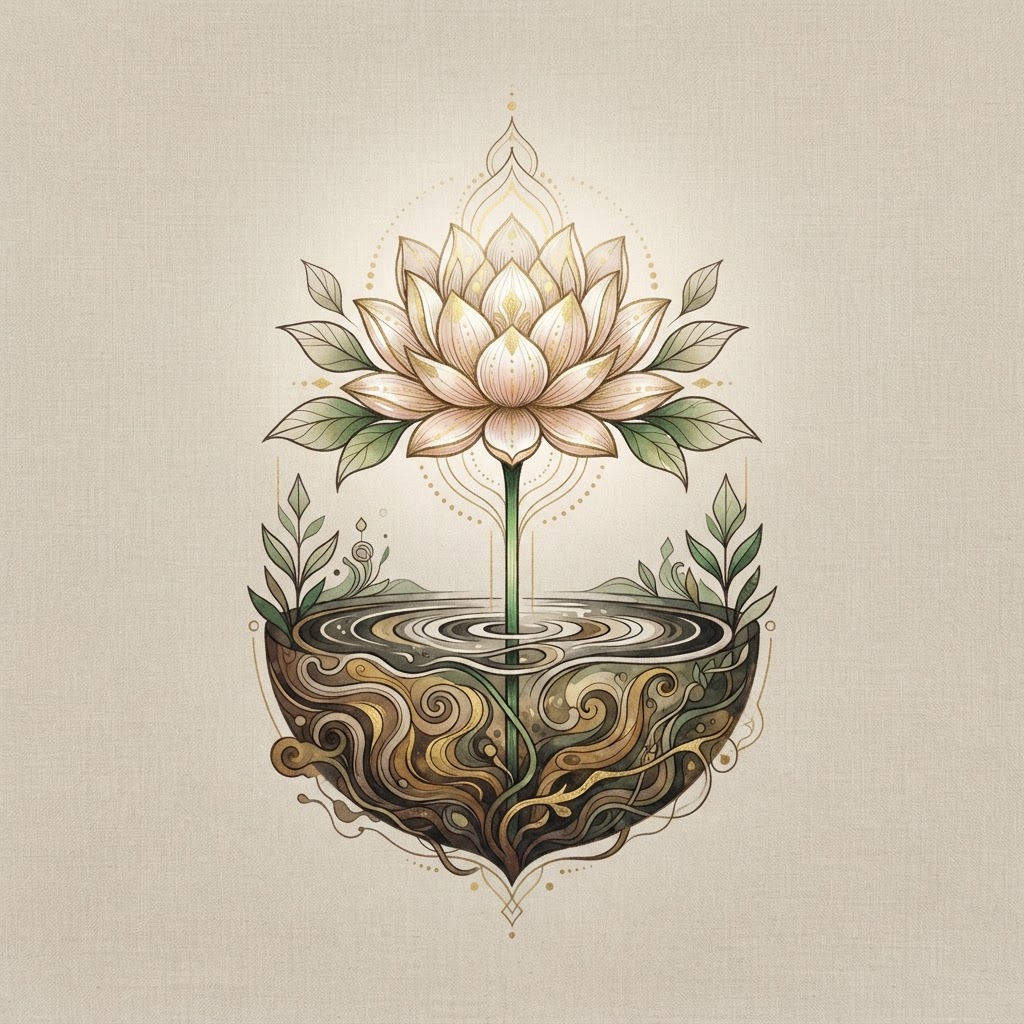
Lotus: Meaning, Origin & Symbolism
Also known as: Padma, Kamala
Buddhist
Buddhist
Heart Chakra
Crown Chakra
Water
Love
Wisdom
Transformation
A profound symbol of spiritual awakening, purity of heart, and non-attachment, rising pristine from muddy waters.
Quick Facts
- Category
- Buddhist
- Culture / Origin
- Buddhist
- Geographic Origin
- Ancient India
- Historical Period
- Classical Antiquity
- Estimated Age
- circa 5th century BCE
- Element
- Water
- Planet
- Moon
- Chakra
- Heart, Crown
- Deities
- Avalokiteshvara, Tara, Padmasambhava
- Verification
- unverified
What is Lotus?
The lotus (Padma) is one of the Eight Auspicious Symbols (Ashtamangala) found across various schools of Buddhism, holding particular resonance in Mahayana and Vajrayana iconography. Rooted in deep mud beneath murky waters, the lotus stem ascends toward the sunlight to unfurl an untainted and radiant blossom. This natural life cycle serves as the archetype for human spiritual evolution, demonstrating how divine wisdom and pristine awareness can emerge directly out of the suffering, ignorance, and attachments of earthly existence. In Buddhist artwork, buddhas and bodhisattvas are routinely depicted seated or standing upon open lotus thrones, signifying that while they abide within the world to liberate beings, their minds remain untouched by its impurities.
Meaning of Lotus
The pristine emergence of the blossom represents spiritual awakening, divine purity, and liberation from cyclic defilements.
Origin & History
The lotus has an immemorial heritage in Indian sacred art, pre-dating Buddhism in Vedic literature. However, the Buddha explicitly used the lotus metaphor in early canonical texts to explain how he remained pure amid worldly corruption, leading to ubiquitous artistic depictions across India, Gandhara, Central Asia, and East Asia.
Spiritual Meaning
The lotus illustrates the transformation of suffering (the mud) into wisdom and compassion (the flower). It teaches that enlightenment is not achieved by escaping the world, but by blossoming within it without clinging to its illusions.
Symbolism
The mud represents worldly desires and samsara; the water represents transit and purification; the stem symbolizes the spiritual path connecting base reality to higher consciousness; the open flower represents full enlightenment.
Traditional Uses
Traditionally, different colors denote distinct spiritual attributes: the white lotus indicates mental purity, the pink lotus represents the supreme Buddha, the blue lotus symbolizes the victory of wisdom over passions, and the red lotus embodies love and compassion.
Modern Spiritual Uses
In contemporary mindfulness, the lotus represents resilience, inner peace, and personal growth emerging through life challenges and trauma.
Healing Associations
Used to open emotional blockages, cultivate self-compassion, and soothe anxieties.
Protection Associations
Protects against emotional turmoil, cynicism, and mental contamination from chaotic environments.
How the Symbol Is Used
- •Metta Meditation
- •Deity Yoga
- •Pranayama
Cultural Context
Buddhist — Ancient India (Classical Antiquity)
Sources & References
- 1.The Encyclopedia of Tibetan Symbols and Motifs by Robert Beer
- 2.The Lotus Sutra (Saddharma Pundarika Sutra)
This content is for educational and informational purposes only. Where modern spiritual interpretations are described, they are not presented as ancient historical facts. It is not a substitute for professional medical or spiritual advice.