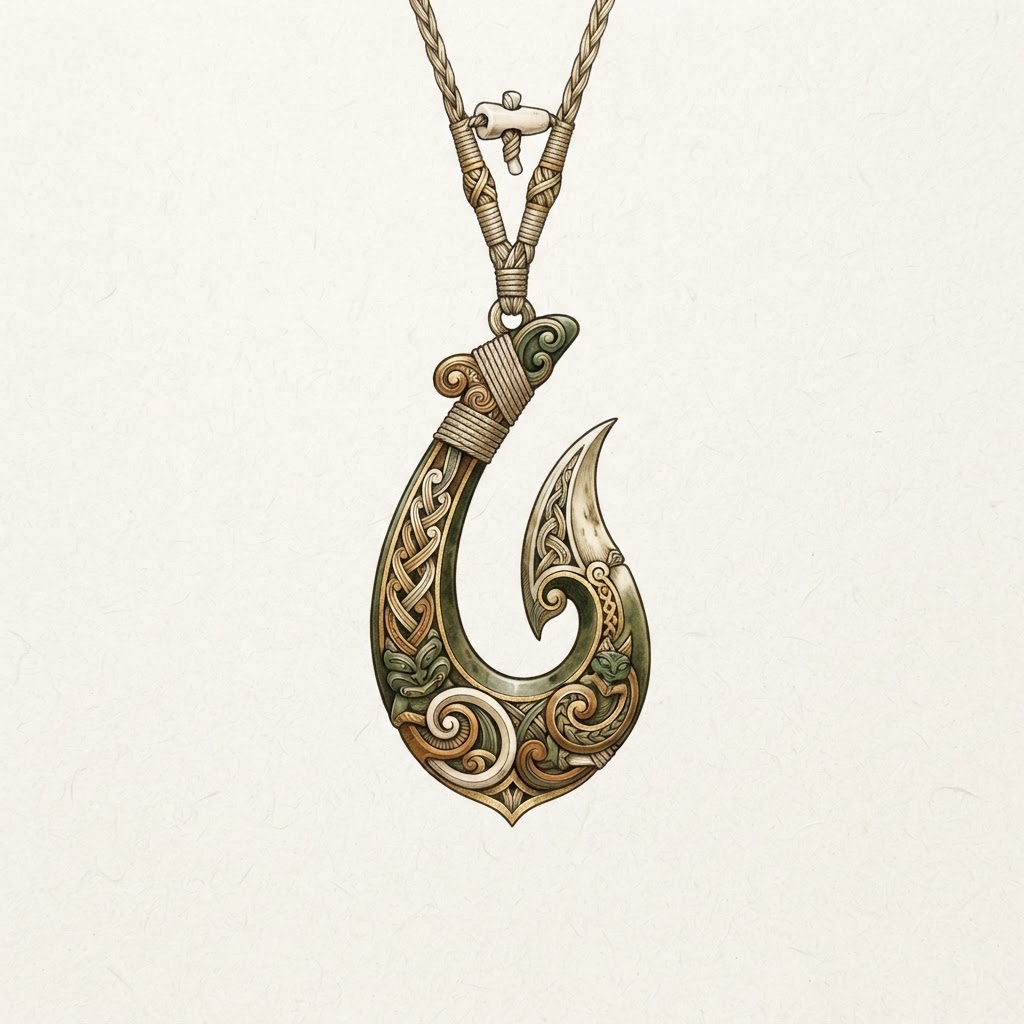
Hei Matau: Meaning, Origin & Symbolism
Also known as: Māori Fish Hook, Hei-Matau
Indigenous
Māori
Root Chakra
Throat Chakra
Water
Protection
Abundance
Strength
A stylized Māori fish hook carving representing prosperity, strength, safe travels over water, and good fortune.
Quick Facts
- Category
- Indigenous
- Culture / Origin
- Māori
- Geographic Origin
- New Zealand (Aotearoa)
- Historical Period
- Pre-European to Modern period
- Estimated Age
- 1000+ years
- Element
- Water
- Chakra
- Root, Throat
- Deities
- Māui, Tangaroa (God of the Sea)
- Verification
- unverified
What is Hei Matau?
The Hei Matau is a stylized fish hook pendant deeply embedded in the cultural heritage of the Māori people of Aotearoa (New Zealand). Derived from traditional bone, stone, and wood fish hooks used for sustenance, the ornamental Hei Matau evolved into a treasured heirloom (taonga) carrying great personal mana.
In Māori mythology, the North Island of New Zealand was literally fished out of the ocean depths by the demigod Māui using a sacred hook fashioned from the jawbone of his grandmother, Murirangawhenua. Thus, the hook connects the wearer directly to divine lineage, oceanic power, and life sustenance.
Meaning of Hei Matau
The Hei Matau represents prosperity, abundance, strength, good luck, and safe passage over water.
Origin & History
Originally functional fishing gear, hooks were transformed into symbolic pendants carved from whale bone or pounamu (New Zealand jade). Inherited across generations, each wearer enriched the Hei Matau with ancestral prestige (mana), making it an emblem of high status, naval skill, and leadership.
Spiritual Meaning
The pendant embodies the sacred bond between humanity and Tangaroa, the god of the sea. Spiritually, it symbolizes emotional resilience, abundance provided by natural ecosystems, and the capacity to harvest prosperity through skill, respect, and ancestral support.
Symbolism
The barbed curve represents resourcefulness, capture of good fortune, and naval mastery; the polished greenstone or bone carries the living presence (mauri) of ancestors.
Traditional Uses
Worn by fishermen, voyagers, and community leaders to guarantee bounty from the sea, navigation safety, and communal authority.
Modern Spiritual Uses
Worn widely across cultures by travelers, surfers, and spiritual seekers as an amulet for protection during travels and living in abundance.
Healing Associations
Calms emotional volatility and anchors the mind through turbulent circumstances.
Protection Associations
Provides protective guardianship over travelers journeying across oceans, rivers, and skies.
How the Symbol Is Used
- •Whakairo (Pounamu Carving)
- •Navigational Blessings
- •Taonga Heirlooms
Cultural Context
Māori — New Zealand (Aotearoa) (Pre-European to Modern period)
Sources & References
- 1.Buck, Peter (Te Rangi Hīroa). The Coming of the Maori (1949)
- 2.Hiroa, Te Rangi. Arts and Crafts of the Maori (1957)
This content is for educational and informational purposes only. Where modern spiritual interpretations are described, they are not presented as ancient historical facts. It is not a substitute for professional medical or spiritual advice.