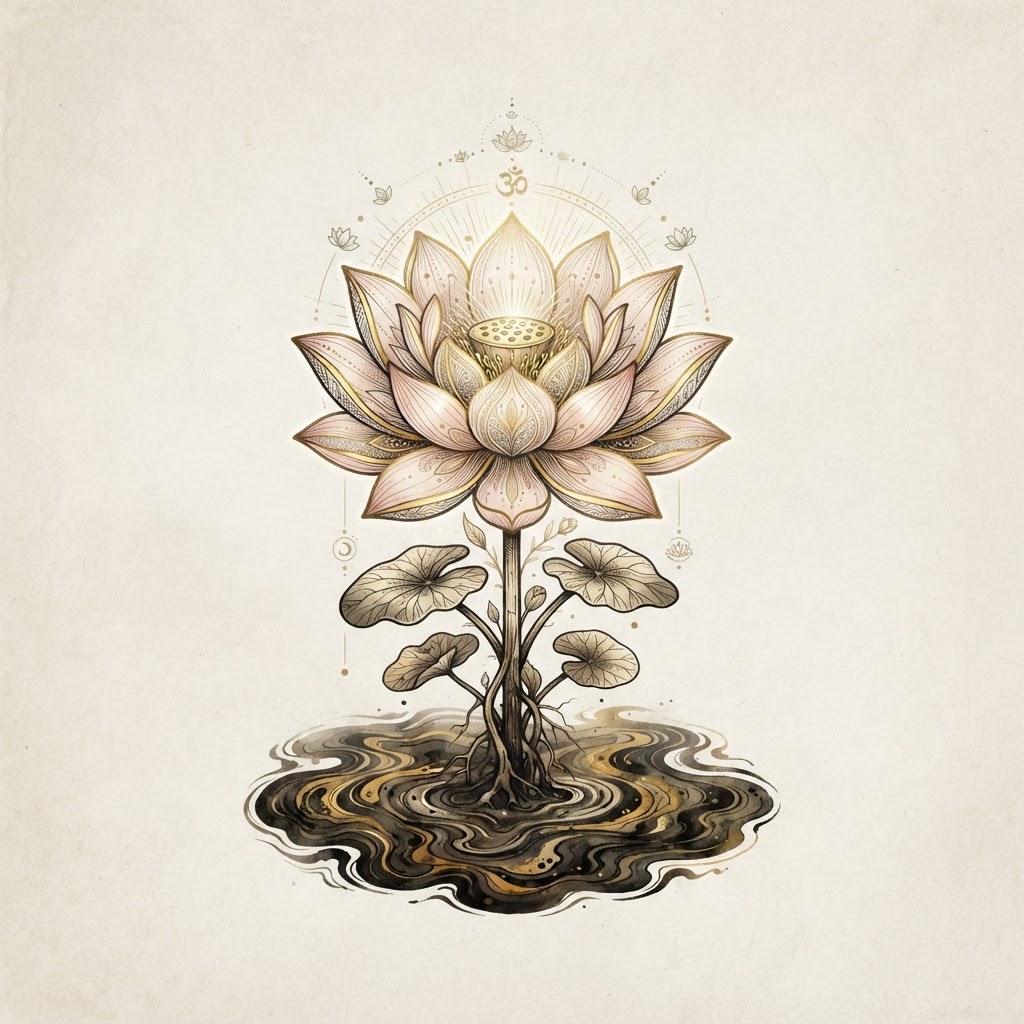
Lotus Flower: Meaning, Origin & Symbolism
Also known as: Padma, Kamala, Sacred Lotus
Buddhist
Buddhist
Heart Chakra
Crown Chakra
Water
Purity
Spiritual Awakening
Compassion
Transformation
A profound symbol of spiritual purity, blooming untainted from muddy waters to represent the awakening of the mind.
Quick Facts
- Category
- Buddhist
- Culture / Origin
- Buddhist
- Geographic Origin
- Ancient India
- Historical Period
- Classical Antiquity
- Estimated Age
- circa 6th century BCE
- Element
- Water
- Planet
- Moon
- Chakra
- Heart, Crown
- Zodiac
- Pisces, Cancer
- Deities
- Avalokiteshvara, Tara, Padmasambhava
- Verification
- unverified
What is Lotus Flower?
The lotus (Padma) is among the most widespread and cherished symbols across Buddhist traditions. Rooted in mud beneath murky water, the plant grows upward through the depths to open into an immaculate bloom above the surface. This botanical journey serves as an allegorical blueprint for the human spiritual condition, demonstrating that enlightenment and purity can emerge pristine from the depths of earthly delusion and defilement.
In iconography, enlightened beings such as the Buddha, Bodhisattvas, and deities are commonly depicted sitting or standing upon open lotus thrones. The color of the blossom often conveys distinct spiritual attributes: white represents mental and spiritual perfection, pink signifies the supreme Buddha, blue embodies wisdom and knowledge, and red symbolizes compassion and the heart.
Meaning of Lotus Flower
The lotus represents the attainment of spiritual purity and enlightenment emerging unscathed from worldly suffering and ignorance.
Origin & History
The lotus held profound spiritual meaning in ancient India prior to the advent of Buddhism, commonly tied to creation myths and cosmic order. In early Buddhist scripture, the Buddha compared himself to a lotus that grows out of water yet remains unsullied by it. Over centuries, the lotus motif spread across Central Asia, China, Japan, and Tibet, becoming an omnipresent architectural and artistic staple.
Spiritual Meaning
The spiritual path of the lotus mirrors the evolution of consciousness. The muddy roots represent the material realm and suffering (samsara), the stem represents the spiritual path traversing worldly waters, and the immaculate blossom blooming under the sun signifies the realization of Nirvana.
Symbolism
The unfolding petals indicate the expansion of the soul and the gradual realization of spiritual potential. Its water-repellent surface represents non-attachment and transcendence of defilements.
Traditional Uses
In Theravada and Mahayana traditions, the lotus symbolizes the pure, unblemished Buddha-nature innate within every sentient being, awaiting cultivation regardless of current defilements.
Modern Spiritual Uses
Contemporary spiritual practitioners use the lotus as an archetype of resilience, personal rebirth, emotional healing, and the capacity to find inner peace despite challenging circumstances.
Healing Associations
Fosters emotional healing, dissolves feelings of unworthiness, and promotes peace.
Protection Associations
Shields against spiritual corruption and preserves emotional equanimity in chaotic environments.
How the Symbol Is Used
- •Chakra meditation
- •Visualization practices
- •Devotional offerings
- •Yoga
Cultural Context
Buddhist — Ancient India (Classical Antiquity)
Sources & References
- 1.The Handbook of Tibetan Buddhist Symbols by Robert Beer
- 2.The Lotus Sutra (Saddharma Pundarika Sutra)
- 3.Dictionary of Buddhist Iconography by Lokesh Chandra
This content is for educational and informational purposes only. Where modern spiritual interpretations are described, they are not presented as ancient historical facts. It is not a substitute for professional medical or spiritual advice.