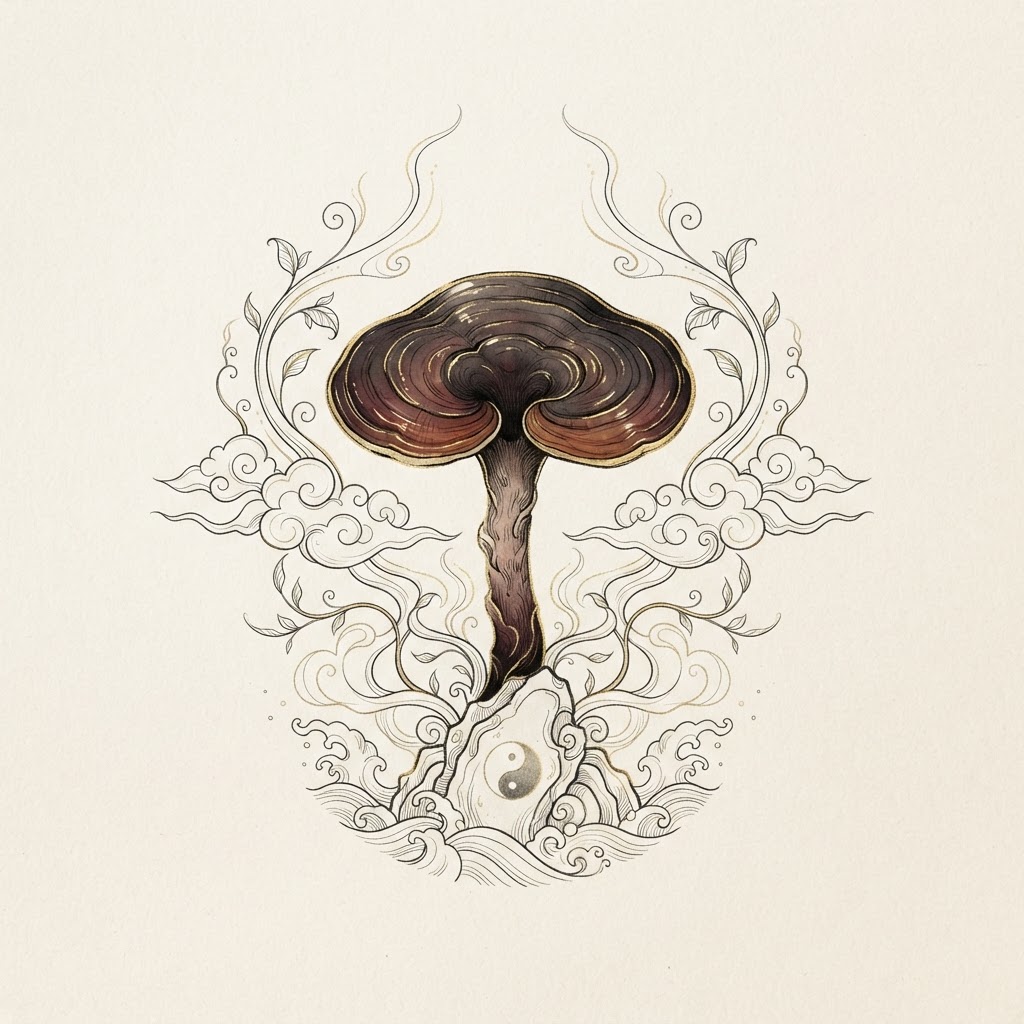
Lingzhi (Mushroom of Immortality): Meaning, Origin & Symbolism
Also known as: Reishi, Spiritual Mushroom, Auspicious Herb
Taoist/Chinese
Taoist/Chinese
Heart Chakra
Third Eye Chakra
Earth
Healing
Wisdom
Transformation
Peace
A woody polypore mushroom revered as the premier plant medicine for spiritual enlightenment and physical longevity.
Quick Facts
- Category
- Taoist/Chinese
- Culture / Origin
- Taoist/Chinese
- Geographic Origin
- China
- Historical Period
- Warring States to Han Dynasty
- Estimated Age
- circa 300 BCE
- Element
- Earth
- Planet
- Saturn
- Chakra
- Heart, Third Eye
- Deities
- Shennong, Queen Mother of the West (Xiwangmu), Magu
- Verification
- unverified
What is Lingzhi (Mushroom of Immortality)?
The Lingzhi mushroom (Ganoderma lucidum, also widely known by its Japanese name Reishi) is a treasured medicinal mushroom with an esteemed place in Chinese philosophy, alchemy, and medicine. Known as the 'Mushroom of Immortality' or the 'Herb of Spiritual Potency,' the Lingzhi has been praised for millennia by Taoist hermits, herbalists, and emperors alike. Rather than being consumed as common culinary nourishment, it was reserved for healing and spiritual elevation, believed to tonify the Three Treasures (Sanbao): Jing (essence), Qi (vital breath), and Shen (spirit). In visual art, the distinctive kidneyshaped cap and undulating contours of the Lingzhi frequently merge with cloud motifs, serving as a visual shorthand for celestial transcendence and the presence of enlightened masters.
Meaning of Lingzhi (Mushroom of Immortality)
Longevity, refined spiritual vitality, radiant physical health, and divine favor.
Origin & History
The earliest written records extolling Lingzhi appear in the Shennong Bencao Jing (Divine Farmer's Materia Medica), compiled during the Han Dynasty, where it was classified as a superior tonic that prolonged life without toxicity. Ge Hong, the famous 4th-century Taoist alchemist, detailed numerous varieties of magical fungi in his masterwork Baopuzi, claiming they granted longevity and spiritual sight to adepts living high in the mountains. Emperors sent expeditions across the seas in search of mountains where giant Lingzhi grew.
Spiritual Meaning
The Lingzhi represents the quiet transformation of earthly decay into spiritual potency. Because it grows upon decaying wood deep in mist-shrouded forests, it serves as a profound metaphor for turning personal suffering and mortality into radiant, tranquil wisdom and spiritual resilience.
Symbolism
Its cloud-like shape evokes heavenly realms, while its durable, lacquer-like surface symbolizes steadfastness and physical incorruptibility.
Traditional Uses
Regarded as a rare divine gift that calms the spirit (Shen), sharpens intellect, and opens the doorway to immortality.
Modern Spiritual Uses
Revered globally in contemporary functional herbalism as a premier adaptogen for stress reduction, immune balance, and deep meditation.
Healing Associations
Renowned in herbalism for calming an overactive mind, supporting emotional balance, and restoring chronic immune exhaustion.
Protection Associations
Images of Lingzhi are carved into architectural elements to welcome auspicious blessings and ward off sickness.
How the Symbol Is Used
- •Traditional Chinese Medicine
- •Daoist Herbology
- •Neidan Meditation
Cultural Context
Taoist/Chinese — China (Warring States to Han Dynasty)
Sources & References
- 1.Ge Hong. Baopuzi: The Master Who Embraces Simplicity. Translated by James R. Ware. MIT Press, 1966.
- 2.Unschuld, Paul U. Medicine in China: A History of Ideas. University of California Press, 1985.
This content is for educational and informational purposes only. Where modern spiritual interpretations are described, they are not presented as ancient historical facts. It is not a substitute for professional medical or spiritual advice.