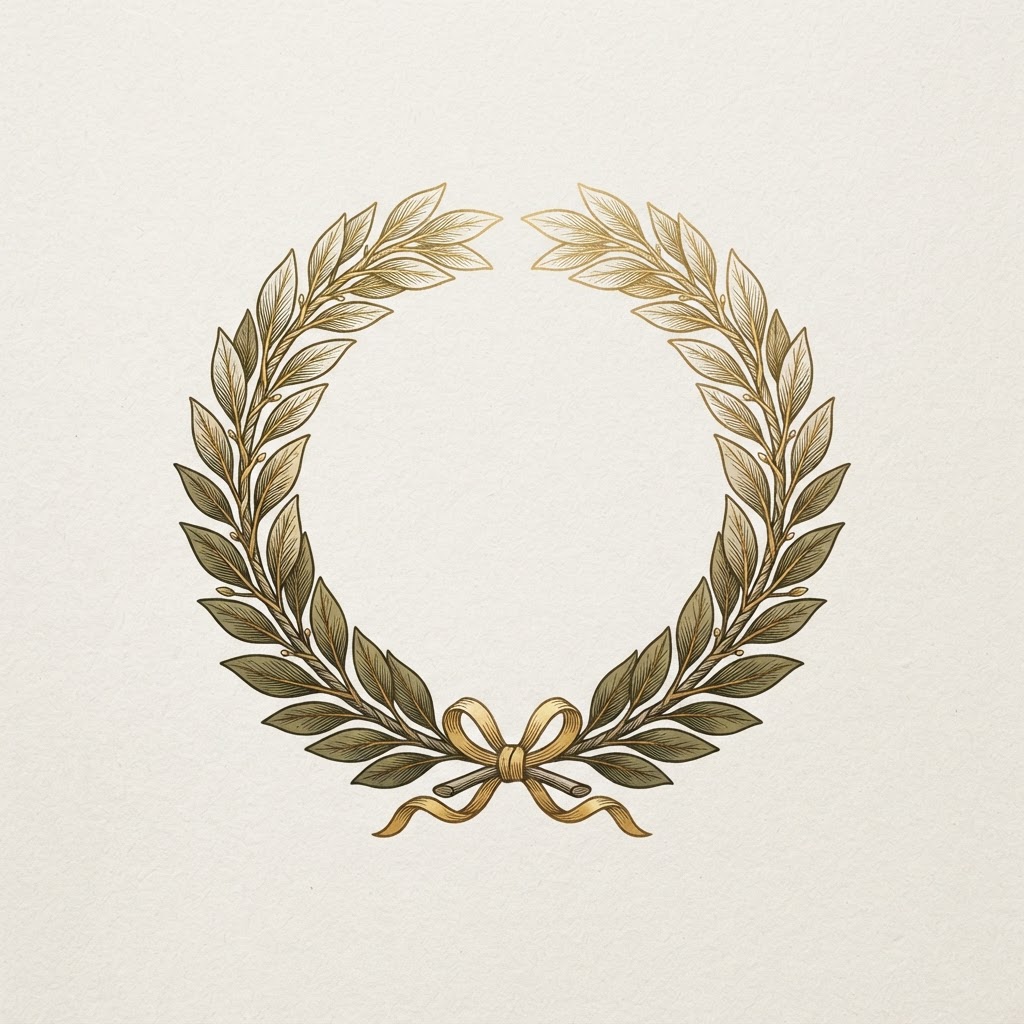
Laurel Wreath: Meaning, Origin & Symbolism
Also known as: Corona Triumphalis, Apollonian Laurel, Stephanus
Greek & Roman
Ancient Greek & Roman
Solar Plexus Chakra
Crown Chakra
Fire
Success
Wisdom
Purification
Courage
A circular crown of laurel leaves symbolizing divine victory, intellectual achievement, poetic inspiration, and immortality.
Quick Facts
- Category
- Greek & Roman
- Culture / Origin
- Ancient Greek & Roman
- Geographic Origin
- Ancient Greece and Italy
- Historical Period
- Classical Antiquity through Imperial Rome
- Estimated Age
- circa 8th century BCE
- Element
- Fire
- Planet
- Sun
- Chakra
- Solar Plexus, Crown
- Zodiac
- Leo, Aries
- Deities
- Apollo, Nike, Victoria, Jupiter
- Verification
- unverified
What is Laurel Wreath?
The Laurel Wreath is a classical circlet constructed from interlocking leaves and branches of the sweet bay laurel (Laurus nobilis). In ancient Greece, it was consecrated to Apollo, patron of truth, prophecy, music, and poetry, following the myth of the nymph Daphne, who transformed into a laurel tree to escape his pursuit.
Wreaths woven from laurel were awarded to the victors of the Pythian Games at Delphi, cementing the plant's connection to physical and intellectual brilliance. In ancient Rome, the laurel wreath transformed into the 'Corona Triumphalis', worn by victorious generals celebrating a military triumph through the streets of Rome and later adopted by emperors as a permanent emblem of imperial sovereignty.
Through the medieval and Renaissance eras, the laurel wreath was awarded to master scholars and poets (yielding the titles 'poet laureate' and 'baccalaureate'), enduring to this day as the global insignia of supreme achievement, honor, and enduring triumph.
Meaning of Laurel Wreath
The Laurel Wreath signifies victory, mastery, artistic genius, royal sovereignty, and eternal honor.
Origin & History
In classical Greece, victorious athletes at Delphi were awarded laurel leaves gathered from the sacred Vale of Tempe. Poetic contestants in musical and dramatic competitions were similarly crowned, marking laurel as an emblem of Apollonian mental clarity and divine inspiration.
In Rome, Julius Caesar was famously granted the perpetual right to wear the laurel wreath, which also served to disguise his balding hair. Subsequent Roman emperors made the golden laurel wreath an official part of imperial regalia, signifying peace achieved through decisive victory (Pax Romana).
Spiritual Meaning
Esoterically, the evergreen nature of laurel leaves represents immortality and the incorruptible soul that triumphs over earthly mortality and failure. It reflects the crowned intellect, where mundane thoughts are purified by the solar fire of truth.
To wear or meditate on the wreath is to invoke the highest standard of spiritual excellence, honoring the discipline and creative spirit necessary to overcome internal and external obstacles.
Symbolism
The circular form denotes eternity, wholeness, and the cycle of the sun; the evergreen laurel leaves symbolize victory, purification, and enduring life.
Traditional Uses
A sacred plant of Apollo possessing purifying virtues, gifted to emperors and poets who achieved mastery under divine favor.
Modern Spiritual Uses
Commonly understood as a universal motif of academic excellence, athletic championship, and personal mastery of ambitious life goals.
Healing Associations
Mental clarity, dispelling lethargy and brain fog, inspiring confidence and perseverance.
Protection Associations
Anciently believed to protect against lightning, pestilence, psychic pollution, and military defeat.
How the Symbol Is Used
- •Triumph ceremonies
- •Purification lustrations
- •Academic initiations
- •Solar invocations
Cultural Context
Ancient Greek & Roman — Ancient Greece and Italy (Classical Antiquity through Imperial Rome)
Sources & References
- 1.Pliny the Elder. 'Natural History' (Book XV). Loeb Classical Library.
- 2.Versnel, H.S. 'Triumphus: An Inquiry into the Origin, Development and Meaning of the Roman Triumph'. Brill.
This content is for educational and informational purposes only. Where modern spiritual interpretations are described, they are not presented as ancient historical facts. It is not a substitute for professional medical or spiritual advice.