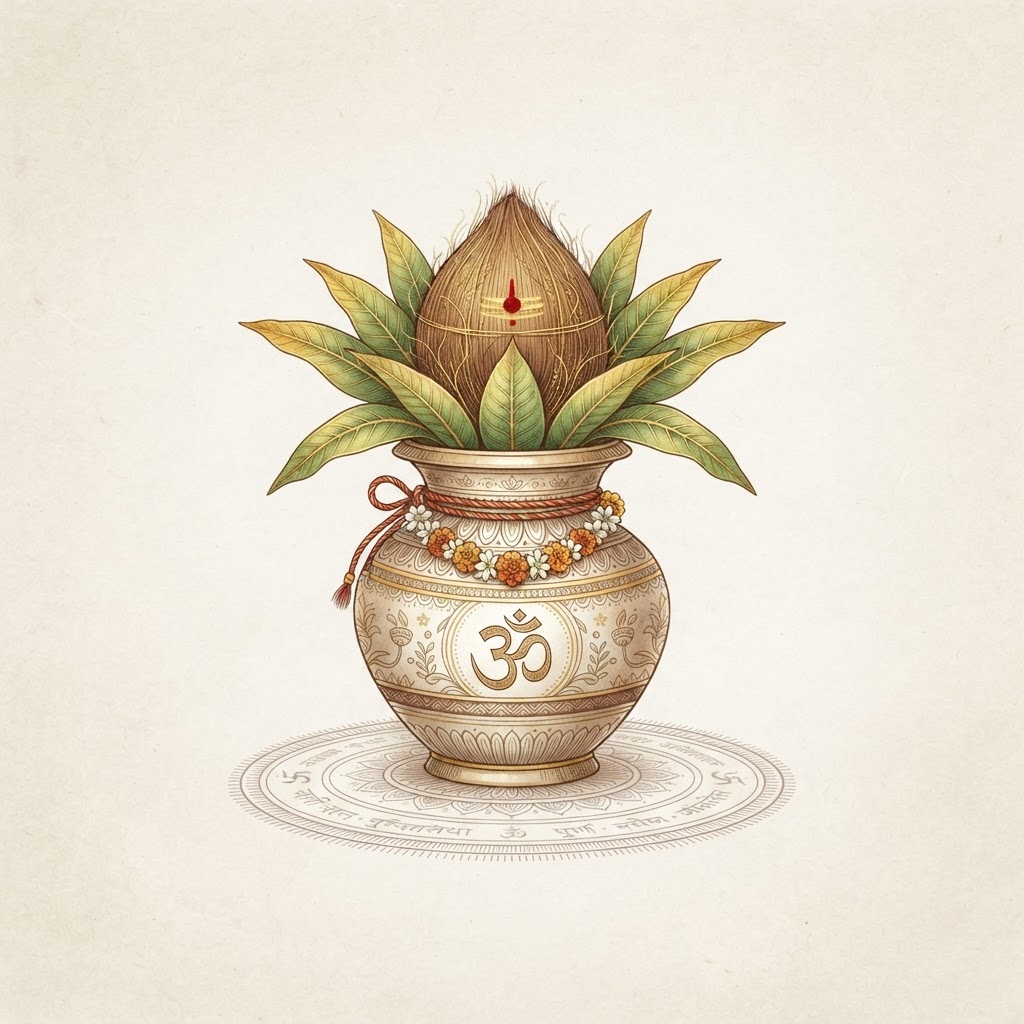
Purna Kalasha: Meaning, Origin & Symbolism
Also known as: Kalash, Purna Kumbha, Ghat
Hindu
Hindu
Sacral Chakra
Heart Chakra
Water
Abundance
Peace
Harmony
Healing
A sacred brass or clay pot filled with water and topped with mango leaves and a coconut, symbolizing divine abundance.
Quick Facts
- Category
- Hindu
- Culture / Origin
- Hindu
- Geographic Origin
- Indian Subcontinent
- Historical Period
- Vedic Period
- Estimated Age
- circa 1500 BCE
- Element
- Water
- Planet
- Moon
- Chakra
- Sacral, Heart
- Zodiac
- Cancer, Taurus
- Deities
- Lakshmi, Varuna, Ganga
- Verification
- unverified
What is Purna Kalasha?
The Purna Kalasha is a prominent ceremonial vessel featured in nearly all Hindu ceremonies and rites of passage. It consists of a metal or terracotta pot filled with water or grain, enveloped by a red thread, crowned with a ring of five or seven mango leaves, and capped with an unhusked coconut.
Representing the womb of creation and the vessel of life, it serves as a temporary dwelling place for invited divine energies during formal temple inaugurations, weddings, and domestic housewarmings.
The pot visually mimics the primordial waters from which the cosmos originated, while the flourishing leaves and fertile coconut depict continuous growth, life-force vitality, and spiritual plenty.
Meaning of Purna Kalasha
Divine abundance, the fullness of life, and the containment of cosmic life force.
Origin & History
Mentioned in the Rigveda as 'Purna-Kumbha' (overflowing pitcher), it was revered as an emblem of hospitality, rain, and fertile harvests. Over millennia, it became a standard architectural fixture on temple shikhara spires (kalasham).
It is central to the massive Kumbh Mela festival, which commemorates the drops of celestial nectar of immortality (amrita) that fell to earth from a cosmic pot.
Spiritual Meaning
The Kalasha symbolizes the completed human being who has become a full, unblemished vessel capable of holding divine consciousness without leaking it through worldly attachments.
It reminds practitioners that internal fullness (Purna) is their true natural state, echoing the Upanishadic verse: 'From fullness, fullness emerges, and fullness yet remains.'
Symbolism
The pot represents Mother Earth and the physical body; the water inside represents the cosmic life-giving waters and emotions; the leaves depict nature's vitality; the coconut signifies divine realization and the ego offered to God.
Traditional Uses
An invocation of the mother goddesses Lakshmi, Ganga, and Saraswati, anchoring divine presence into sanctified spaces.
Modern Spiritual Uses
Employed in modern mindfulness and ceremonial altars as an affirmation of personal wholeness, nourishment, and gratitude for physical and spiritual resources.
Healing Associations
Promotes inner replenishment, relieving feelings of scarcity, emotional burnout, and fatigue.
Protection Associations
Anchors peaceful, benevolent energy at home entrances, repelling discord and environmental instability.
How the Symbol Is Used
- •Puja invocations
- •Griha Pravesha
- •Vastu rituals
- •Kumbhabhishekam
Cultural Context
Hindu — Indian Subcontinent (Vedic Period)
Sources & References
- 1.The Book of Hindu Imagery by Eva Rudy Jansen
- 2.Rigveda Samhita
- 3.Vedic Rituals of the Hindu Temple by S.N. Rath
This content is for educational and informational purposes only. Where modern spiritual interpretations are described, they are not presented as ancient historical facts. It is not a substitute for professional medical or spiritual advice.