Jera: Meaning, Origin & Symbolism
Also known as: Ger, Ar, Jeran
Elder Futhark Runes
Germanic / Norse
Sacral Chakra
Solar Plexus Chakra
Earth
Abundance
Harmony
Patience
Manifestation
The rune of the harvest, natural cycles, patience, and rightful reward for labor.
Quick Facts
- Category
- Elder Futhark Runes
- Culture / Origin
- Germanic / Norse
- Geographic Origin
- Northern Europe
- Historical Period
- Migration Period
- Estimated Age
- circa 2nd century CE
- Element
- Earth
- Planet
- Sun
- Chakra
- Sacral, Solar Plexus
- Zodiac
- Virgo
- Deities
- Freyr, Sif
- Verification
- unverified
What is Jera?
Jera is the twelfth rune of the Elder Futhark, marking the midpoint of the alphabet. Representing the completed year, seasonal cycles, and the abundant harvest, Jera embodies the principle of cause and effect, reaping what one has sown.
Unlike sudden windfalls, Jera signifies earned success born of sustained, diligent effort aligned with natural timing. It reminds us that nature cannot be rushed: seed, growth, maturation, and harvest must each be given their proper season.
Meaning of Jera
Jera translates to 'year' or 'good harvest', symbolizing cyclical completion, fruitful reward, patience, and cosmic justice.
Origin & History
In agrarian Europe, the harvest determined survival through the winter. A prosperous harvest (*ar*) brought peace and security, celebrating the fertile collaboration between human toil and the natural world.
The Anglo-Saxon Rune Poem observes: 'Summer is a joy to men, when God allows the earth to bring forth bright fruits for rich and poor alike.'
Spiritual Meaning
Spiritually, Jera governs the law of karma, or Orlog: every thought, action, and deed seeds consequences that mature in due course. It encourages harmony with natural personal rhythms.
It honors patience and ongoing dedication, providing reassurance that honest labor will manifest its harvest at the appointed cosmic hour.
Symbolism
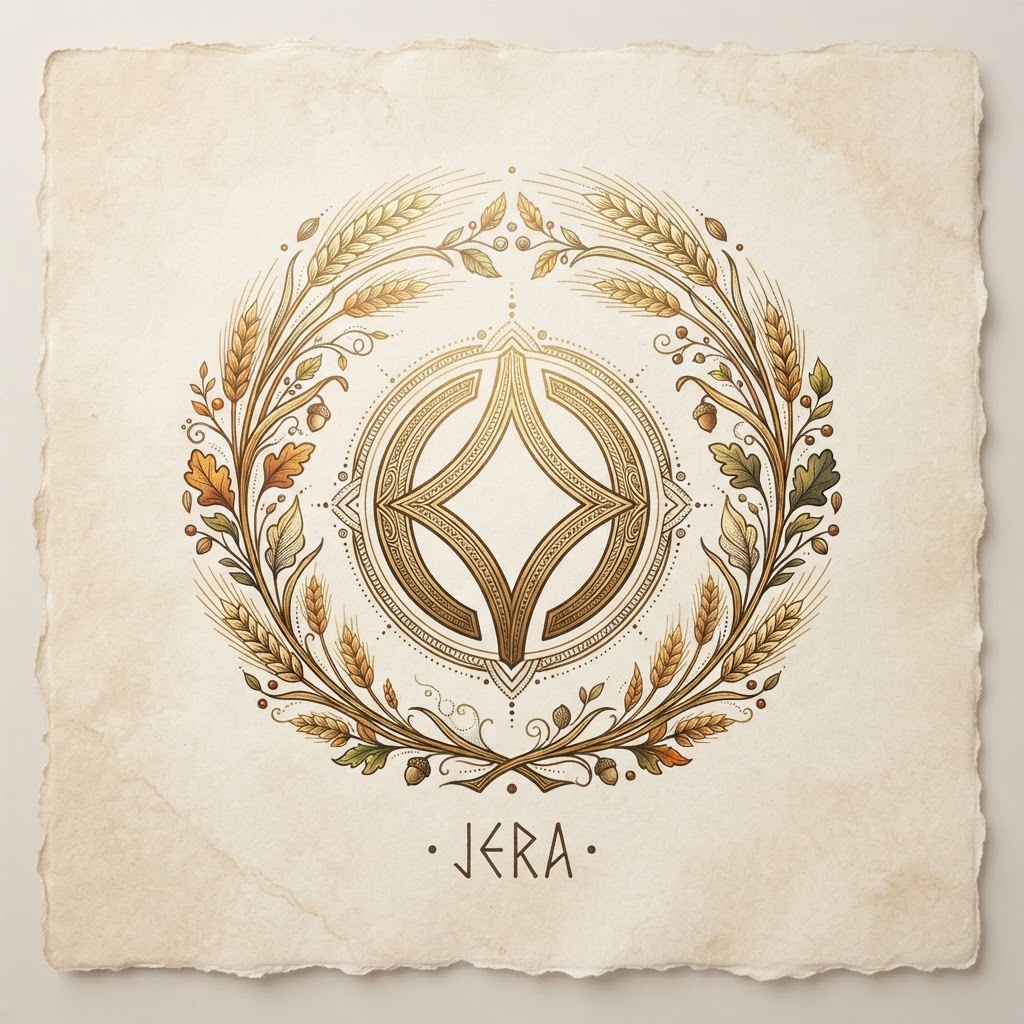
Two interlocking, non-touching angled brackets revolving in perpetual clockwise harmony, symbolizing the turning wheel of seasons, day and night, and seed and fruit.
Traditional Uses
Historically viewed as an omen of successful harvest, legal recompense, seasonal completion, and fruitful rewards.
Modern Spiritual Uses
Modernly utilized to enhance long-term project success, maintain patience through life transitions, and celebrate gradual self-improvement.
Healing Associations
Supports healthy, natural cellular regeneration and aids chronic healing requiring steady, persistent treatment.
Protection Associations
Protects hard-earned achievements and agricultural or business investments from premature loss.
How the Symbol Is Used
- •Harvest Rituals
- •Long-term Goal Work
- •Karmic Balancing
- •Galdr
Cultural Context
Germanic / Norse — Northern Europe (Migration Period)
Sources & References
- 1.The Anglo-Saxon Rune Poem
- 2.The Old Norwegian Rune Poem
- 3.Runes: Alphabet of Mystery by Michael Howard
This content is for educational and informational purposes only. Where modern spiritual interpretations are described, they are not presented as ancient historical facts. It is not a substitute for professional medical or spiritual advice.