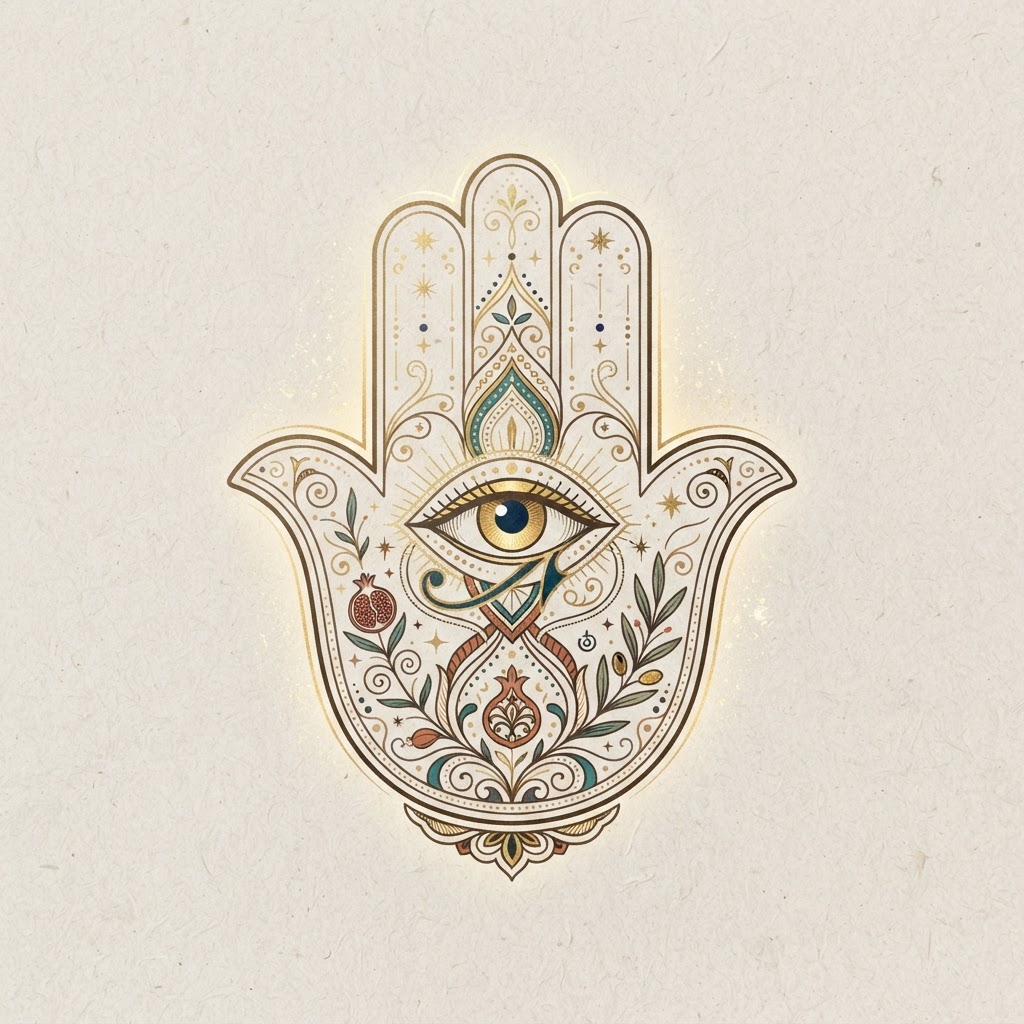
Hamsa: Meaning, Origin & Symbolism
Also known as: Hand of Fatima, Hand of Miriam, Khamsa
Universal Spiritual Symbols
Semitic (Phoenician, Jewish, Islamic)
Throat Chakra
Solar Plexus Chakra
Water
Protection
Peace
Love
Harmony
An ancient palm-shaped amulet recognized across multiple traditions as a defense against the evil eye and harbinger of fortune.
Quick Facts
- Category
- Universal Spiritual Symbols
- Culture / Origin
- Semitic (Phoenician, Jewish, Islamic)
- Geographic Origin
- Middle East / North Africa
- Historical Period
- Iron Age
- Estimated Age
- circa 800 BCE
- Element
- Water
- Planet
- Venus
- Chakra
- Throat, Solar Plexus
- Deities
- Tanit, Fatima Zahra, Miriam
- Verification
- unverified
What is Hamsa?
The Hamsa is an open palm amulet featuring an eye embedded in its center, recognized for millennia throughout the Middle East and North Africa. It is depicted either symmetrically (with two balanced thumbs) or realistically as a human hand.
Revered by Jews, Christians, and Muslims alike, the Hamsa is universally deployed as a protective talisman. While different cultures associate the five fingers with varying sacred tenets, its essential purpose remains consistent: turning away negative intentions and channeling blessings.
Meaning of Hamsa
Protection against the Evil Eye, defense against envy, and the welcoming of divine blessing.
Origin & History
Archaeological records trace the Hamsa back to ancient Phoenicia and Carthage, where the hand symbol was dedicated to the supreme mother goddess Tanit to invoke her protective blessings.
With the expansion of Judaism and Islam across the Mediterranean, the symbol was adopted into monotheistic settings. In Judaism, it was named the Hand of Miriam (Moses' sister) and connected to the five books of the Torah. In Islam, it became the Hand of Fatima (daughter of the Prophet Muhammad), representing the Five Pillars of Islam.
Spiritual Meaning
The open palm of the Hamsa indicates divine shelter, honesty, and openness. It serves as a reminder to the practitioner to live with an open hand—generous and compassionate—while relying on divine grace to guard against malevolent glances and envy.
The central eye represents cosmic vigilance, piercing through deception and reminding the soul that higher consciousness watches over all human affairs.
Symbolism
The five fingers symbolize the physical senses, the five elements, or foundational religious tenets. The central eye represents universal awareness that deflects harm. The downward-facing hand draws heavenly blessing, while the upward hand blocks danger.
Traditional Uses
An apotropaic charm crafted into door hangings, wall plaques, and personal jewelry to deflect malevolent glances and ill wishes.
Modern Spiritual Uses
A beloved cross-cultural emblem of peace, hospitality, feminine strength, and spiritual sanctuary in home decor and personal jewelry.
Healing Associations
Soothes irrational anxiety, restores emotional security, and creates a felt sense of divine sanctuary.
Protection Associations
Specifically designed to ward off the evil eye (Ayin Hara / Nazar), jealousy, gossip, and external spiritual aggression.
How the Symbol Is Used
- •Amuletic Talismans
- •Home Blessings
- •Boundary Work
- •Protective Rituals
Cultural Context
Semitic (Phoenician, Jewish, Islamic) — Middle East / North Africa (Iron Age)
Sources & References
- 1.The Evil Eye: The Folklore and Culture of Protecting Yourself by Antonio Pagliarulo
- 2.Amulets and Talismans by E.A. Wallis Budge
- 3.Jewish Magic and Superstition by Joshua Trachtenberg
This content is for educational and informational purposes only. Where modern spiritual interpretations are described, they are not presented as ancient historical facts. It is not a substitute for professional medical or spiritual advice.