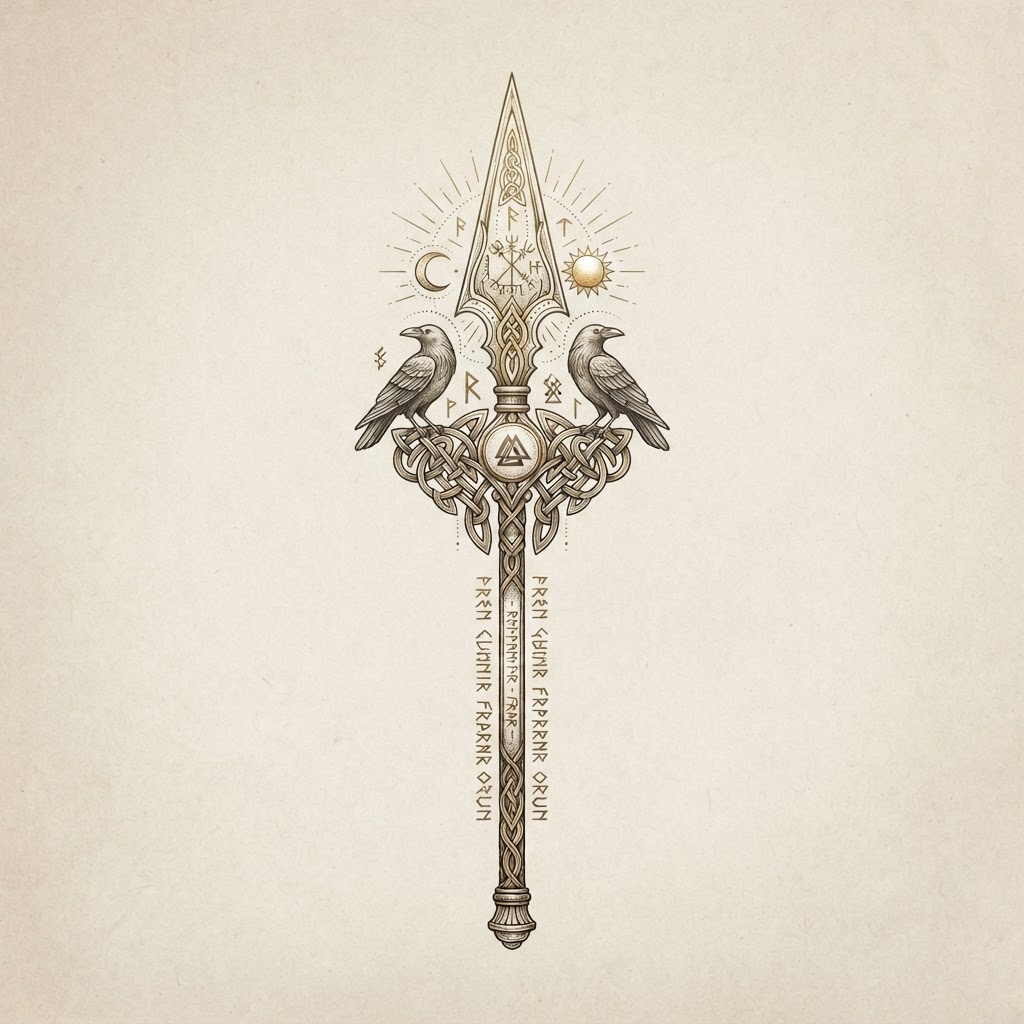
Gungnir: Meaning, Origin & Symbolism
Also known as: The Swaying One, Odin's Spear
Norse/Germanic
Norse/Germanic
Solar Plexus Chakra
Throat Chakra
Fire
Strength
Courage
Wisdom
Transformation
The magical spear of Odin that never misses its mark, symbolizing unyielding authority, oaths, and focus.
Quick Facts
- Category
- Norse/Germanic
- Culture / Origin
- Norse/Germanic
- Geographic Origin
- Scandinavia
- Historical Period
- Viking Age
- Estimated Age
- 1200+ years
- Element
- Fire
- Planet
- Mars
- Chakra
- Solar Plexus, Throat
- Zodiac
- Aries, Capricorn
- Deities
- Odin
- Verification
- unverified
What is Gungnir?
Gungnir is the legendary spear crafted by the master dwarven smiths known as the Sons of Ivaldi and wielded by Odin, ruler of Asgard. Its Old Norse name translates roughly to 'the swaying one' or 'trembler'.
According to myth, Gungnir was forged with runes carved into its tip and possessed the magical property of never missing its target, regardless of the wielder's skill or the distance thrown. Odin cast it over the heads of the Vanir gods during the primeval Aesir-Vanir war, instituting the ancient Germanic tradition of throwing a spear over enemy lines to consecrate them to death.
It is upon Gungnir that solemn, unbreakable oaths were sworn, establishing the spear as the ultimate emblem of divine authority, cosmic justice, and unwavering determination.
Meaning of Gungnir
Unwavering focus, supreme divine authority, unbreakable oaths, and the unerring achievement of goals.
Origin & History
Documented in both the Poetic Edda and the Prose Edda, Gungnir reflects ancient Germanic spear-cult traditions. Spearhead artifacts inscribed with Elder Futhark runes dating to the 3rd century (such as the Dahmsdorf and Kowel spearheads) prove that spears held profound religious and magical status long before the Viking Age.
In pagan Norse warfare, dedicating opposing armies to Odin by casting a spear over them was a documented historical rite performed by kings and chieftains.
Spiritual Meaning
Spiritually, Gungnir represents laser-like mental clarity and unbending willpower. It empowers the individual to pierce through illusion, confusion, and hesitation to hit their intended target with absolute certainty.
As the weapon upon which Odin hung and pierced himself during his nine-day self-sacrifice on Yggdrasil, Gungnir also signifies the painful yet transformative wound of spiritual initiation.
Symbolism
The spear tip symbolizes focused intent, direction, and truth; the carved runes represent divine law woven into action; its flight represents unstoppable kinetic destiny.
Traditional Uses
The sovereign weapon of Odin denoting warlike victory, royal authority, and the dedication of sacrificial offerings to the gods.
Modern Spiritual Uses
A talisman for professional focus, keeping solemn personal promises, executing plans without distraction, and piercing through mental paralysis.
Healing Associations
Aids in excising toxic habits and severing destructive energetic cords with surgical finality.
Protection Associations
Wards against deceit, broken promises, and outside manipulation by demanding absolute truth.
How the Symbol Is Used
- •Oath swearing rituals
- •Blót consecrations
- •Intention setting
- •Runic focus work
Cultural Context
Norse/Germanic — Scandinavia (Viking Age)
Sources & References
- 1.Prose Edda: Skáldskaparmál
- 2.Poetic Edda: Völuspá
- 3.Gods and Myths of Northern Europe by H.R. Ellis Davidson
This content is for educational and informational purposes only. Where modern spiritual interpretations are described, they are not presented as ancient historical facts. It is not a substitute for professional medical or spiritual advice.