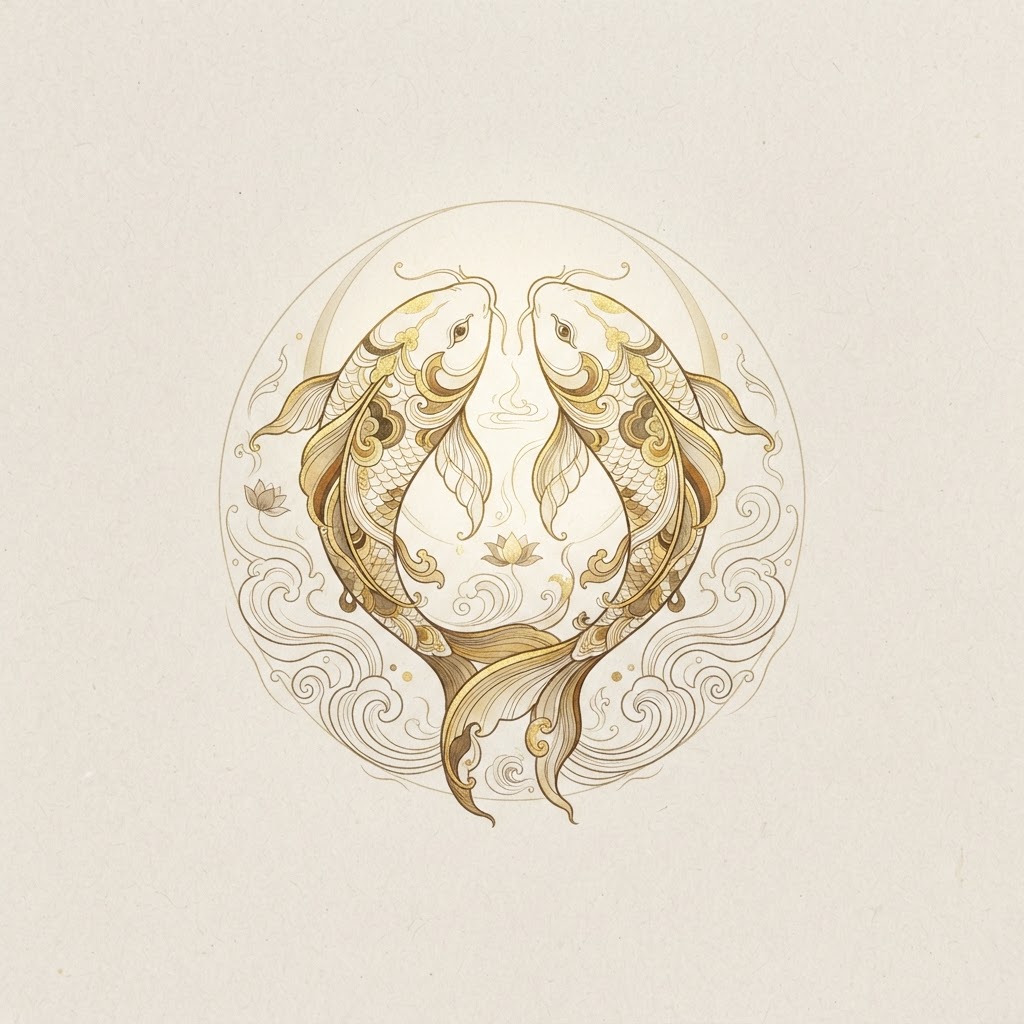
Golden Fishes: Meaning, Origin & Symbolism
Also known as: Matsyayugma, Gser-nya, Twin Fishes
Buddhist
Buddhist
Sacral Chakra
Heart Chakra
Water
Harmony
Joy
Transformation
A pair of graceful fishes symbolizing fearlessness, spiritual freedom, and joy in navigating the ocean of existence.
Quick Facts
- Category
- Buddhist
- Culture / Origin
- Buddhist
- Geographic Origin
- Ancient India
- Historical Period
- Classical Antiquity
- Estimated Age
- circa 6th century BCE
- Element
- Water
- Planet
- Venus
- Chakra
- Sacral, Heart
- Zodiac
- Pisces
- Verification
- unverified
What is Golden Fishes?
The Golden Fishes (Sanskrit: Matsyayugma; Tibetan: Gser-nya) comprise another vital component of the Eight Auspicious Symbols of Buddhism. Usually depicted as two carp or river fishes leaping upward together, they were originally linked with the two sacred rivers of northern India: the Ganga (Ganges) and the Yamuna. In early Indian culture, fish represented fertility, abundance, and auspicious beginnings. Within the Buddhist lexicon, the fish symbolize ultimate spiritual freedom and fearlessness: just as fish glide freely through deep water without fear of drowning, enlightened practitioners move gracefully through the ocean of worldly suffering (samsara) without clinging or fear.
Meaning of Golden Fishes
Fearlessness, joy, spiritual emancipation, and liberation from the drowning waters of samsara.
Origin & History
Emerging from ancient riverine symbolism in the Gangetic plain, the two fish initially represented life, abundance, and the life-giving flow of rivers. As Buddhism evolved, the motif was adopted into monastic and lay art, adorning buildings, ritual banners, and jewelry across Central and East Asia.
Spiritual Meaning
The fishes signify liberation of consciousness. When one realizes the non-dual nature of existence, one can engage with life completely and joyfully, navigating obstacles without suffering or getting entangled.
Symbolism
The twin fishes also correspond esoterically to the subtle energetic anatomy: the solar (pingala) and lunar (ida) channels that flank the central channel (sushumna), balancing masculine and feminine vital energies.
Traditional Uses
Traditionally, they represent the abundance of the spiritual life, freedom from all karmic constraints, and marital harmony when given as auspicious gifts.
Modern Spiritual Uses
In modern wellness contexts, the symbol inspires emotional resilience, effortless flow (wu wei), and balance between intellect and intuition.
Healing Associations
Encourages emotional release, balances pranic channels, and relieves existential anxiety.
Protection Associations
Protects against emotional turmoil, fear of death, and overwhelming life transitions.
How the Symbol Is Used
- •Kundalini Balancing
- •Tantric Subtle Body Yoga
- •Auspicious Gifting
Cultural Context
Buddhist — Ancient India (Classical Antiquity)
Sources & References
- 1.The Handbook of Tibetan Buddhist Symbols by Robert Beer
- 2.Studies in the Iconography of the Ashtamangala by K. R. Van Kooij
This content is for educational and informational purposes only. Where modern spiritual interpretations are described, they are not presented as ancient historical facts. It is not a substitute for professional medical or spiritual advice.