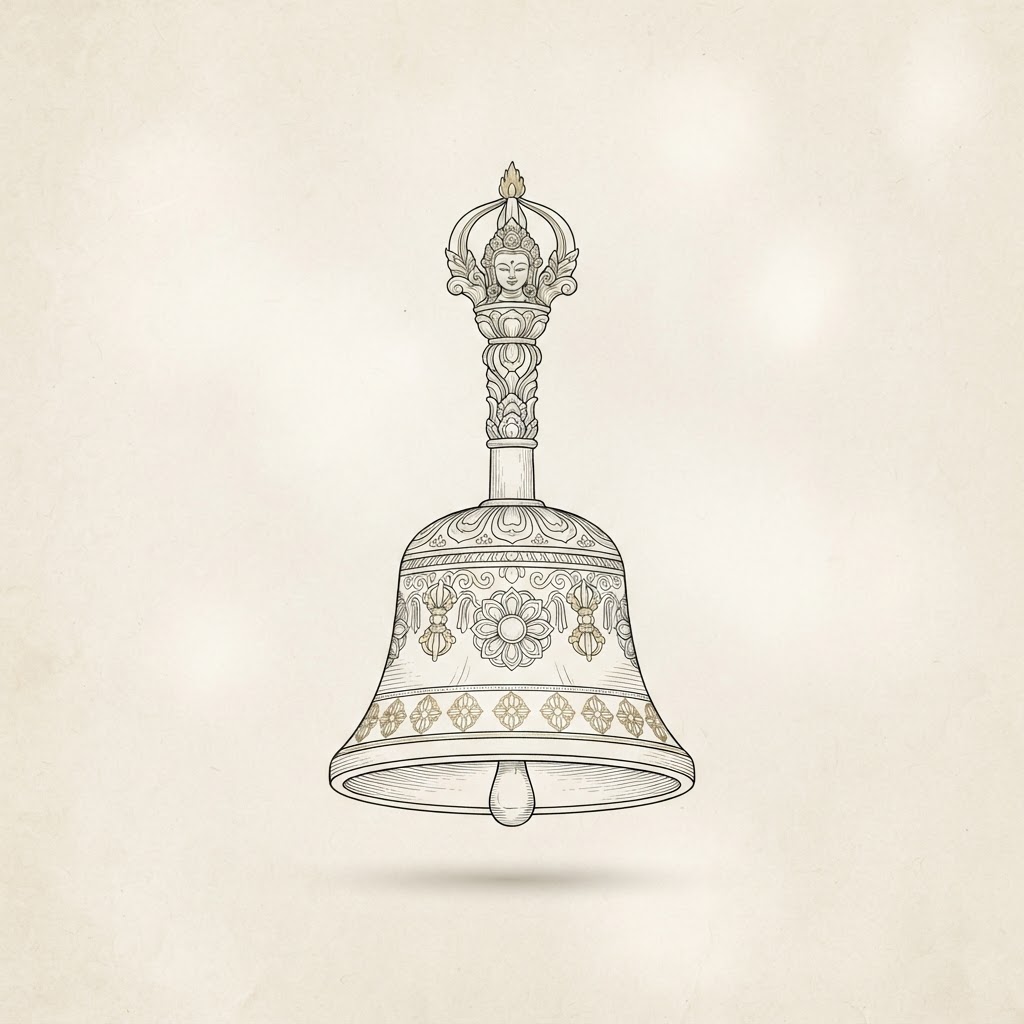
Ghanta: Meaning, Origin & Symbolism
Also known as: Drilbu, Buddhist Ritual Bell
Buddhist
Buddhist
Throat Chakra
Crown Chakra
Air
Wisdom
Clarity
Harmony
A sacred ritual bell representing feminine wisdom, empty nature, and the transient resonance of all phenomena.
Quick Facts
- Category
- Buddhist
- Culture / Origin
- Buddhist
- Geographic Origin
- Ancient India / Tibet
- Historical Period
- Medieval
- Estimated Age
- circa 7th century CE
- Element
- Air
- Planet
- Moon
- Chakra
- Throat, Crown
- Deities
- Prajnaparamita, Vajrasattva
- Verification
- unverified
What is Ghanta?
The Ghanta (known as Drilbu in Tibetan) is a sacred hand bell used in Buddhist liturgical ceremonies and meditation, almost universally paired with the masculine Vajra. The bell's body is typically cast from bell-metal bronze to produce a clear, sustained resonance, with a handle that is sculpted into the upper half of a vajra, often crowned with the face of the goddess Prajnaparamita. While the vajra held in the right hand embodies compassion and active skillful means, the ghanta held in the left hand symbolizes the feminine principle of profound wisdom (prajna) and the realization of emptiness (shunyata). As the bell rings, its sound emerges from silence, vibrates through space, and returns to silence, serving as an auditory reminder of impermanence.
Meaning of Ghanta
The Ghanta represents feminine intuitive wisdom, the realization of emptiness, and the acoustic manifestation of ultimate truth.
Origin & History
Bells have served as call-to-prayer devices across Indian traditions since antiquity. With the development of esoteric Tantric Buddhism in Northern India and its subsequent transmission to Tibet during the Pala Empire, the bell was elevated to a primary metaphysical tool representing the sound of the ultimate nature of mind.
Spiritual Meaning
The clear chime of the bell draws the practitioner directly into the present moment, dissolving conceptual thought. Because sound cannot be grasped yet is clearly perceived, it directly exemplifies the doctrine of emptiness—phenomena appear, yet lack inherent, independent existence.
Symbolism
The hollow cavity of the bell represents emptiness (shunyata), while the clapper represents the sound of wisdom arising within that emptiness. The handle portrays Prajnaparamita, the mother of all Buddhas.
Traditional Uses
Traditionally, the Ghanta is rung to invoke deities, disperse malignant spirits, clear the ritual field, and maintain the harmony between method and wisdom during sadhana practices.
Modern Spiritual Uses
In contemporary sound therapy and meditation, the bell is widely used for space clearing, mindfulness pacing, and calming hyperactive cognitive states.
Healing Associations
Acoustically balances brainwaves, releases stagnant emotional energy, and induces relaxation.
Protection Associations
Clears negative energies, dissolves emotional agitation, and seals meditative spaces against distraction.
How the Symbol Is Used
- •Sound Healing
- •Tantric Rituals
- •Mindfulness Meditation
Cultural Context
Buddhist — Ancient India / Tibet (Medieval)
Sources & References
- 1.Secret of the Vajra World by Reginald A. Ray
- 2.The Tibetan Book of Living and Dying by Sogyal Rinpoche
This content is for educational and informational purposes only. Where modern spiritual interpretations are described, they are not presented as ancient historical facts. It is not a substitute for professional medical or spiritual advice.