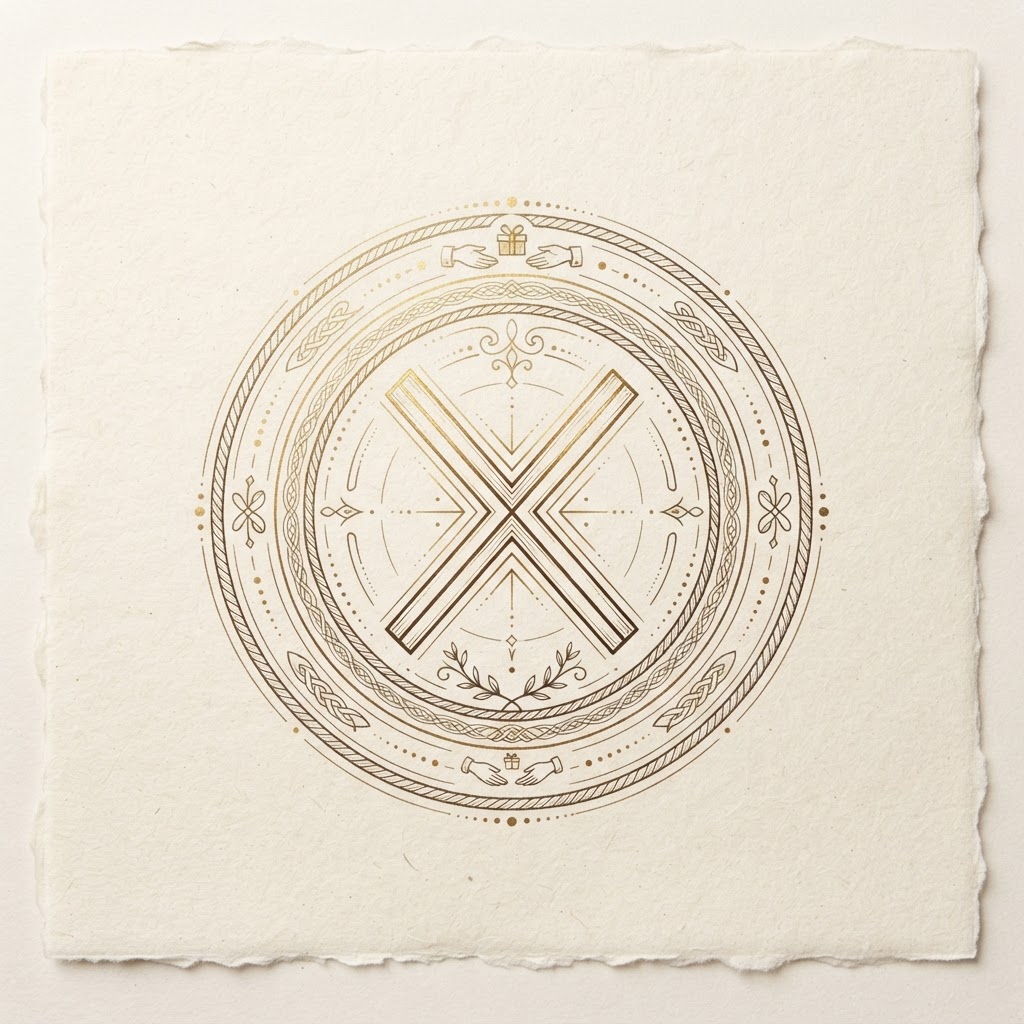
Gebo: Meaning, Origin & Symbolism
Also known as: Gyfu, Gipt, Giba
Elder Futhark Runes
Germanic
Heart Chakra
Air
Love
Harmony
Peace
Abundance
The rune of the gift, sacred exchange, partnership, reciprocity, and the binding bond of honor.
Quick Facts
- Category
- Elder Futhark Runes
- Culture / Origin
- Germanic
- Geographic Origin
- Northern Europe
- Historical Period
- Migration Period
- Estimated Age
- circa 150 CE
- Element
- Air
- Planet
- Venus
- Chakra
- Heart
- Zodiac
- Libra, Pisces
- Deities
- Odin, Gefjon, Freyja
- Verification
- unverified
What is Gebo?
Gebo is the seventh rune of the Elder Futhark, translating directly to 'gift.' In historic Germanic and Scandinavian society, gift-giving was not a casual courtesy but the fundamental social glue that established mutual obligation, honor, and loyalty between chieftains and their warriors.
This rune embodies the profound spiritual law of reciprocity: 'A gift looks always for a gift in return' (Hávamál). It is the crossing point where two independent entities meet, exchange value, and form a balanced, sacred covenant without subjugating one to the other.
Gebo presides over hospitality, true romantic partnerships, blood brotherhood, and trades where both sides flourish through mutual respect, equity, and voluntary commitment.
Meaning of Gebo
Gift, mutual exchange, equal partnership, hospitality, and divine blessing.
Origin & History
Reconstructed from Proto-Germanic *gebō, the glyph is one of the most frequently carved runes on continental brooches, rings, and marriage tokens.
The Anglo-Saxon rune poem lauds 'Gyfu' as a credit to every man, an ornament of princehood, and an estate for those who possess nothing else. Because it possesses complete vertical and horizontal symmetry, Gebo was viewed as an inherently balanced, un-invertible sign of good fortune.
Spiritual Meaning
Spiritually, Gebo represents the equilibrium between giving and receiving. It embodies the mystical sacrifice where humans offer devotion to the gods, and the gods reciprocate with protection and insight.
It teaches that self-worth is maintained through healthy boundaries in relationships. A true gift must be given freely, honoring the sovereignty of both the giver and the recipient.
Symbolism
The equal-armed 'X' marks the intersection of two paths, the intertwining of two separate forces, and the balanced equilibrium of an equitable exchange.
Traditional Uses
Historically signified generous gifts, pacts between leaders, hospitality covenants, and successful betrothals.
Modern Spiritual Uses
Modern esoteric workers employ Gebo for deepening equitable relationships, harmonizing soul connections, and negotiating honest contracts.
Healing Associations
Harmonizing hormonal imbalances, easing relationship-induced anxiety, regulating the heart rhythm.
Protection Associations
Preventing exploitation, manipulative contracts, and energetic vampirism.
How the Symbol Is Used
- •Handfasting Ceremonies
- •Alliance Talismans
- •Divination
- •Hospitality Blessings
Cultural Context
Germanic — Northern Europe (Migration Period)
Sources & References
- 1.Hávamál (The Poetic Edda)
- 2.The Anglo-Saxon Rune Poem
- 3.The Runic World by Nigel Pennick
This content is for educational and informational purposes only. Where modern spiritual interpretations are described, they are not presented as ancient historical facts. It is not a substitute for professional medical or spiritual advice.