Fuchen (Taoist Fly Whisk): Meaning, Origin & Symbolism
Also known as: Fly Whisk, Dust Whisk, Cloud Whisk
Taoist/Chinese
Taoist/Chinese
Throat Chakra
Third Eye Chakra
Air
Purification
Wisdom
Protection
Transformation
A ritual staff of horsehair used by Taoist adepts to sweep away worldly dust and clear negative spiritual obstacles.
Quick Facts
- Category
- Taoist/Chinese
- Culture / Origin
- Taoist/Chinese
- Geographic Origin
- China
- Historical Period
- Jin and Tang Dynasties
- Estimated Age
- circa 300 CE
- Element
- Air
- Planet
- Mercury
- Chakra
- Throat, Third Eye
- Deities
- Lu Dongbin, Taishang Laojun
- Verification
- unverified
What is Fuchen (Taoist Fly Whisk)?
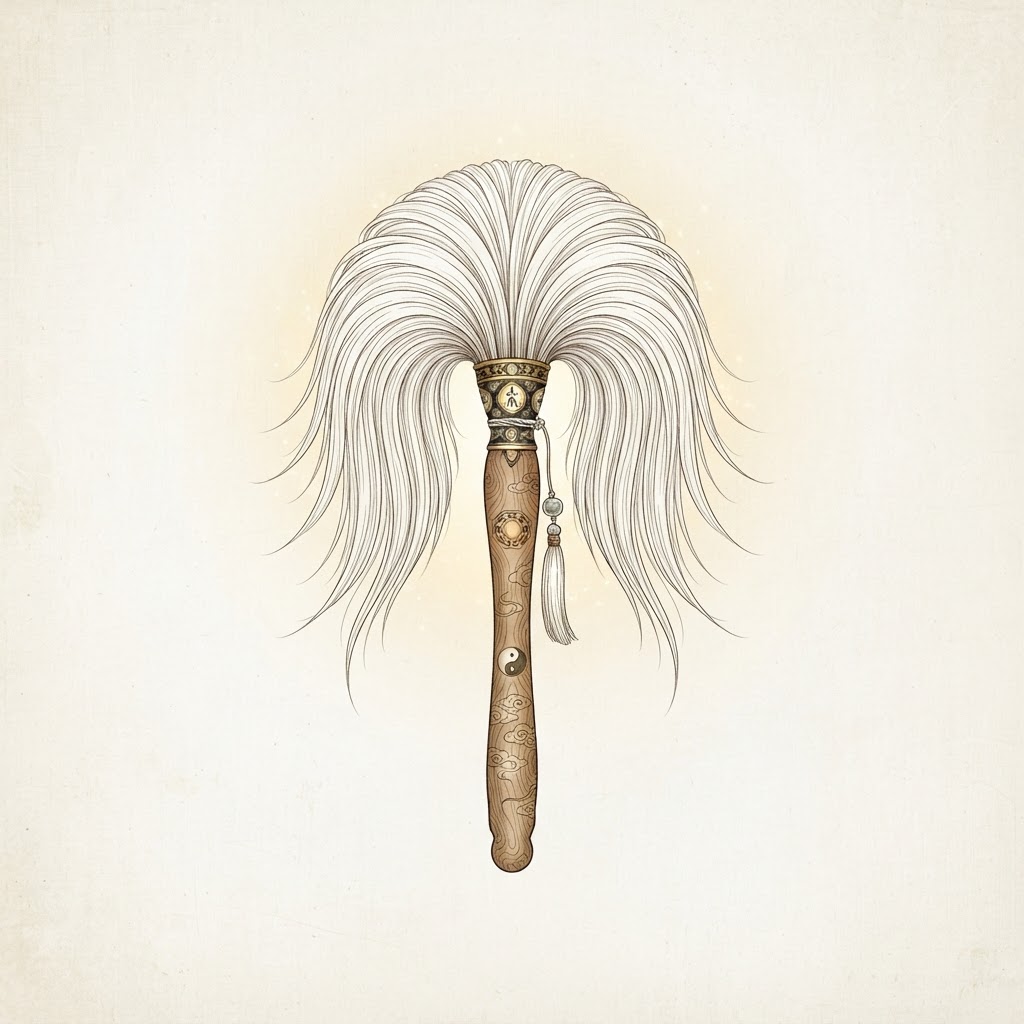
The Fuchen is a traditional Taoist ceremonial implement composed of a wooden or bone handle bound to long, flowing horsehair. Originally created as a practical tool to gently brush away insects without harming them—honoring the core precept of non-harming (Ahimsa)—it evolved into an iconic ritual instrument of spiritual purification and high lineage authority. In the hands of a Taoist master, the Fuchen does not merely sweep away insects; it sweeps away mundane worldly attachments, cognitive illusions, and spiritual dust (chen) that clouds the clarity of the Dao. In addition to its ceremonial and meditative uses, the Fuchen was developed into an ingenious soft weapon within Wudang martial arts, where its supple fibers can wrap around weapons, strike pressure points, and misdirect incoming strikes.
Meaning of Fuchen (Taoist Fly Whisk)
Purification of the mind, the sweeping away of earthly desires, and authority in Taoist ritual practice.
Origin & History
The fly whisk was initially adopted into China via Indian Buddhist monastic traditions and quickly found a home within Daoist ascetic practice. During the Jin Dynasty, wandering Taoist recluses embraced the whisk as a symbol of their detached, wandering lifestyle. By the Tang and Song eras, paintings consistently depicted enlightened immortals, such as Lu Dongbin, cradling a white Fuchen in the crook of their arm, solidifying its status as an unmistakable badge of spiritual mastery and internal alchemy.
Spiritual Meaning
The Fuchen represents mental stillness and active energetic purification. Its fluid bristles demonstrate the virtue of softness overcoming hardness, reminding seekers that spiritual freedom requires gently detaching from worldly desires rather than forcefully suppressing them.
Symbolism
The white hair symbolizes purity, celestial clouds, and untainted consciousness, while the act of brushing mirrors the ongoing mental discipline of cleansing one's awareness of daily delusions.
Traditional Uses
Carried by ordained Taoist priests to delineate sacred space, sweep altars clean of disruptive energies, and conduct liturgies.
Modern Spiritual Uses
Regarded as a metaphor for spiritual hygiene, digital detox, mental clarity, and shedding psychological burdens.
Healing Associations
Employed metaphorically in Qigong practices to brush away toxic or stagnant qi from the energetic aura of a patient.
Protection Associations
Swept across ceremonial thresholds and spaces to clear residual negative spiritual energies.
How the Symbol Is Used
- •Wudang Martial Arts
- •Taoist Altar Rituals
- •Daoist Meditation
Cultural Context
Taoist/Chinese — China (Jin and Tang Dynasties)
Sources & References
- 1.Kohn, Livia. Monastic Life in Medieval Daoism. University of Hawaii Press, 2003.
- 2.Little, Stephen, and Shawn Eichman. Taoism and the Arts of China. Art Institute of Chicago, 2000.
This content is for educational and informational purposes only. Where modern spiritual interpretations are described, they are not presented as ancient historical facts. It is not a substitute for professional medical or spiritual advice.