Enso: Meaning, Origin & Symbolism
Also known as: Zen Circle, Circle of Enlightenment, Circle of Togetherness
Buddhist
Buddhist
All Chakra
Ether/Spirit
Clarity
Peace
Acceptance
Wisdom
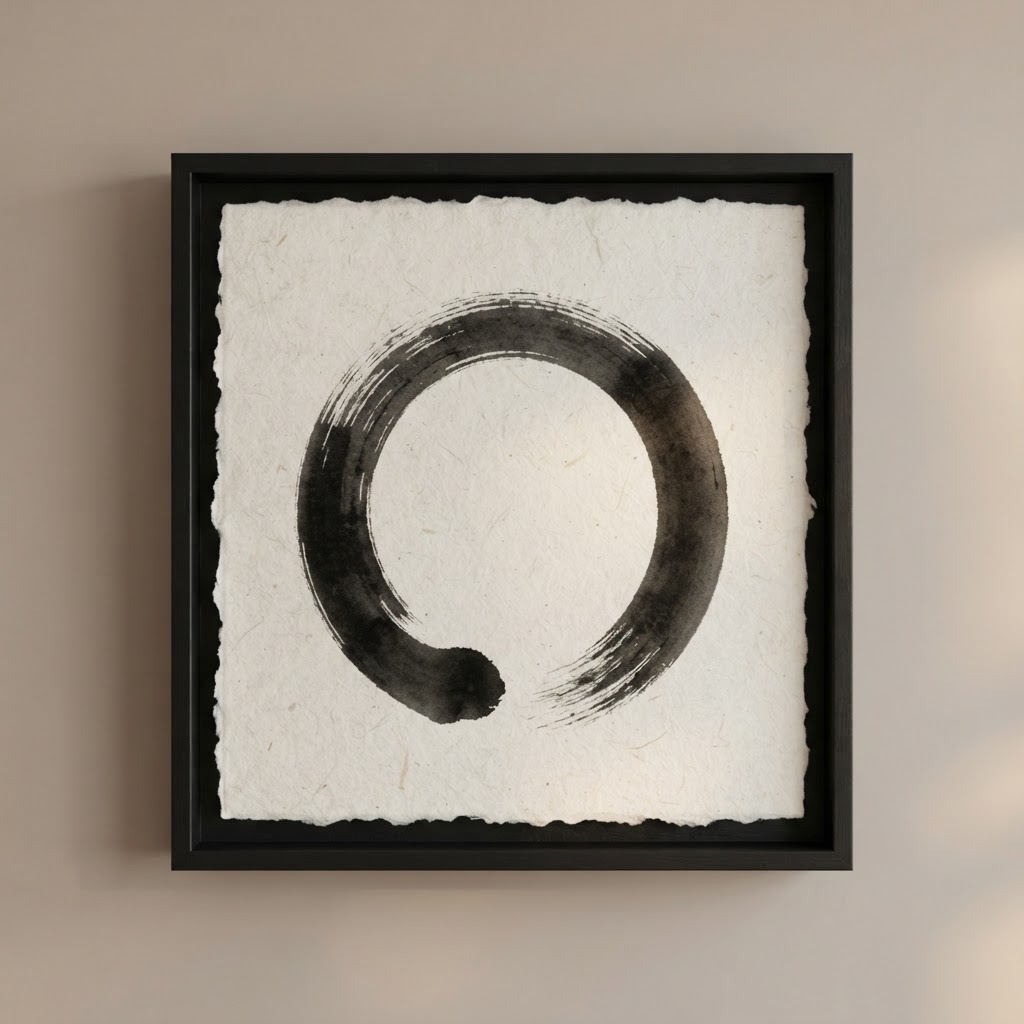
A minimalist Zen calligraphy circle brushed in one fluid stroke, representing emptiness, enlightenment, and the perfection of imperfection.
Quick Facts
- Category
- Buddhist
- Culture / Origin
- Buddhist
- Geographic Origin
- Japan
- Historical Period
- Medieval / Early Modern
- Estimated Age
- circa 8th century CE
- Element
- Ether/Spirit
- Chakra
- All
- Verification
- unverified
What is Enso?
The Enso is a profound visual expression of Zen Buddhist philosophy, created through ink-brush calligraphy (Hitsuzendo). Executed in a single, unhesitating, fluid movement, the brushstroke produces an expressive circle that captures the practitioner's exact mental state and level of realization at the precise moment of creation. The brush is never retraced; any variation, splattering, or irregularity in the ink is retained as a reflection of reality.
The circle may be rendered as either closed or open. An open enso allows movement and accommodates flow, signifying the imperfection, incompletion, and openness of all reality (Wabi-sabi), as well as the non-separation between the self and the cosmos. A closed circle illustrates absolute unity, perfection, and the cyclical nature of existence.
Meaning of Enso
The Enso represents absolute enlightenment, Mu (nothingness or emptiness), and the universe contained within a single present moment.
Origin & History
While circular imagery has ancient roots in Chinese Chan Buddhism, the Enso flourished as a defined artistic and contemplative medium in Japanese Zen during the Edo period. Masters like Hakuin Ekaku utilized spontaneous brushwork to transmit teachings directly to disciples, bypassing discursive language to convey direct, non-conceptual insight.
Spiritual Meaning
The Enso reveals the mind of the master at the moment of painting, demonstrating freedom from conceptual contrivance and egoic clinging. It points directly to the realization that emptiness is form and form is emptiness.
Symbolism
The void within the circle represents Sunyata (emptiness), pregnant with infinite potential. The outer ring signifies manifestation and the ephemeral nature of all conditioned things.
Traditional Uses
Zen monastics interpret the Enso as an uncompromising test of spiritual realization, revealing whether the practitioner paints from egoic deliberation or spontaneous Buddha-nature.
Modern Spiritual Uses
Widely adopted in Western mindfulness and psychology as an emblem of self-acceptance, the beauty of imperfection, and staying fully anchored in the here and now.
Healing Associations
Relieves perfectionism, calms cognitive overthinking, and invites acceptance of personal flaws.
How the Symbol Is Used
- •Hitsuzendo (calligraphy meditation)
- •Zazen (seated meditation)
- •Mindful breathing
- •Art therapy
Cultural Context
Buddhist — Japan (Medieval / Early Modern)
Sources & References
- 1.Zen Antics: 100 Stories of Enlightenment by Thomas Cleary
- 2.The Art of Just Sitting by John Daido Loori
- 3.Zen and the Fine Arts by Shin'ichi Hisamatsu
This content is for educational and informational purposes only. Where modern spiritual interpretations are described, they are not presented as ancient historical facts. It is not a substitute for professional medical or spiritual advice.