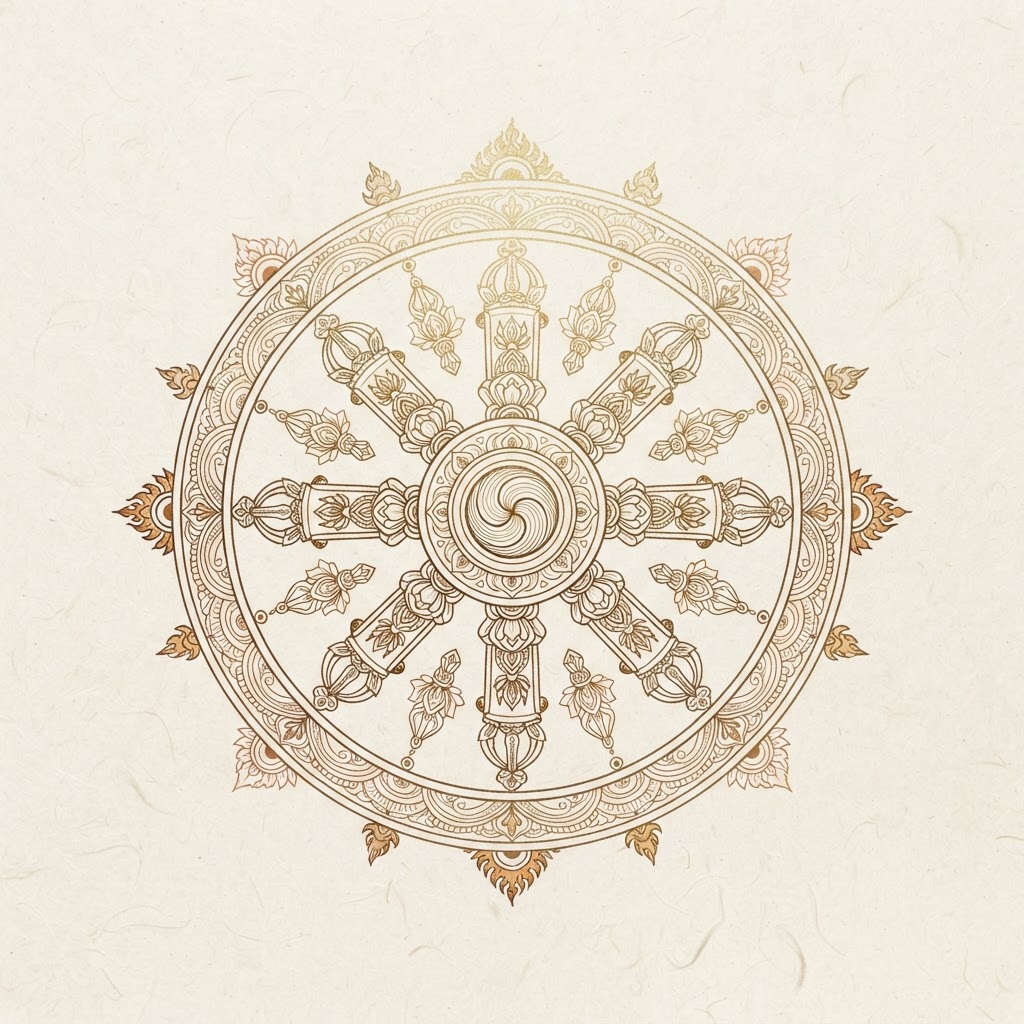
Dharmachakra: Meaning, Origin & Symbolism
Also known as: Wheel of Dharma, Wheel of the Law, Dharma Wheel
Buddhist
Buddhist
Crown Chakra
Third Eye Chakra
Ether/Spirit
Wisdom
Transformation
Clarity
Balance
One of the oldest and most revered Buddhist symbols, representing the teachings of Siddhartha Gautama and the Noble Eightfold Path.
Quick Facts
- Category
- Buddhist
- Culture / Origin
- Buddhist
- Geographic Origin
- Ancient India
- Historical Period
- Classical Antiquity
- Estimated Age
- circa 5th century BCE
- Element
- Ether/Spirit
- Planet
- Sun
- Chakra
- Crown, Third Eye
- Deities
- Gautama Buddha, Maitreya, Vairochana
- Verification
- unverified
What is Dharmachakra?
The Dharmachakra, or Wheel of the Law, is universally recognized as the quintessential emblem of Buddhism. Representing the teachings of Gautama Buddha, its circular form evokes the continuous cycle of life, death, and rebirth (samsara), as well as the completeness and perfection of the Buddha's doctrine. The motion of the wheel signifies the dynamic dissemination of spiritual truth throughout the cosmos, initiating a transformative journey for practitioners.
Traditionally depicted with eight spokes, the wheel mirrors the Noble Eightfold Path, which outlines the practical steps required to overcome suffering and attain enlightenment. In many Buddhist traditions, the wheel is depicted flanked by two deer, recalling the Buddha's first discourse given in the Deer Park at Sarnath. This historic sermon is poetically referred to as the 'First Turning of the Wheel of Dharma.'
Meaning of Dharmachakra
The Dharmachakra symbolizes the Buddha's teachings (Dharma) and the Noble Eightfold Path leading to enlightenment.
Origin & History
The Dharmachakra dates back to pre-Buddhist Vedic traditions where the wheel was associated with solar power and imperial sovereignty (Chakravartin). Following the Buddha's historical sermon at Deer Park in Sarnath, the symbol was adopted by early Buddhists to symbolize the turning of spiritual truth into motion. Emperor Ashoka adopted the wheel extensively across his pillars in the 3rd century BCE, solidifying its role as an imperial and spiritual hallmark across Asia.
Spiritual Meaning
Spiritually, the wheel represents the path to liberation from the illusions of ego and worldly suffering. The hub symbolizes moral discipline, which grounds the mind; the spokes represent wisdom and the eightfold path radiating outward; and the rim represents meditative concentration that holds the entire spiritual practice together.
Symbolism
The eight spokes signify Right View, Right Resolve, Right Speech, Right Action, Right Livelihood, Right Effort, Right Mindfulness, and Right Concentration. The circular rim embodies cyclical existence and unbroken perfection, while the central hub serves as the axis of ethical stability.
Traditional Uses
In traditional Buddhist doctrine, the wheel embodies the cosmic order and the historical turning of the wheel through three major epochs of teaching: the Four Noble Truths, the Mahayana emptiness teachings, and the Vajrayana Buddha-nature teachings.
Modern Spiritual Uses
Modern practitioners and wellness communities view the Dharmachakra as a visual reminder of balance, mindful living, and daily adherence to conscious ethical conduct.
Healing Associations
Aids mental clarity, reduces existential anxiety, and aligns moral behavior with inner peace.
Protection Associations
Wards off spiritual ignorance and prevents regression into unskillful karmic habits.
How the Symbol Is Used
- •Meditation
- •Dharma study
- •Vajrayana ritual art
- •Mindfulness practice
Cultural Context
Buddhist — Ancient India (Classical Antiquity)
Sources & References
- 1.The Handbook of Tibetan Buddhist Symbols by Robert Beer
- 2.Buddhist Art and Architecture by Robert E. Fisher
- 3.The Foundations of Buddhism by Rupert Gethin
This content is for educational and informational purposes only. Where modern spiritual interpretations are described, they are not presented as ancient historical facts. It is not a substitute for professional medical or spiritual advice.