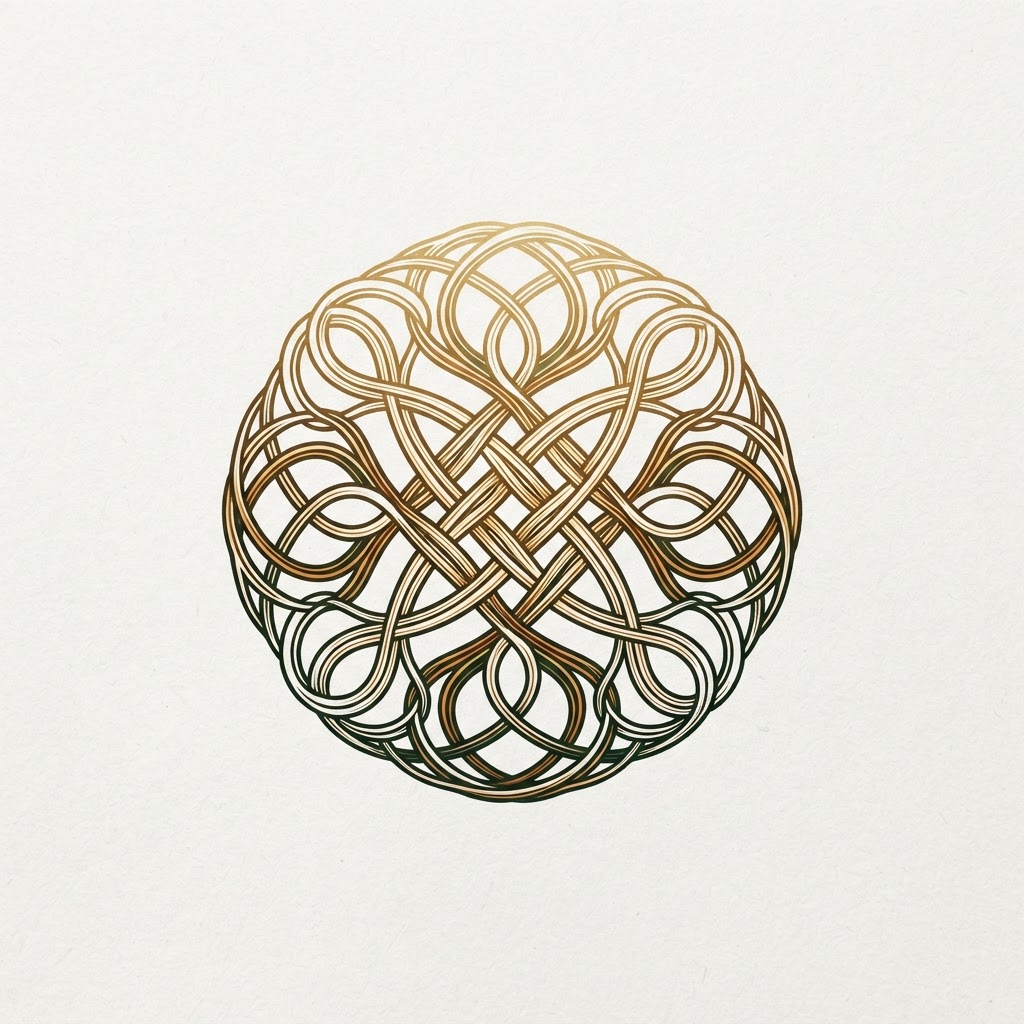
Dara Knot: Meaning, Origin & Symbolism
Also known as: Oak Knot, Oak Root Knot
Celtic
Celtic
Root Chakra
Earth
Protection
Wisdom
Transformation
Balance
A modern Celtic knot inspired by the complex root system of the sacred oak tree, symbolizing profound inner strength.
Quick Facts
- Category
- Celtic
- Culture / Origin
- Celtic
- Geographic Origin
- Ireland
- Historical Period
- Modern (rooted in Early Medieval styling)
- Estimated Age
- Modern Era (circa 20th Century)
- Element
- Earth
- Planet
- Jupiter
- Chakra
- Root
- Zodiac
- Capricorn, Taurus
- Deities
- The Dagda, Cernunnos, Taranis
- Verification
- unverified
What is Dara Knot?
The Dara Knot is an intricate, interwoven Celtic knot pattern that echoes the sprawling, tenacious root system of the oak tree. The name itself stems directly from the Irish Gaelic word 'doire', meaning 'oak tree'—a plant revered above all others in classical Celtic society for its immense longevity, hardwood resilience, and sacred presence.
While constructed using the strict historical conventions of Insular knotwork—relying on unbroken strands, precise interlacing, and symmetrical layouts—the specific design recognized today as the Dara Knot is primarily a late modern artistic realization of ancient root veneration. It visually simulates how oak roots spread secretly beneath the surface to anchor immense boughs above.
Recognized as a premier emblem of resilience, the Dara Knot reminds the observer that true endurance is quiet, stable, and deeply rooted. It has become a widespread symbol for facing adversity with unwavering fortitude, wisdom, and patience.
Meaning of Dara Knot
The Dara Knot symbolizes deep inner strength, steadfast courage, wisdom, and an unbreakable foundation.
Origin & History
In Celtic antiquity, the oak was the king of the forest. The Roman writer Pliny famously asserted that the very name 'Druid' was etymologically linked to the Greek word for oak ('drus'), noting that Druids gathered in oak groves and harvested sacred mistletoe using golden sickles.
Although genuine medieval manuscripts are replete with varied geometric interlacing, specific stylized knots were assigned symbolic names during the modern Celtic Revival. The Dara Knot was formulated to honor this legendary oak-reverence, bridging authentic ancient values with contemporary graphic symbolism.
Spiritual Meaning
Spiritually, the Dara Knot speaks to the hidden reservoirs of vitality inside every human soul. Just as the oak endures violent tempests by trusting its unseen roots, human beings navigate life crises by anchoring into their core integrity, values, and spiritual lineage.
It is used to foster unwavering resolve during intense trials. It helps practitioners realize that vulnerability above can coexist with unshakeable power below, grounding turbulent emotions into solid earth energy.
Symbolism
The interlaced loops represent the underground network of roots, conveying stability, hidden resilience, community connection, and ancient endurance.
Traditional Uses
Draws directly upon historic veneration of the oak as the residence of forest spirits and the primary channel of druidic wisdom.
Modern Spiritual Uses
Employed worldwide as a motivational talisman for overcoming trauma, enduring hardship, and establishing healthy emotional roots.
Healing Associations
Ideal for grounding therapies, recovery from physical fatigue, and reinforcing skeletal or root-level body systems.
Protection Associations
Acts as an anchoring amulet to prevent psychological uprooting, emotional chaos, and external energetic manipulation.
How the Symbol Is Used
- •Grounding Rituals
- •Strength Invocations
- •Meditation
- •Ancestral Anchoring
Cultural Context
Celtic — Ireland (Modern (rooted in Early Medieval styling))
Sources & References
- 1.Matthews, John and Caitlin. 'The Encyclopedia of Celtic Wisdom.' Element Books, 1994.
- 2.Ross, Anne. 'Pagan Celtic Britain: Studies in Iconography and Tradition.' Academy Chicago Publishers, 1996.
This content is for educational and informational purposes only. Where modern spiritual interpretations are described, they are not presented as ancient historical facts. It is not a substitute for professional medical or spiritual advice.