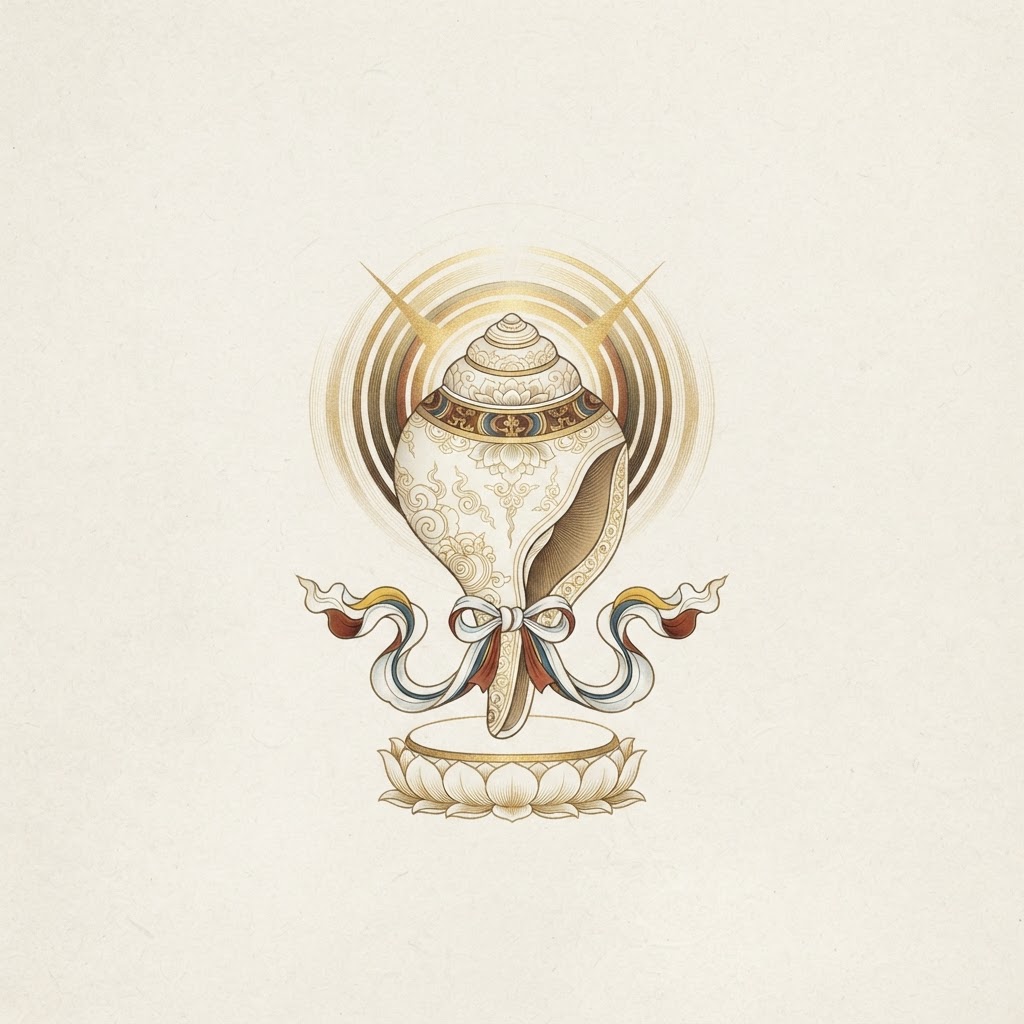
Conch Shell: Meaning, Origin & Symbolism
Also known as: Shankha, Dung-dkar, Right-Turning Conch
Buddhist
Buddhist
Throat Chakra
Water
Wisdom
Clarity
Harmony
A musical emblem symbolizing the resonant sound of the Dharma awakenings beings from the slumber of ignorance.
Quick Facts
- Category
- Buddhist
- Culture / Origin
- Buddhist
- Geographic Origin
- Ancient India
- Historical Period
- Classical Antiquity
- Estimated Age
- circa 1000 BCE
- Element
- Water
- Planet
- Mercury
- Chakra
- Throat
- Deities
- Brahma, Gautama Buddha
- Verification
- unverified
What is Conch Shell?
The sacred white conch shell (Sanskrit: Shankha; Tibetan: Dung-dkar) is an essential item among the Eight Auspicious Symbols of Buddhism. Traditionally blown as a horn in ancient India to signal the commencement of battles or state gatherings, the conch was repurposed by the Buddhist tradition to announce spiritual awakening. Its powerful, resonant blast carries effortlessly across vast distances, symbolizing the far-reaching proclamation of the Dharma that awakens sentient beings from the deep slumber of spiritual ignorance. In Tibetan and Himalayan Buddhist temples, a specially prized conch is one that spirals to the right (clockwise), a biological rarity considered deeply auspicious, mirroring the sacred clockwise circumambulation of shrines and the movement of the cosmos.
Meaning of Conch Shell
The fearless proclamation and universal reach of the Buddha's teachings that rouses beings toward truth.
Origin & History
In epic Indian literature like the Mahabharata, warrior heroes blew named conch shells before combat. According to Buddhist legend, Brahma appeared after Shakyamuni Buddha achieved enlightenment and presented him with a right-spiraling conch, beseeching him to proclaim the profound truth to all beings.
Spiritual Meaning
The conch represents the authentic voice of truth that cuts through hesitation and mental fog. It signifies the teacher's willingness to transmit wisdom without prejudice to all receptive ears, regardless of station.
Symbolism
Its brilliant white color represents the pure nature of the Dharma; its spiral mirrors cosmic motion and clockwise circumambulation; its deep resonance signifies spiritual awakeness.
Traditional Uses
In ritual ceremonies, it is both an offering vessel for sacred liquids and an instrument blown to convene the monastic sangha and summon peaceful deities.
Modern Spiritual Uses
Modern meditators look to the conch as an invitation to deep listening, self-expression, and communicating personal truth with integrity and clarity.
Healing Associations
Stimulates the throat chakra, enhancing vocal communication and soothing social anxiety.
Protection Associations
Dispels fearful delusions, purges spiritual stagnation, and drives away discord.
How the Symbol Is Used
- •Temple Chanting
- •Ritual Sound Offerings
- •Pratishtha (Consecration)
Cultural Context
Buddhist — Ancient India (Classical Antiquity)
Sources & References
- 1.Tibetan Buddhist Symbols and Motifs by Robert Beer
- 2.The Way of the White Clouds by Anagarika Govinda
This content is for educational and informational purposes only. Where modern spiritual interpretations are described, they are not presented as ancient historical facts. It is not a substitute for professional medical or spiritual advice.